
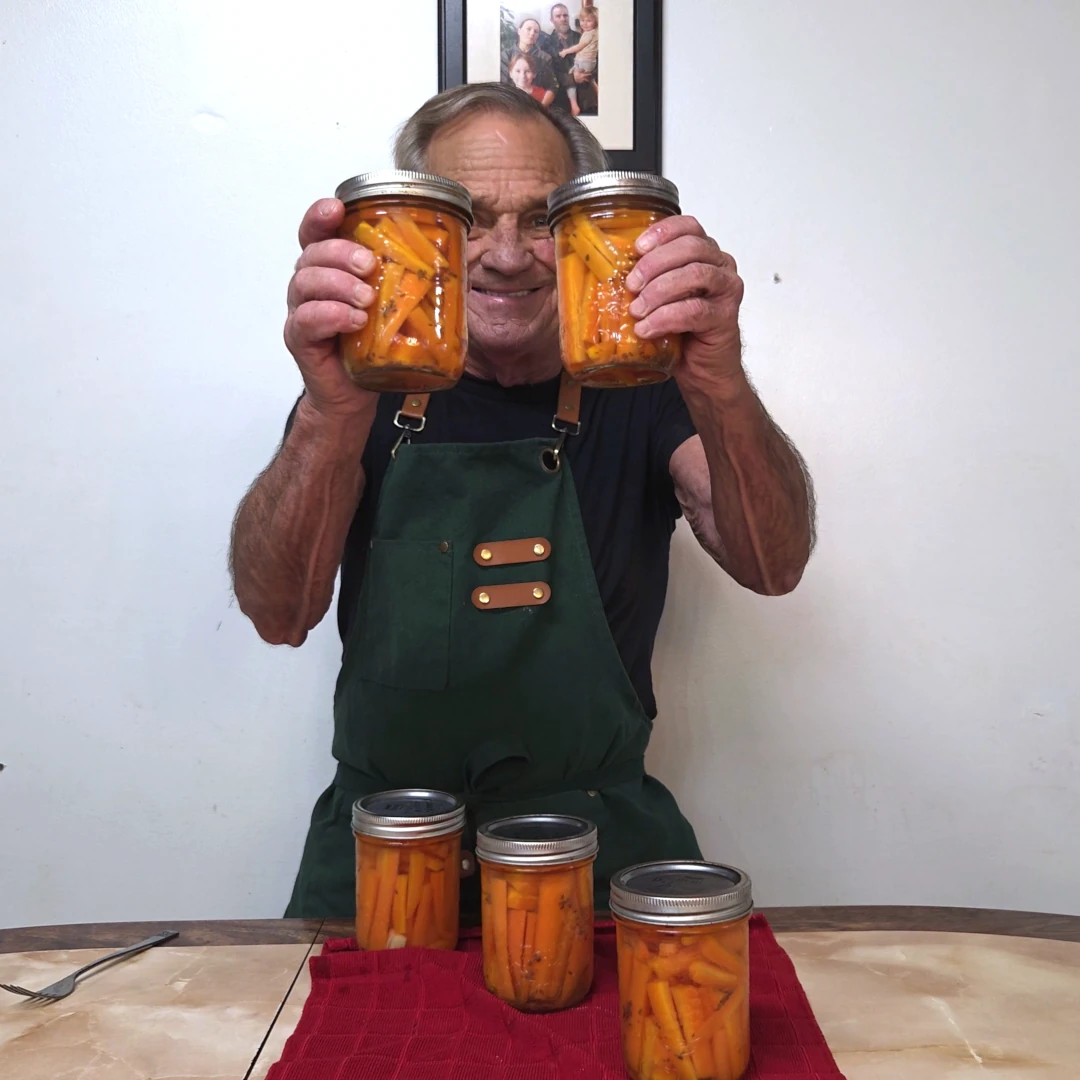
I decided to make dilled carrots with some of the carrots I had picked from the garden. I used garlic, dill seed, and pickling spice along with the vinegar brine.
I picked the carrots from the garden, washed, peeled, and cut them into sticks about 2 to 3 inches long.
I set the carrots aside and got the brine ready, but first I put my pint jars into hot water.
By the way, I’ve been seeing people on the Internet saying to heat the jars in the oven. Don’t do that.
Both Ball and Bernardin say that canning jars aren’t meant for dry heat. Heating them in the oven can cause the glass to crack or even break. Always heat your jars in hot or boiling water.
Making the Brine
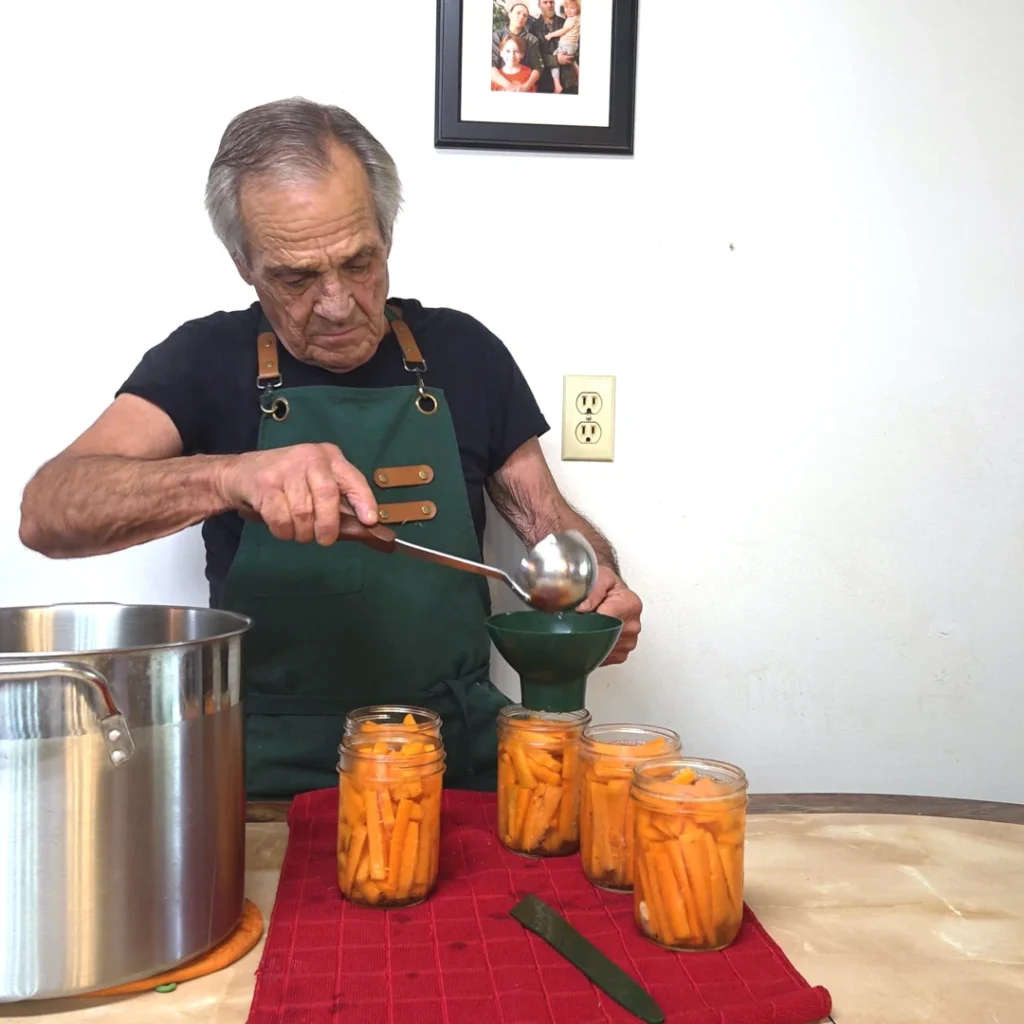
The recipe called for 6 cups of white vinegar, 2 cups of water, and ½ cup of pickling salt.
I also added 1 tablespoon of pickling spice to the recipe. I put the pickling spice into a tea bag before adding it to the brine. Adding pickling spice is safe to do, and putting it in a tea bag keeps the spices out of the finished jars.
I brought the brine to a boil, then turned the heat down and let it simmer for 10 minutes.
While the brine was simmering, I started filling the jars. I put 1 clove of garlic and 1 teaspoon of dill seed into each pint jar.
Then I tightly packed the carrot sticks into the jars, leaving a generous ½ inch of headspace.
I ladled the hot brine into each jar, again leaving ½ inch of headspace. I removed the air bubbles and checked the headspace one more time.
I wiped the rims with a paper towel dampened with vinegar, put the lids on, and tightened the bands finger tight.
Water-Bath Canning the Carrots
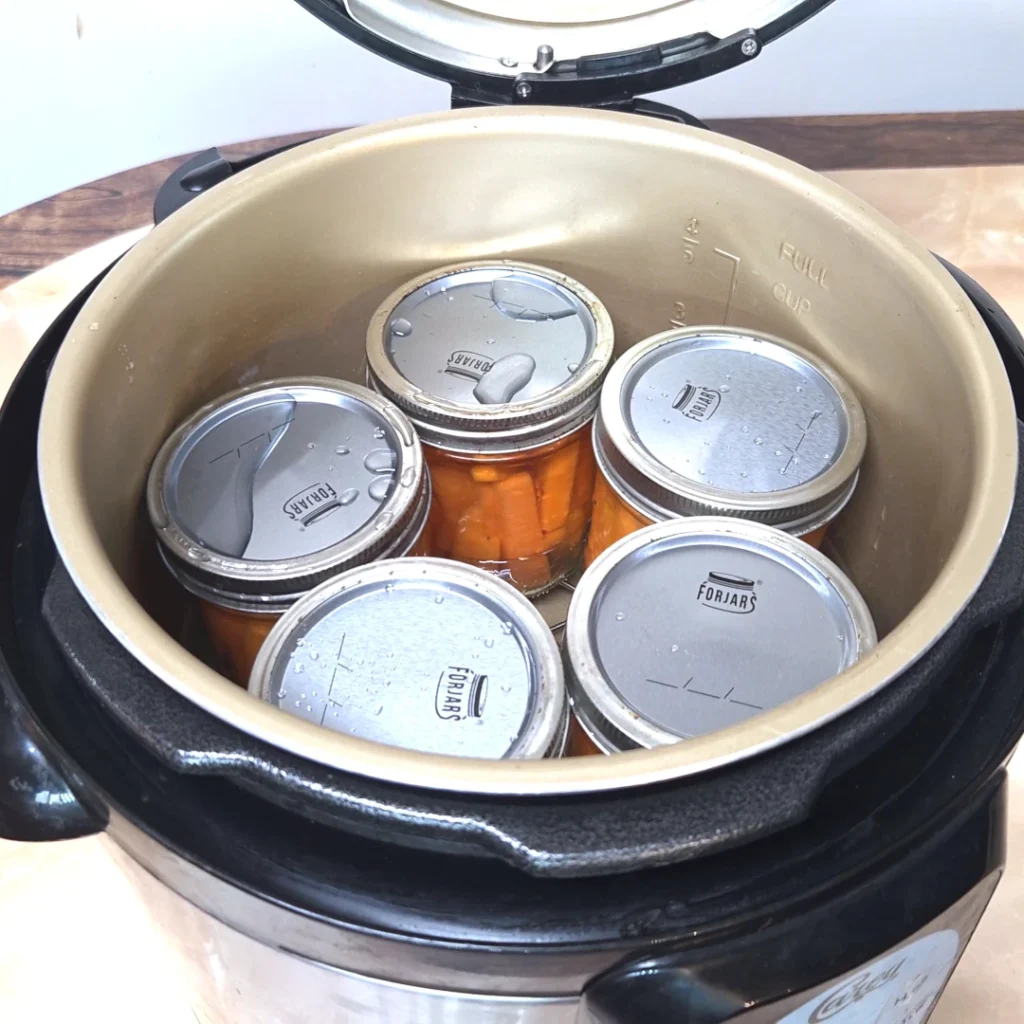
Bernardin’s recipe calls for processing the jars in a boiling-water canner for 10 minutes, but you need to adjust the processing time for altitude. I’ve included the altitude adjustments in the recipe below.
Once the processing time was up, I turned off the heat and removed the lid from the canner. I let the jars sit for 5 minutes before taking them out.
I removed the jars from the canner and set them on the counter to cool.
Unfortunately, I dropped one of the jars.
When I checked the jars the next day, that jar hadn’t sealed. Since it wasn’t sealed, I put it in the refrigerator.
That did give me a chance to taste one of the carrot spears, though, and they tasted really good. They had a nice crunch and the garlic and dill came through well. The carrots still needed time to finish pickling, so I left that jar in the refrigerator for a week.
What Happened to the Extra Carrots?
It took 4 pounds of carrots to fill the five pint jars, so I still had 1½ pounds left.
I wasn’t going to try to force the rest into another batch, so I blanched the remaining carrots and froze them.
Conclusion
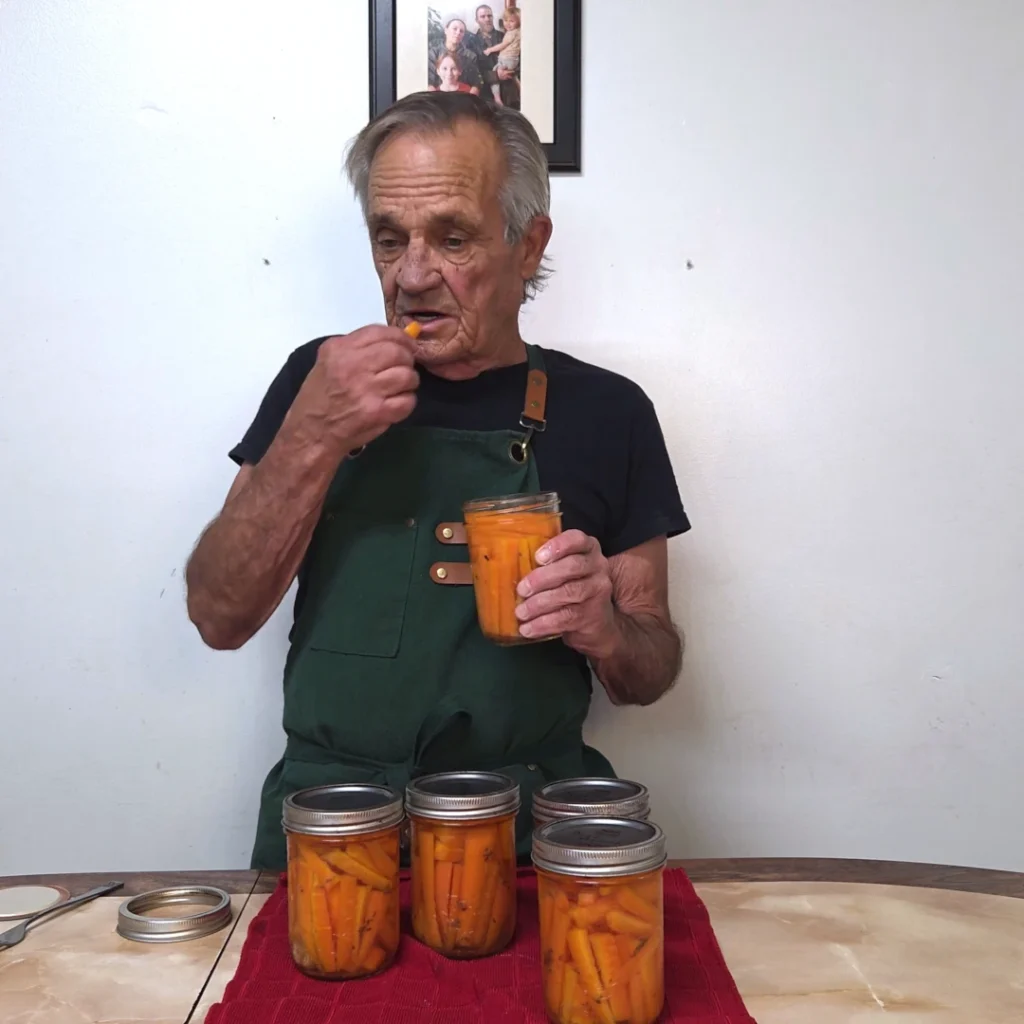
These dilled carrots turned out really well. The garlic and dill give the carrots plenty of flavor, and the pickling spice adds a little something extra without taking over.
The jar that didn’t seal ended up being useful because I got to taste the carrots early. After a week in the refrigerator, they had more time to take on the flavor of the brine.
If you’re looking for another way to use up some of the carrots from the garden, this is a good one. Just make sure you use proper water-bath canning procedures, adjust the processing time for your altitude, and don’t heat your canning jars in the oven.
What’s your favorite way to season pickled carrots?
Dilled Carrots
Crunchy pickled carrots with garlic, dill seed, and pickling spice, processed in a boiling-water canner.
Ingredients
- 4 lbs carrots, washed, peeled, and cut into 2 to 3-inch sticks
- 6 cups white vinegar
- 2 cups water
- ½ cup pickling salt
- 1 tablespoon pickling spice
- 5 cloves garlic
- 5 teaspoons dill seed
Instructions
- Prepare five pint jars by heating them in hot or boiling water. Do not heat canning jars in the oven.
- Combine the white vinegar, water, pickling salt, and pickling spice in a pot. Put the pickling spice in a tea bag if you want to keep the spices contained in the brine.
- Bring the brine to a boil, then reduce the heat and simmer for 10 minutes.
- While the brine is simmering, place 1 clove of garlic and 1 teaspoon of dill seed into each hot pint jar.
- Pack the carrot sticks tightly into the jars, leaving a generous ½ inch of headspace.
- Ladle the hot brine into the jars, maintaining ½ inch of headspace.
- Remove air bubbles and check the headspace again, adding more brine if necessary to maintain ½ inch.
- Wipe the jar rims with a paper towel dampened with vinegar.
- Place the lids on the jars and tighten the bands finger tight.
- Place the jars in a boiling-water canner, making sure they are covered with water according to your canner instructions.
- Process pint jars for 10 minutes at elevations of 1,000 feet (305 m) or less. Adjust the processing time for higher elevations using the table below.
- When the processing time is complete, turn off the heat and remove the canner lid. Wait 5 minutes before removing the jars.
- Remove the jars and place them upright on a towel, leaving them undisturbed while they cool.
Notes
Boiling-Water Canning Altitude Adjustments:
The 10-minute processing time is based on an elevation of 1,000 feet (305 m) or less. If you are above 1,000 feet, increase the processing time according to the table below.
| Elevation | Processing Time |
|---|---|
| 1,000 ft (305 m) or less | 10 minutes |
| 1,001–3,000 ft (306–914 m) | 15 minutes |
| 3,001–6,000 ft (915–1,829 m) | 20 minutes |
| 6,001–8,000 ft (1,830–2,438 m) | 25 minutes |
| 8,001–10,000 ft (2,439–3,048 m) | 30 minutes |
Yield: 5 pint jars
Frequently Asked Questions
Can I heat canning jars in the oven?
No. Ball and Bernardin say canning jars are not designed for dry heat. Heating jars in the oven can cause the glass to crack or break. Heat canning jars in hot or boiling water instead.
How much headspace do I leave for dilled carrots?
Pack the carrots tightly, leaving a generous ½ inch of space. After adding the brine, adjust the liquid so there is exactly ½ inch of headspace.
Do I need to remove air bubbles from the jars?
Yes. Remove the air bubbles after adding the brine, then check the headspace again and add more brine if necessary to maintain ½ inch of headspace.
How long do I water-bath dilled carrots?
Process the pint jars for 10 minutes at elevations of 1,000 feet (305 m) or less. The processing time needs to be increased at higher elevations.
How do I adjust the processing time for altitude?
Use these processing times for a 10-minute base time:
| Elevation | Processing Time |
|---|---|
| 1,000 ft (305 m) or less | 10 minutes |
| 1,001–3,000 ft (306–914 m) | 15 minutes |
| 3,001–6,000 ft (915–1,829 m) | 20 minutes |
| 6,001–8,000 ft (1,830–2,438 m) | 25 minutes |
| 8,001–10,000 ft (2,439–3,048 m) | 30 minutes |
Why do you put pickling spice in a tea bag?
I put the pickling spice into a tea bag before adding it to the brine so the spices can flavor the brine without leaving loose pieces of spice throughout the jars.
Can I leave the pickling spice out?
Yes. The pickling spice adds extra flavor to the brine, but you can leave it out if you don’t want to use it.
What happens if one of the jars doesn’t seal?
A jar that doesn’t seal should not be stored at room temperature. Refrigerate it instead. In my case, the jar that didn’t seal gave me a chance to taste the carrots, and I kept that jar in the refrigerator to finish pickling.
How many jars does this recipe make?
This batch made five pint jars using 4 pounds of carrots.
What can I do with leftover carrots?
I had 1½ pounds of carrots left after filling the five pint jars. I blanched and froze the remaining carrots.

Leave a Reply