
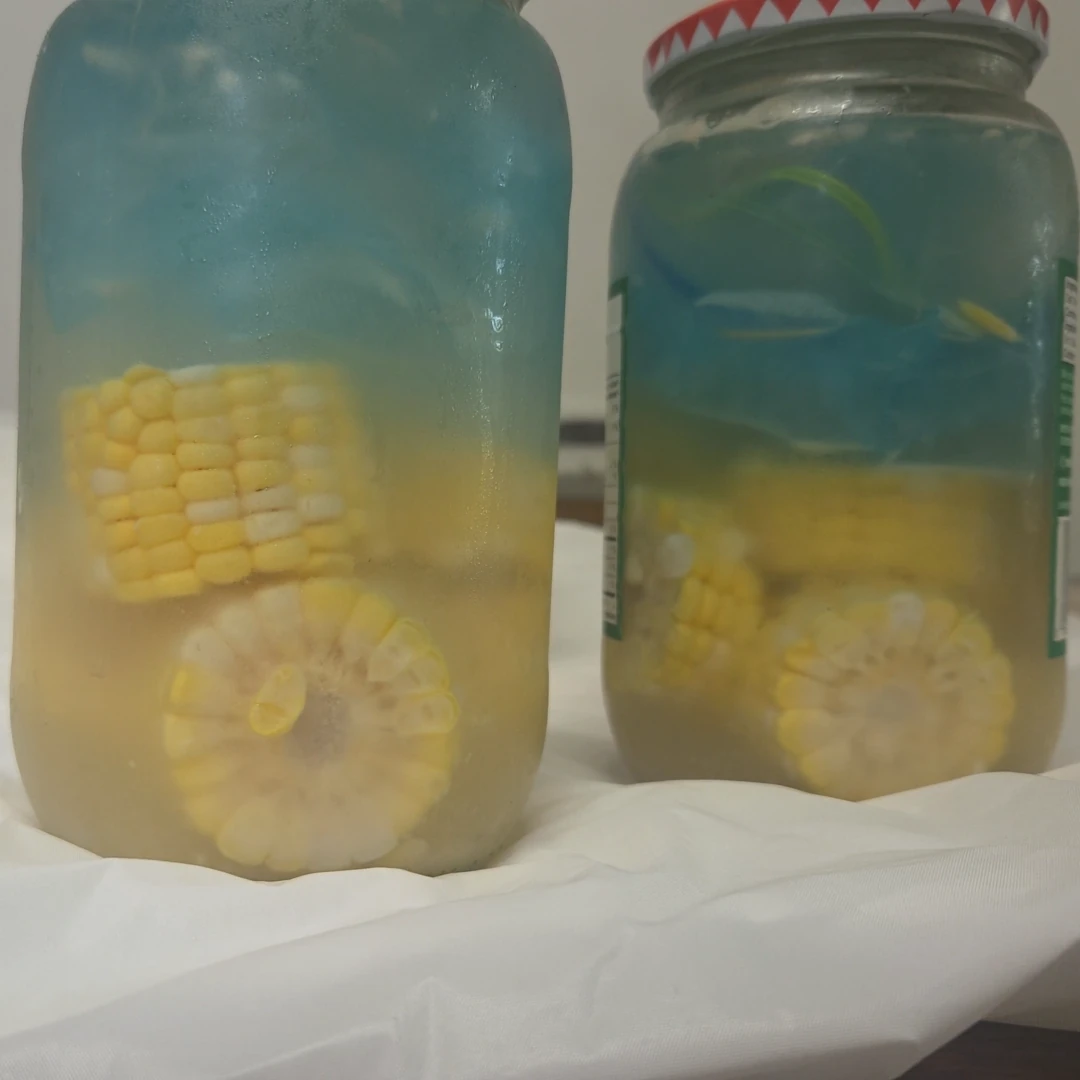
If you’ve never tried fermenting corn before, you’re in for something a little different. Most people think of fermenting cucumbers or cabbage, but fresh sweet corn also ferments surprisingly well. The finished corn keeps much of its natural sweetness while developing a pleasant tanginess that you just can’t get any other way.
This is a very simple ferment to make. It doesn’t take much work, and after a week you’ll have something that’s completely different from the fresh corn you started with.
Ingredients
- 3 ears fresh sweet corn
- Water
- Pickling salt
- Brine for fermentation weights (2 tablespoons pickling salt to 1 quart water)
Instructions
I started with three ears of fresh sweet corn, which was enough to fill three 1-litre jars.
The first step was to shuck the corn and remove all of the silk. Taking the extra time to get as much silk off as possible makes for a much cleaner finished ferment.
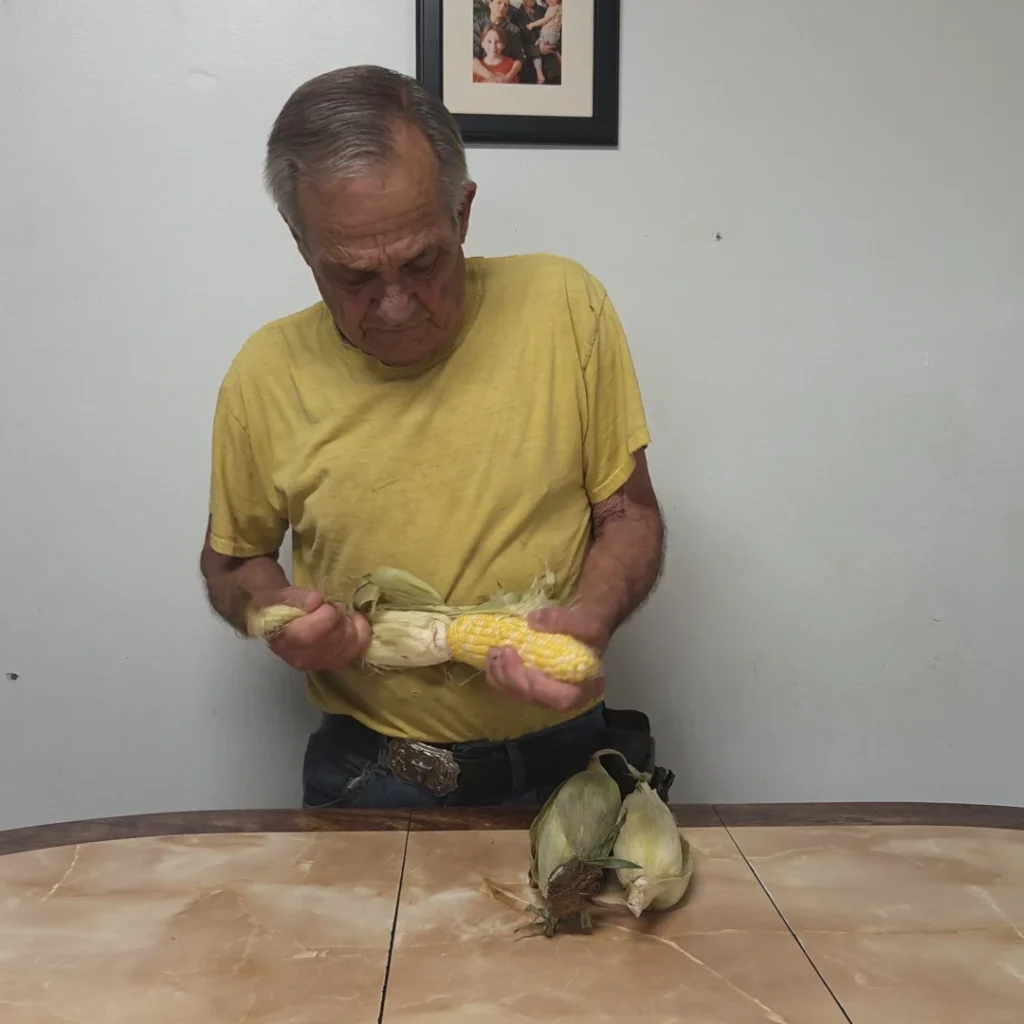
Instead of cutting the kernels off the cob, I cut each cob into smaller sections. That made it much easier to pack everything into the jars and keep the corn below the surface of the brine. I also figured the cobs themselves might add a little extra flavor during the fermentation.
Once the jars were filled with the corn pieces, I added enough water to completely cover everything.
I used tap water for mine, but if your tap water is chlorinated, it’s better to use bottled or spring water. Chlorine can slow down or even stop the beneficial bacteria that make fermentation work.
To figure out exactly how much salt to use, I placed an empty one-litre jar on my kitchen scale and zeroed it out. Then I weighed each filled jar individually. Since the weight of the empty jar had already been removed, I was left with the combined weight of the corn and water.
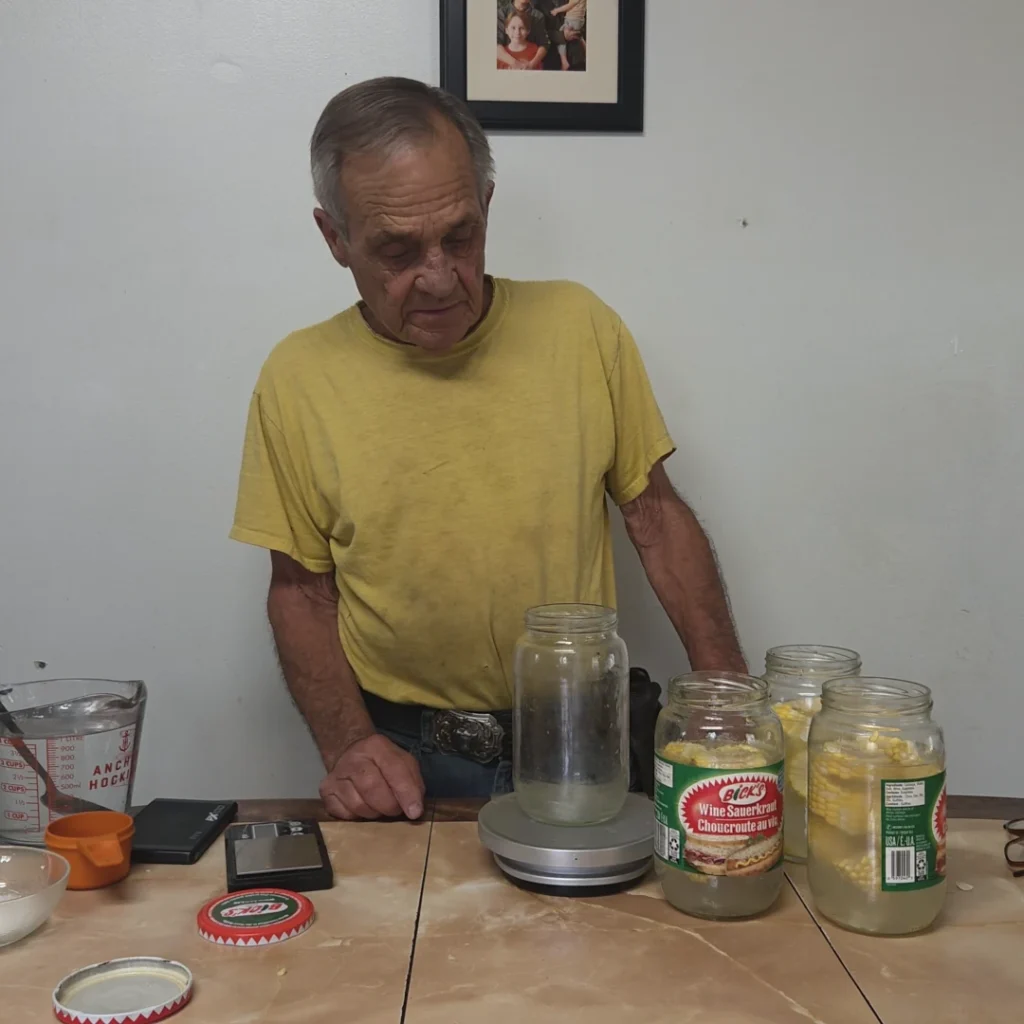
For this batch I used a 2.5% salt ratio.
The first two jars each weighed 729 grams, so I added 18.25 grams of pickling salt to each one. The third jar weighed slightly more, so I simply calculated the correct amount of salt based on its weight and added that amount.
After the salt was dissolved, I needed a way to keep the corn below the surface of the brine. Exposure to air can allow mold to develop, so keeping everything submerged is important.
I placed a freezer bag inside each jar and filled it with brine made from 2 tablespoons of pickling salt mixed with 1 quart of water. The bags worked perfectly as weights while also providing a little insurance in case one leaked.
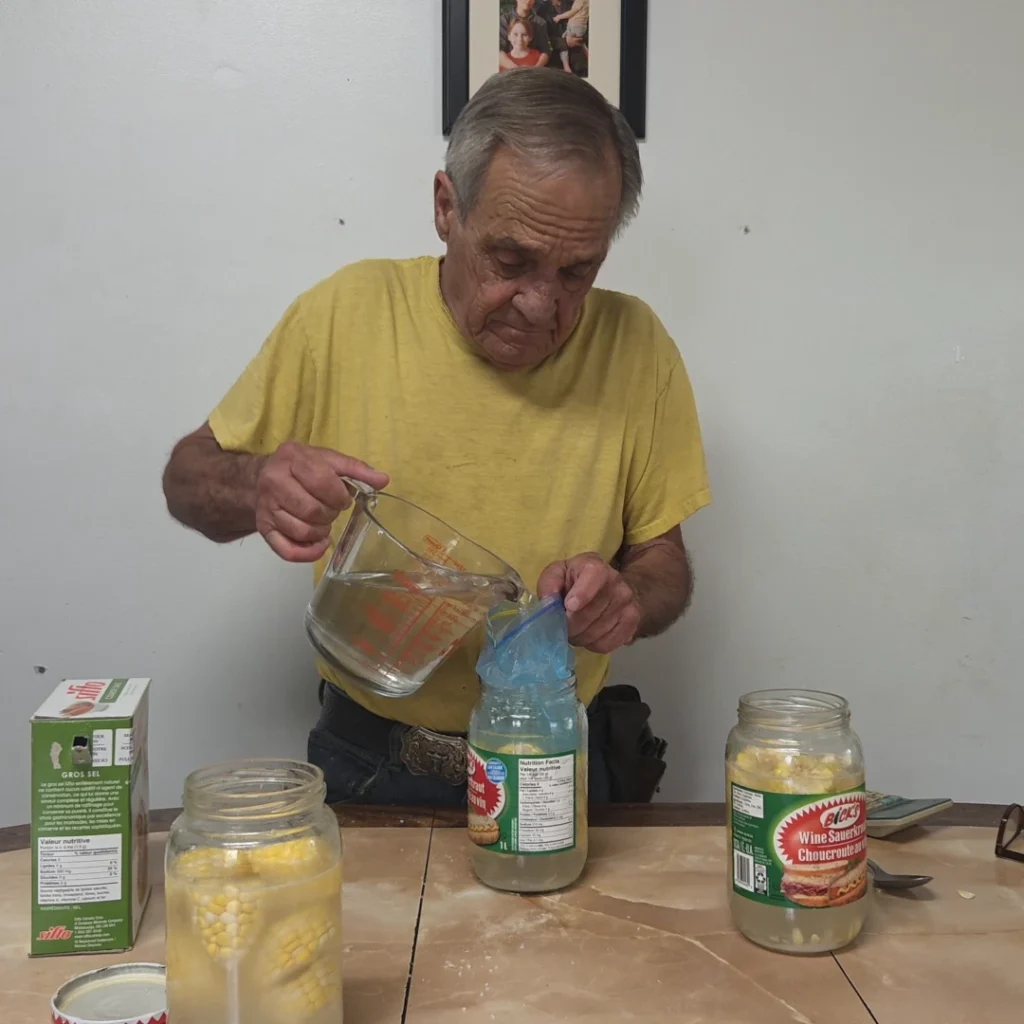
Once everything was submerged, I screwed the lids on very loosely. During fermentation, the beneficial bacteria produce carbon dioxide gas, so the lids need to be loose enough for that gas to escape.
Since active ferments sometimes bubble over, I placed all three jars in a container to catch any overflowing brine. Then I moved them to a spot out of direct sunlight.
The ideal temperature for lacto-fermenting vegetables is between 64°F and 75°F (18°C to 24°C), and my kitchen stayed right in that range.
After that, all I had to do was check on the jars once a day. On the seventh day I tasted the corn and decided it had fermented long enough for my liking, so I moved the jars into the refrigerator. The cold temperature slows the fermentation down and helps preserve the flavor at the stage you enjoy.
How Does It Taste?
It’s actually pretty hard to describe.
The corn still has much of its natural sweetness, but now it also has a pleasant tang from the lactic acid produced during fermentation. Of course, there’s also a little saltiness from the brine. All three flavors come together into something that’s completely different from fresh corn, but surprisingly enjoyable.

Final Thoughts
If you’re looking for something a little different to try during fresh corn season, sour corn is definitely worth making. It doesn’t require any special equipment, and once you understand how to calculate the salt, the process is very straightforward.
Like most fermented foods, the flavor changes depending on how long you let it ferment. Seven days was just about right for my taste, but you may prefer it a little milder or a little tangier. That’s part of the fun of home fermentation—you get to decide exactly when it’s ready.
Sour (Lacto-Fermented) Corn
A simple traditional lacto-fermented corn recipe that transforms fresh sweet corn into a tangy, slightly salty ferment while still keeping much of its natural sweetness.
Ingredients
- 3 ears fresh sweet corn
- Water (enough to completely cover the corn)
- Pickling salt (2.5% of the combined weight of the corn and water)
Brine for Fermentation Weights
- 2 tablespoons pickling salt
- 1 quart water
Equipment
- 3 one-litre jars
- Kitchen scale
- Freezer bags (to use as fermentation weights)
- Container or tray to catch overflowing brine
Instructions
- Shuck the corn and remove all of the silk.
- Cut each cob into smaller sections instead of removing the kernels.
- Pack the corn pieces into three clean 1-litre jars.
- Add enough water to completely cover the corn. If your tap water is chlorinated, use bottled or spring water instead.
- Place an empty jar on a kitchen scale and zero the scale.
- Weigh each filled jar individually to determine the combined weight of the corn and water.
- Calculate the salt using a 2.5% salt ratio and add the correct amount of pickling salt to each jar.
- Stir or gently shake until the salt dissolves.
- Place a freezer bag inside each jar and fill it with brine made from 2 tablespoons of pickling salt mixed with 1 quart of water. This keeps the corn completely submerged.
- Loosely screw the lids onto the jars so fermentation gases can escape.
- Place the jars in a container to catch any overflowing brine.
- Store the jars out of direct sunlight at 64°F to 75°F (18°C to 24°C).
- Check the jars daily.
- After about 7 days, taste the corn. When it reaches a flavor you enjoy, refrigerate the jars to slow the fermentation.
Notes
- Keeping the corn completely submerged under the brine is important to prevent mold.
- The cobs help keep the pieces together and may contribute additional flavor during fermentation.
- Fermentation time may vary depending on room temperature and your personal taste.
- Always use pickling salt or another salt without anti-caking agents.
Frequently Asked Questions
What is sour corn?
Sour corn is fresh corn that has been preserved through lacto-fermentation. Beneficial bacteria naturally convert sugars in the corn into lactic acid, creating a slightly sour and tangy flavor while still keeping the natural sweetness of the corn.
Do I have to cut the corn off the cob?
No. You can ferment the corn either on or off the cob. For this recipe, I cut the cobs into smaller sections because it made them easier to pack into the jars and helped keep the corn submerged. I also thought the cobs might add some extra flavor during fermentation. If you prefer, you can remove the kernels from the cob and ferment the corn that way instead.
Can I use tap water to make sour corn?
Yes, but if your tap water contains chlorine, it is better to use spring water or bottled water. Chlorine can interfere with the beneficial bacteria needed for the fermentation process.
Why do I need to weigh the corn and water before adding salt?
The amount of salt needed depends on the total weight of the corn and water. Weighing each jar allows you to calculate the correct amount of salt and maintain the proper 2.5% salt ratio for a successful ferment.
Why use a 2.5% salt ratio for sour corn?
A 2.5% salt ratio creates an environment that encourages beneficial bacteria while helping prevent unwanted microorganisms from growing. It also gives the finished corn a balanced flavor.
How do I keep the corn submerged during fermentation?
The corn should remain below the surface of the brine throughout fermentation. A freezer bag filled with salt brine works well as a simple weight to hold the corn down.
Why are the jar lids left loose during fermentation?
Fermentation produces carbon dioxide gas. Leaving the lids loose allows the gas to escape instead of building pressure inside the jars.
How long does sour corn take to ferment?
Sour corn usually takes about 5 to 7 days to ferment. This batch fermented for 7 days before being moved to the refrigerator. Fermentation time can vary depending on temperature and personal taste, so tasting the corn is the best way to decide when it is ready.
What temperature is best for fermenting sour corn?
The ideal temperature range for lacto-fermentation is between 64°F and 75°F (18°C and 24°C). Keeping the jars in this range helps create a steady fermentation.
How does sour corn taste?
Sour corn is difficult to describe because it combines several flavors. It is still sweet from the corn, has a mild acidity from fermentation, and has a little saltiness from the brine.
How do I store sour corn after fermentation?
Once the sour corn reaches the flavor you like, place the jars in the refrigerator. The colder temperature slows the fermentation and helps maintain the flavor.

Leave a Reply