
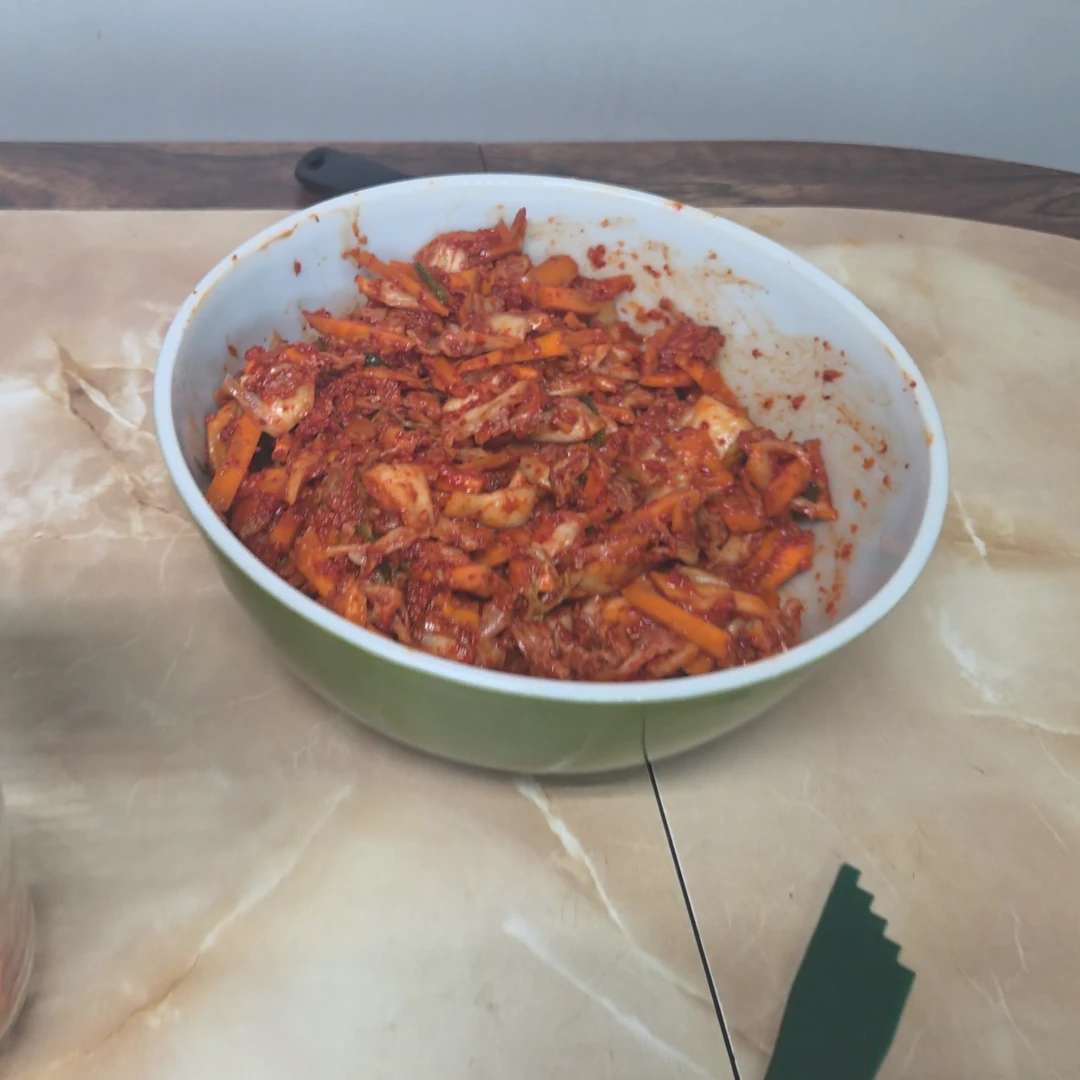
Easy Kimchi
Kimchi isn’t all that complicated. At its simplest, you’re mixing vegetables with a spicy paste and letting everything ferment.
I call this an “easy” kimchi because I’m cutting the cabbage into pieces instead of leaving the cabbage in halves and rubbing the paste into each individual leaf. It saves a fair bit of work, and I still ended up with a good batch of kimchi.
I grew the Chinese cabbage, daikon radishes and carrots in my garden, but there’s no reason you can’t buy the vegetables if you don’t have them growing yourself.
I started by trimming and cleaning the cabbage. I soaked the head in salt water for about 15 minutes to get rid of any bugs that might have been hiding in it. After that, I rinsed it well and let it drain.
The cabbage was close to 3½ pounds. I cut it part way down the length of the head and pulled it apart into quarters. I then sliced those quarters into pieces about 2 inches long.
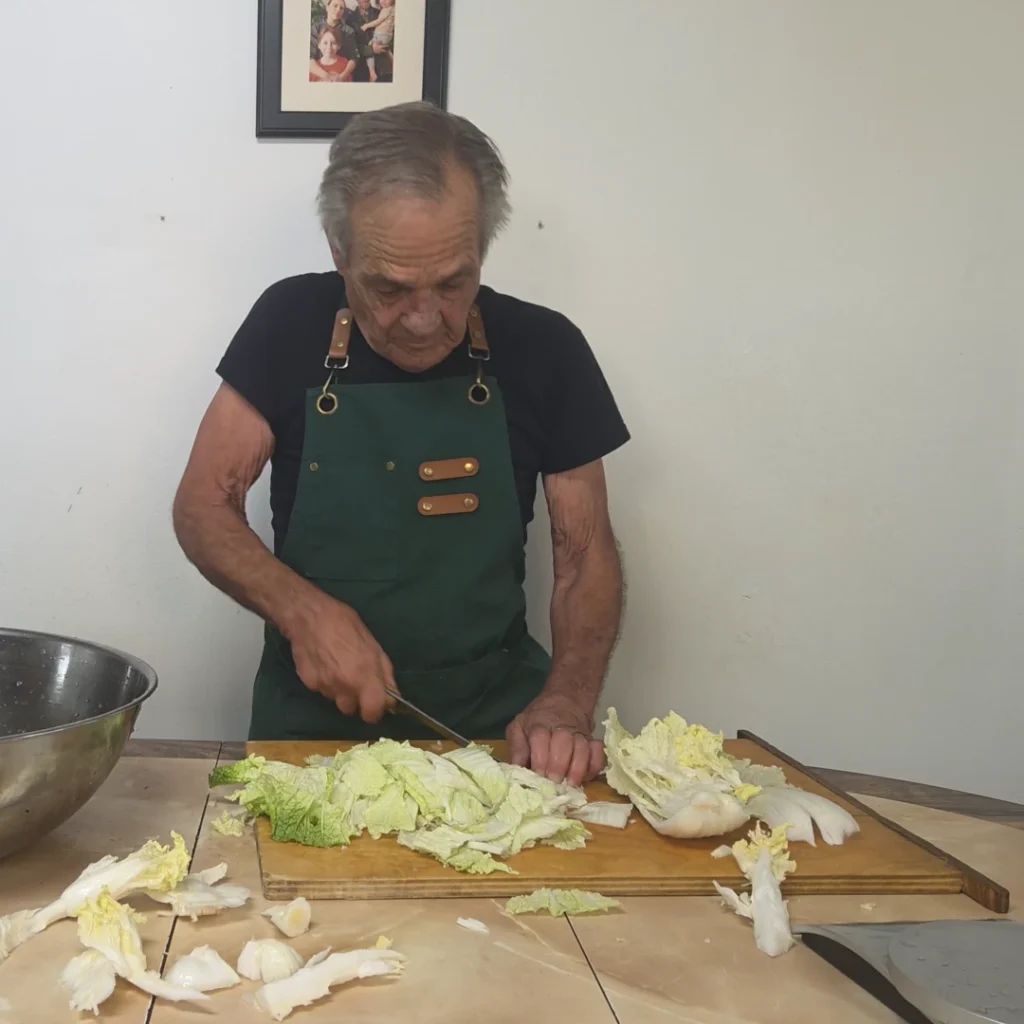
I mixed the cabbage with ¾ cup of pickling salt and let it sit for 2 hours. Every half hour I gave it a good stir so the salt could work its way through the cabbage.
After the two hours were up, I thoroughly rinsed the cabbage three times to remove the excess salt, then drained it well.
While the cabbage was salting, I prepared the other vegetables. I cut 4½ medium carrots and 12 ounces of daikon radish into matchsticks. I also chopped 10 green onions into pieces about 1 inch long.
Normally, I would have used a pear in the kimchi paste, but I didn’t have any on hand. Instead, I used two apples and pureed them.
I mixed the pureed apples with 4½ tablespoons of fish sauce, 1¼ teaspoons of sugar, 9 minced garlic cloves, 2½ teaspoons of grated ginger and 1 cup of Gochugaru, which is Korean chili flake.
Once the paste was mixed, I added the cabbage, carrots, daikon and green onions. I mixed everything together until the vegetables were evenly coated with the red paste.
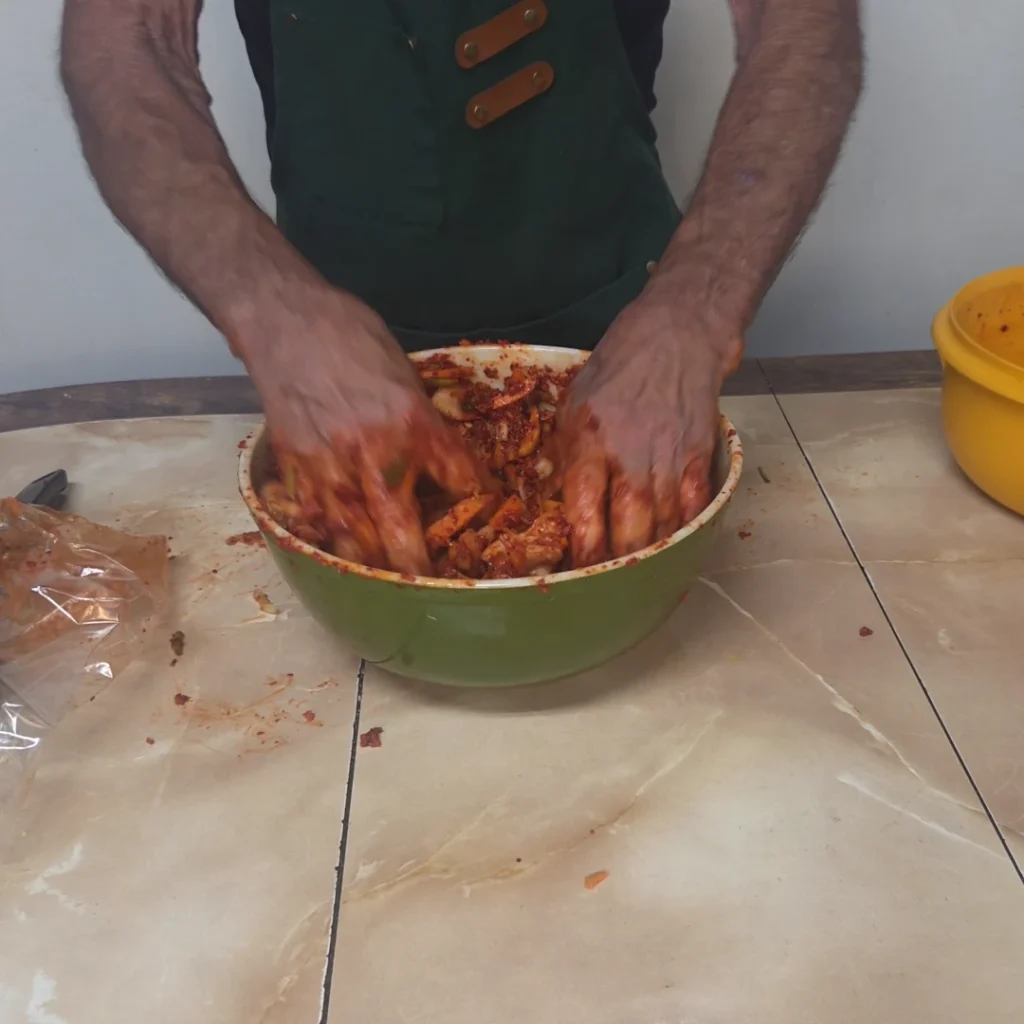
Then it was time to pack it into the jar.
I packed everything tightly into a 1-gallon jar, pressing it down as I went. Once it was packed, I covered it with cabbage leaves and put the lid on loosely. The fermentation produces gas, so I didn’t want to seal the jar tightly and trap that pressure inside.
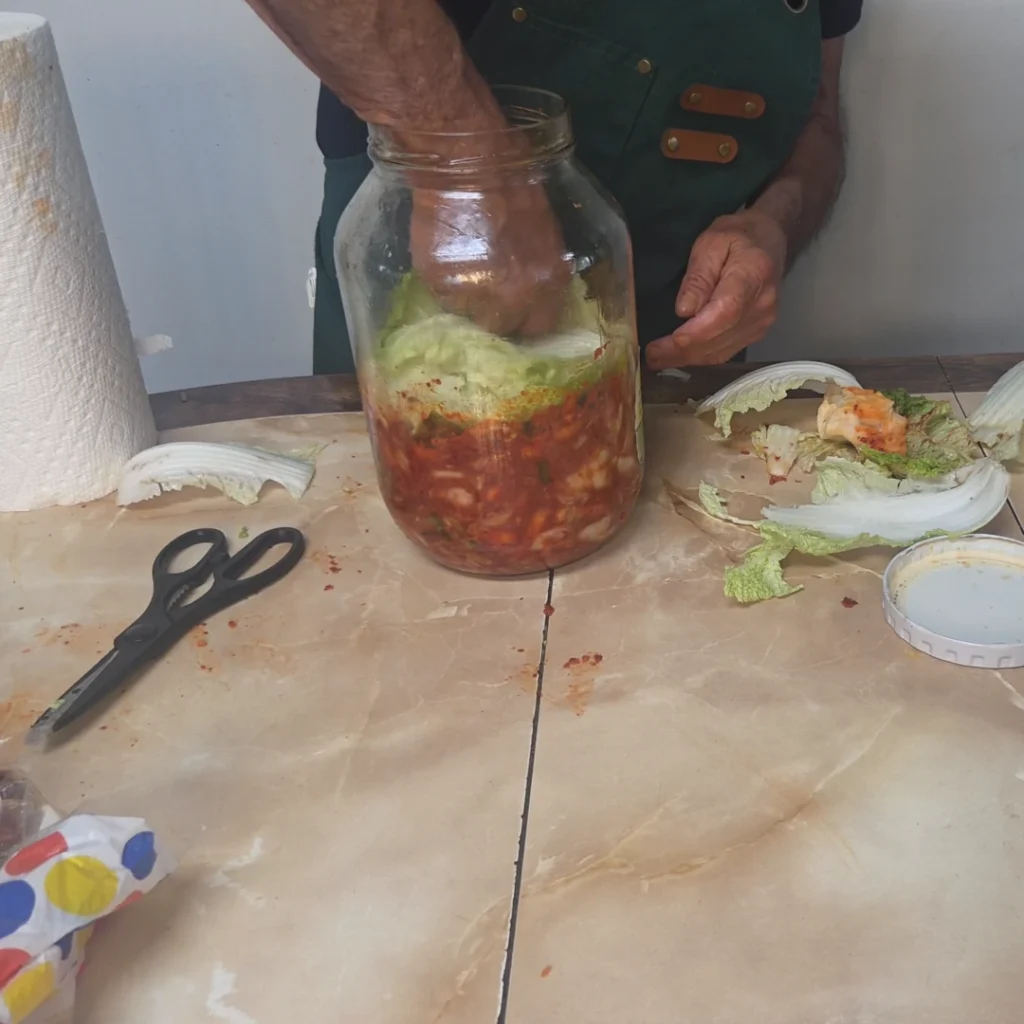
I put the jar downstairs where the temperature averaged about 19°C and let it ferment.
After about 40 hours, I tasted it. It was already good at that point, but I decided to leave it for another day to let the fermentation develop a little more.
After that extra day, I moved the kimchi into 1-quart jars. I find the smaller jars much easier to store in the refrigerator and they’re more convenient to use a little at a time.
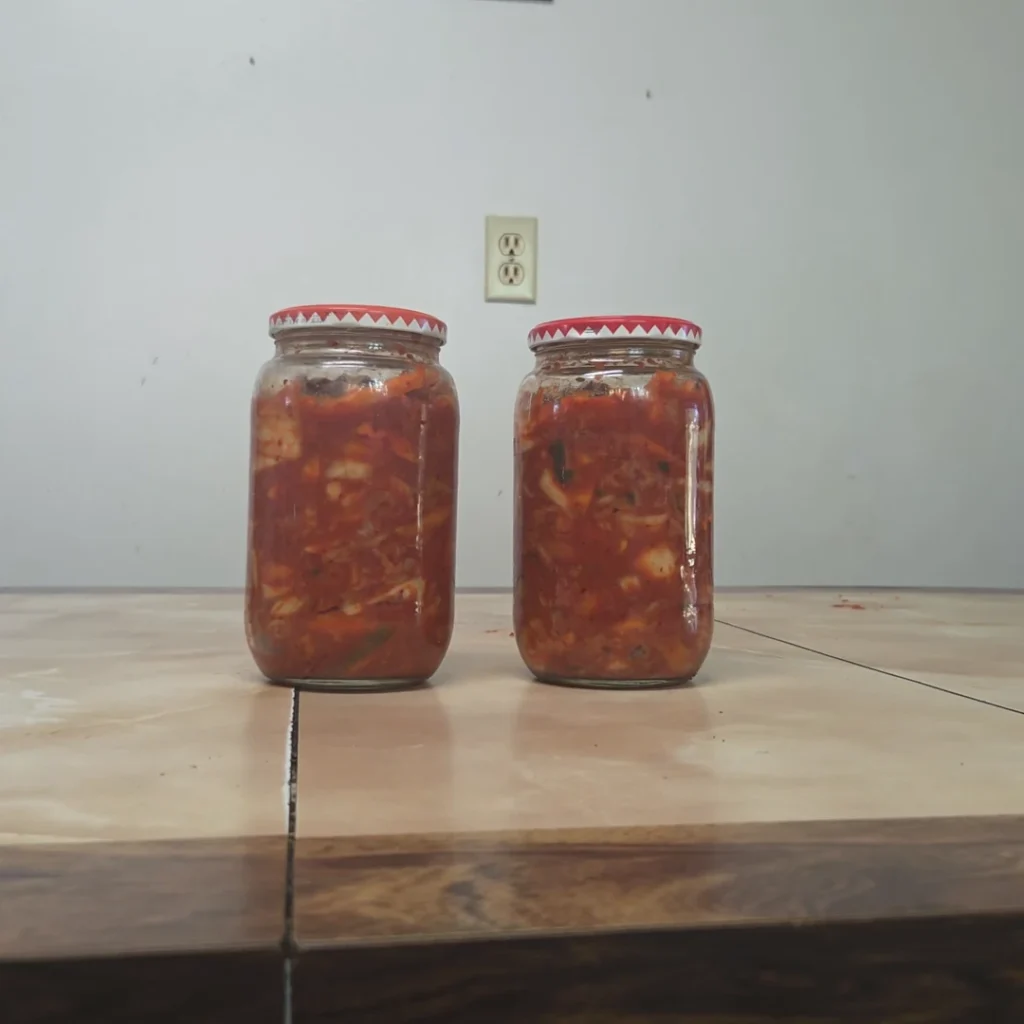
And that’s really all there is to this version of kimchi. There’s no need to spend the time working the paste into every individual cabbage leaf. Cutting everything into pieces, mixing it together and letting it ferment gives you a simple batch of homemade kimchi without making the process more complicated than it needs to be.
Have you ever used apples instead of pears in kimchi? I’d be interested to hear how your batch turned out.
Easy Kimchi
Kimchi made with Chinese cabbage, daikon, carrots and green onions, mixed with a homemade spicy paste and left to ferment.
Ingredients
- Chinese cabbage: 3 lbs 5 oz, chopped into 1 to 2-inch pieces
- Coarse pickling salt: ¾ cup (12 tablespoons)
- Gochugaru (Korean chili flakes): 1 cup
- Carrots: 4½ medium, cut into thin matchsticks
- Daikon radish: 12 oz (340 g), cut into matchsticks
- Asian pears: 1½ medium, peeled, cored and pureed
- Fish sauce: 4½ tablespoons
- Granulated sugar: 2¼ teaspoons
- Green onions: 9 to 12, cut into 1-inch pieces
- Garlic: 9 cloves, minced
- Fresh ginger: 2¼ tablespoons, grated
Instructions
Salt the Cabbage
Put the chopped cabbage into a large glass or stainless steel bowl. Sprinkle the pickling salt evenly over the cabbage and toss it thoroughly with your hands so the salt is well distributed.
Leave the cabbage at room temperature for 2 hours. Give it a good stir every 30 minutes while it is salting.
Rinse the Cabbage
Drain the cabbage in a colander, then rinse it thoroughly under cold running water three times to remove the excess salt.
Let the cabbage drain for about 15 minutes, then gently press it down with your hands to remove any excess water.
Make the kimchi Paste
In a large bowl, combine the pureed Asian pears, fish sauce, sugar, minced garlic, grated ginger and Gochugaru. Mix everything together until you have a thick red paste.
Add the Vegetables
Add the carrots, daikon and green onions to the paste and mix until the vegetables are evenly coated.
Add the drained cabbage and mix everything together thoroughly until the cabbage and vegetables are evenly covered with the red paste.
Pack and Ferment
Pack the kimchi tightly into a 1-gallon jar, pressing it down as you go. Loosely secure the lid so that gas produced during fermentation can escape.
Leave the jar at approximately 18°C to ferment. Taste it after about 40 hours. If the flavour is where you want it, it can be moved to the refrigerator. If you want a little more fermentation, leave it for another day before refrigerating.
Notes
Once fermentation is finished, the kimchi can be transferred to smaller jars for easier storage in the refrigerator.
If you don’t have Asian pears, you can substitute apples. I used two apples in place of the pears in this batch and pureed them before adding them to the kimchi paste.
Frequently Asked Questions
Can I use apples instead of Asian pears?
Yes. I used two apples in this batch because I didn’t have any pears. I pureed them before adding them to the kimchi paste.
How long should kimchi ferment?
There isn’t one exact time that works for every batch. I fermented this batch at about 19°C, tasted it after 40 hours, and left it for another day because I wanted a little more fermentation.
Why is this called easy kimchi?
Instead of leaving the cabbage in large sections and working the paste into each individual leaf, the cabbage is chopped into pieces and everything is mixed together. It saves quite a bit of work.
What temperature should kimchi ferment at?
I fermented this batch at an average temperature of about 19°C. The warmer the room, the faster fermentation can progress, so the best way to judge it is by tasting it as it develops.
How do I know when my kimchi is ready?
Taste it. When the flavour and level of fermentation are where you want them, move the kimchi to the refrigerator to slow the fermentation.
Why do I leave the jar lid loose while kimchi ferments?
Fermentation produces gas. Leaving the lid loose gives that gas a way to escape instead of allowing pressure to build up inside the jar.

Leave a Reply