
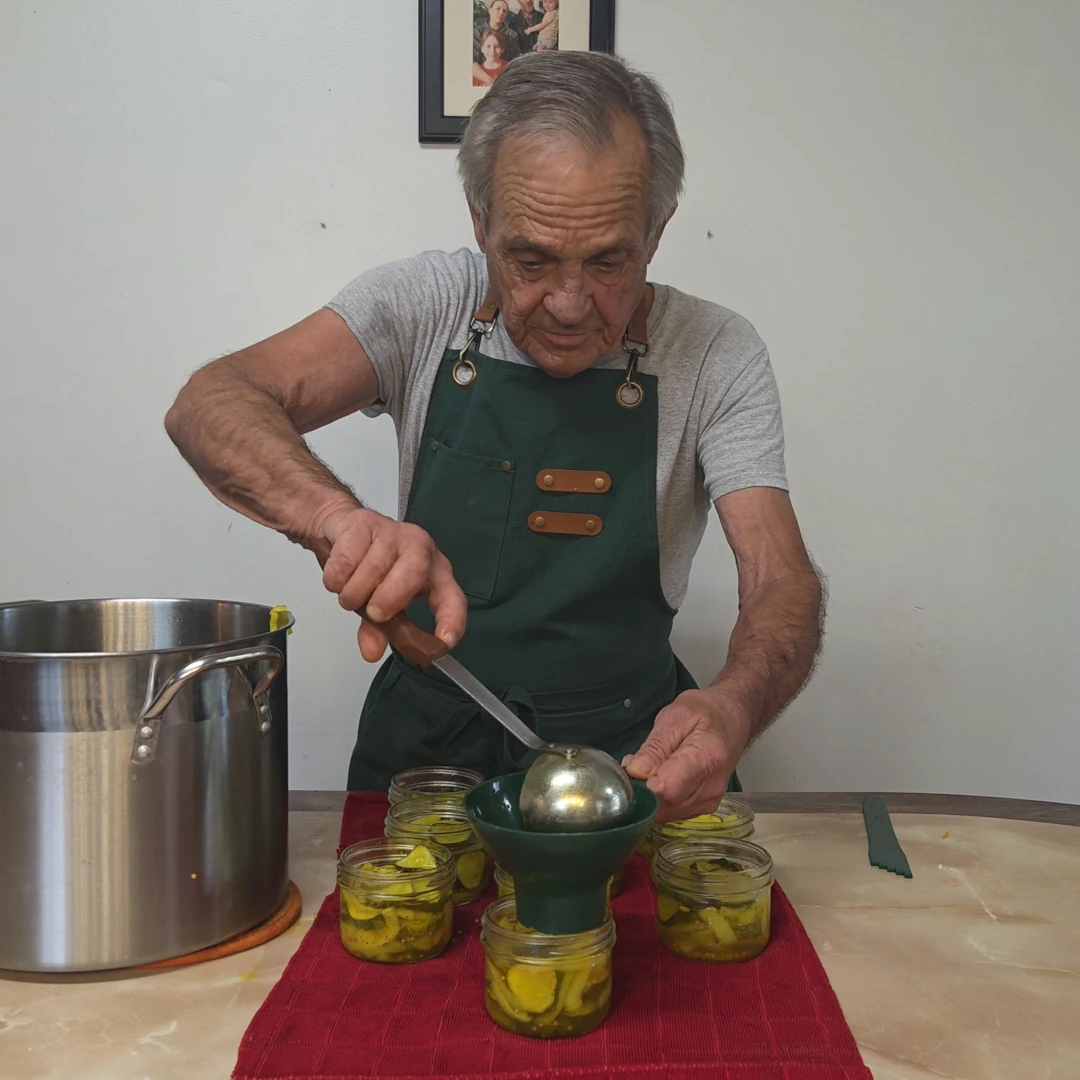
Bread and butter pickles are one of those things I like making when the garden starts giving me more cucumbers than I can use fresh. They’re fairly simple to put together, and they’re a good way to turn some of those garden cucumbers into something that will keep on the shelf.
I picked a little over 2 kg, or about 4½ pounds, of cucumbers from the garden thinking that should give me the 10 cups of sliced cucumbers called for in the recipe. I was wrong. I only needed about 3 pounds of cucumbers to get the 10 cups I needed.
That left me with some extra cucumbers, but at least I knew how much I actually needed for the next batch. Once the cucumbers were sliced, I sliced 4 medium onions and added them to the cucumbers.
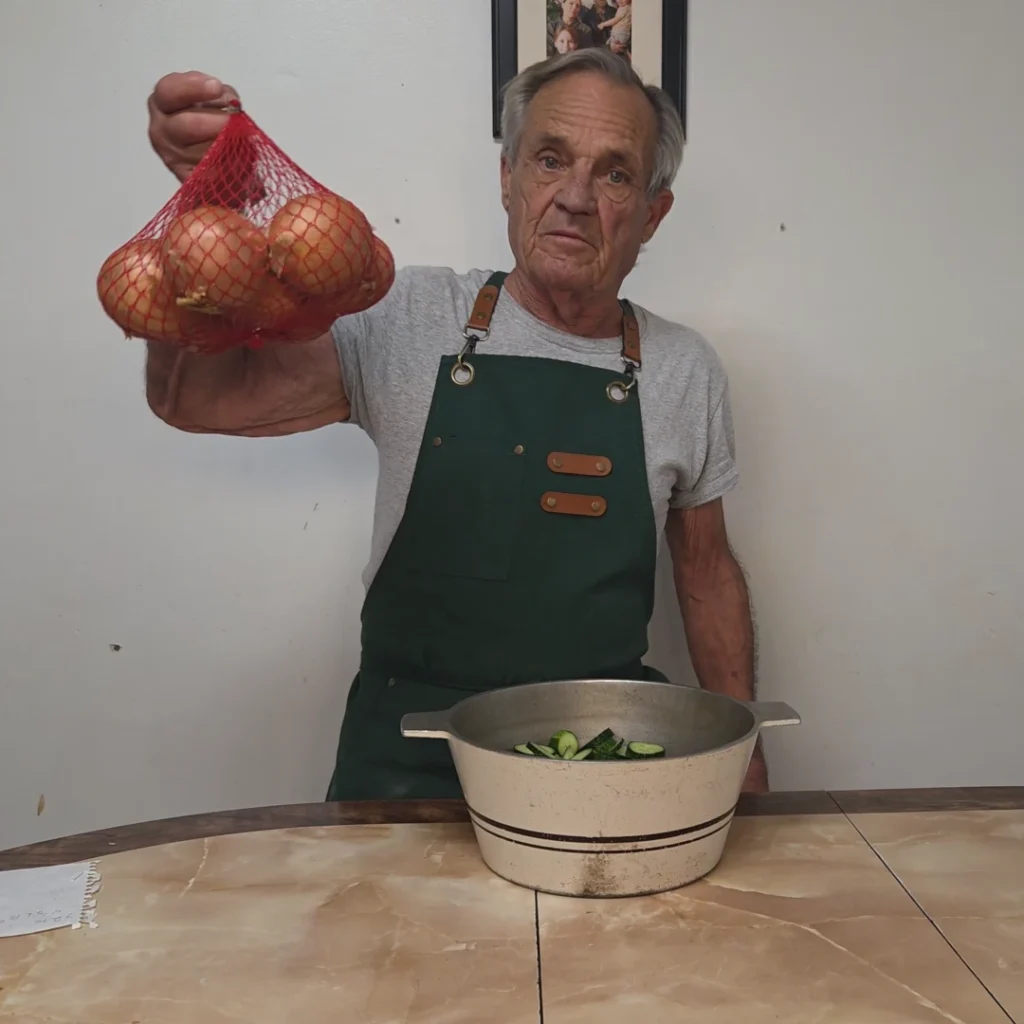
I added ½ cup of pickling salt and mixed everything together. Then I covered the cucumber and onion mixture with cold water and left it at room temperature for 2 hours.
After the 2 hours, I drained the vegetables and rinsed them thoroughly to remove the excess salt.
For the pickling liquid, I used a 3-gallon pot and stirred together 3 cups of white vinegar, 2 cups of granulated sugar, 2 tablespoons of mustard seed, 1 teaspoon of celery seed, and 1 teaspoon of turmeric. I brought the mixture to a boil, stirring until the sugar had completely dissolved.
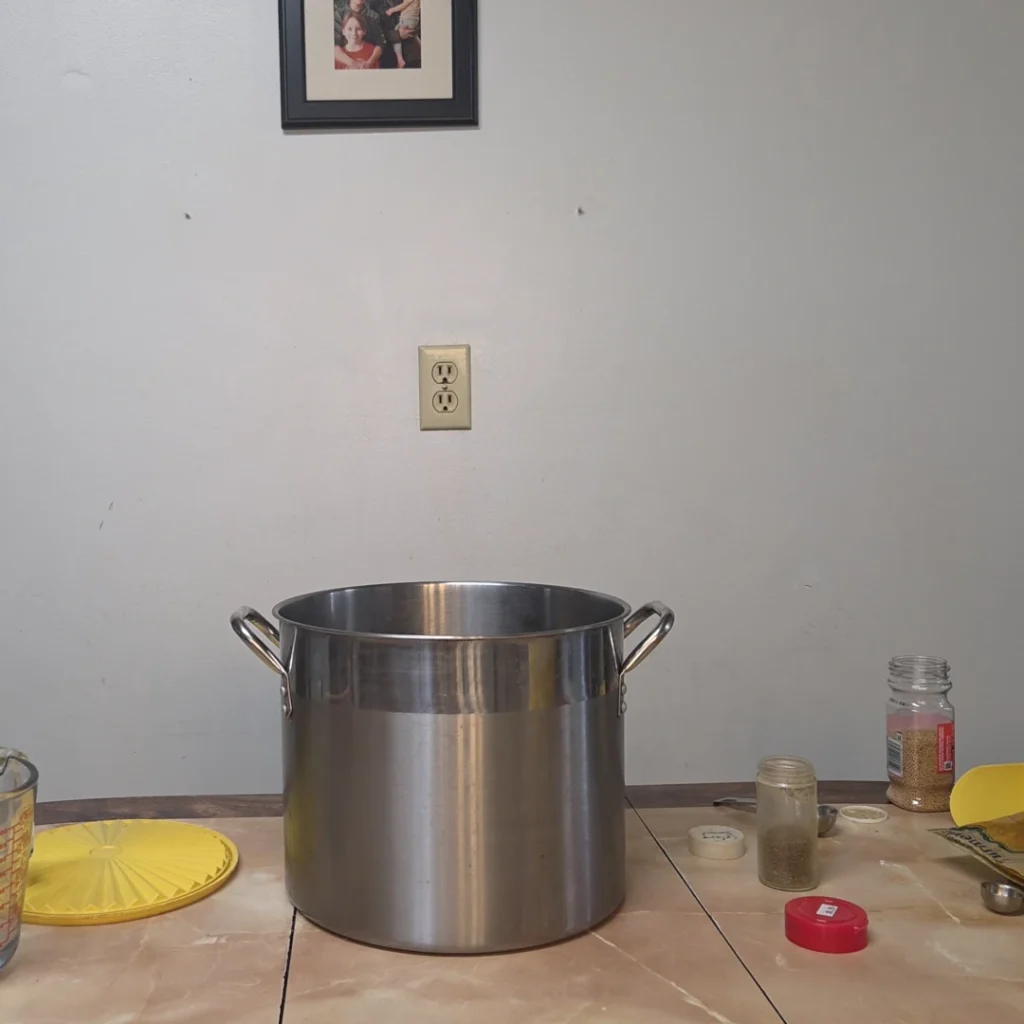
Once the liquid was boiling, I stirred in the cucumbers and onions and brought everything back to a boil.
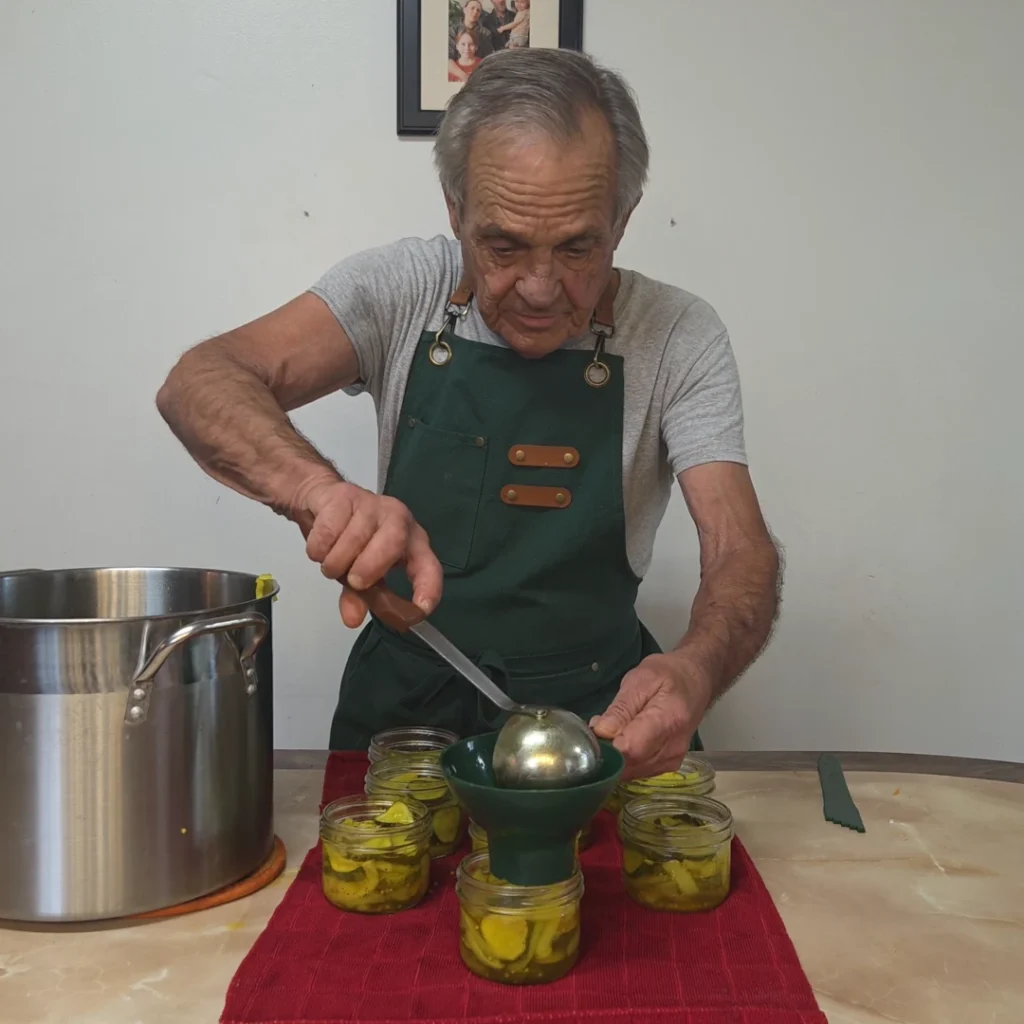
From there, I filled 10 half-pint jars with the vegetables, leaving a generous ½ inch of headspace. I then topped each jar up with the hot pickling liquid, again leaving ½ inch of headspace.
I removed any air bubbles from the jars and checked the headspace again. I wiped the rims with a paper towel dampened with vinegar, put the lids on, and tightened the bands to fingertip tight.
I put the jars into the canner using two layers, with a rack between the layers. I also added some vinegar to the canner water to help prevent the jars from becoming cloudy.
I added hot water to the canner until the jars were covered by a little more than 1 inch of water and put the lid on.
The recipe called for a 10-minute boiling-water-bath process at elevations under 1,000 feet. Since I live at a higher elevation, I adjusted the processing time to 15 minutes. I’ve put the altitude adjustments in the recipe notes so you can adjust the processing time for your own elevation.
Once the water came to a boil, I started the timer. After 15 minutes, I turned off the heat and opened the lid. I waited another 5 minutes before removing the jars from the canner.
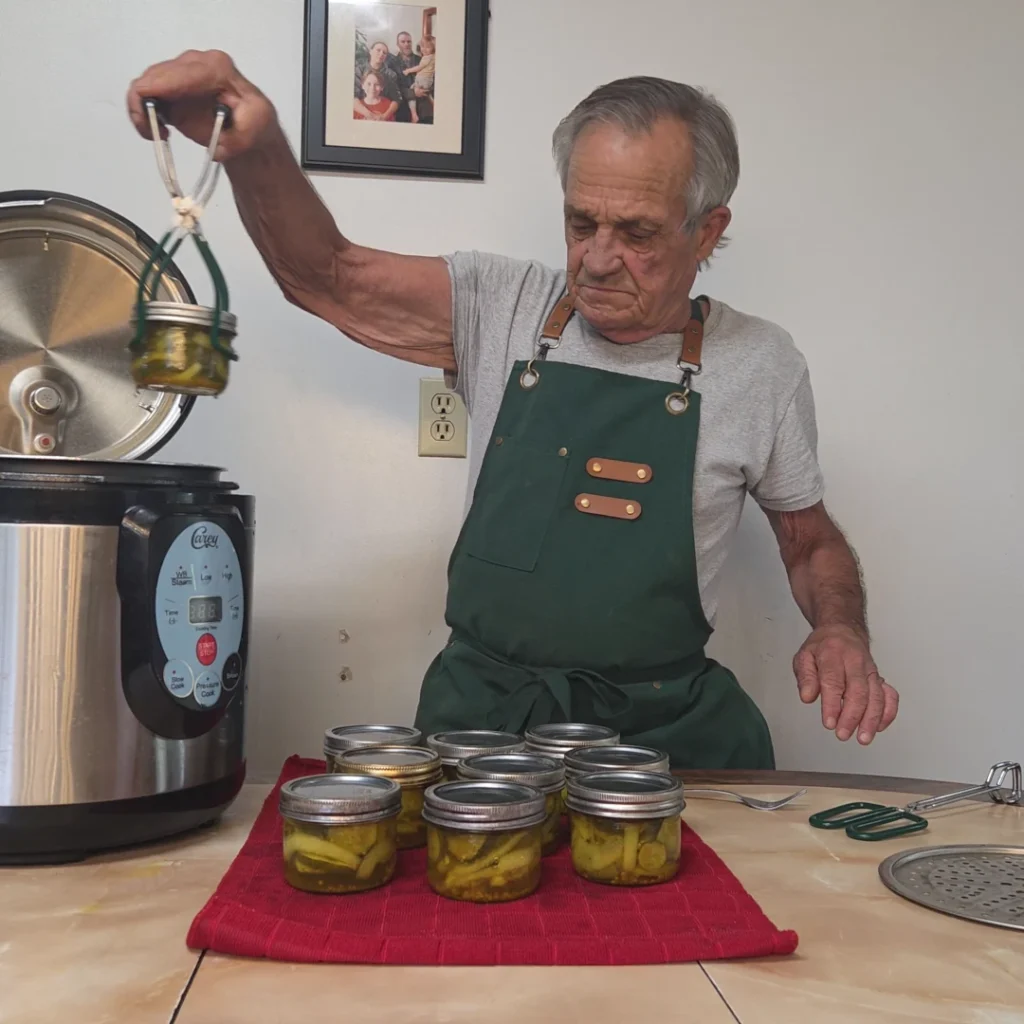
The next morning, all 10 jars were sealed.
I gave the pickles a full week before opening a jar to see how they turned out. They are very good. The cucumbers have a nice crunch, and the combination of the vinegar, sugar, mustard seed, celery seed, and turmeric gives them the sweet and tangy flavor I was looking for.
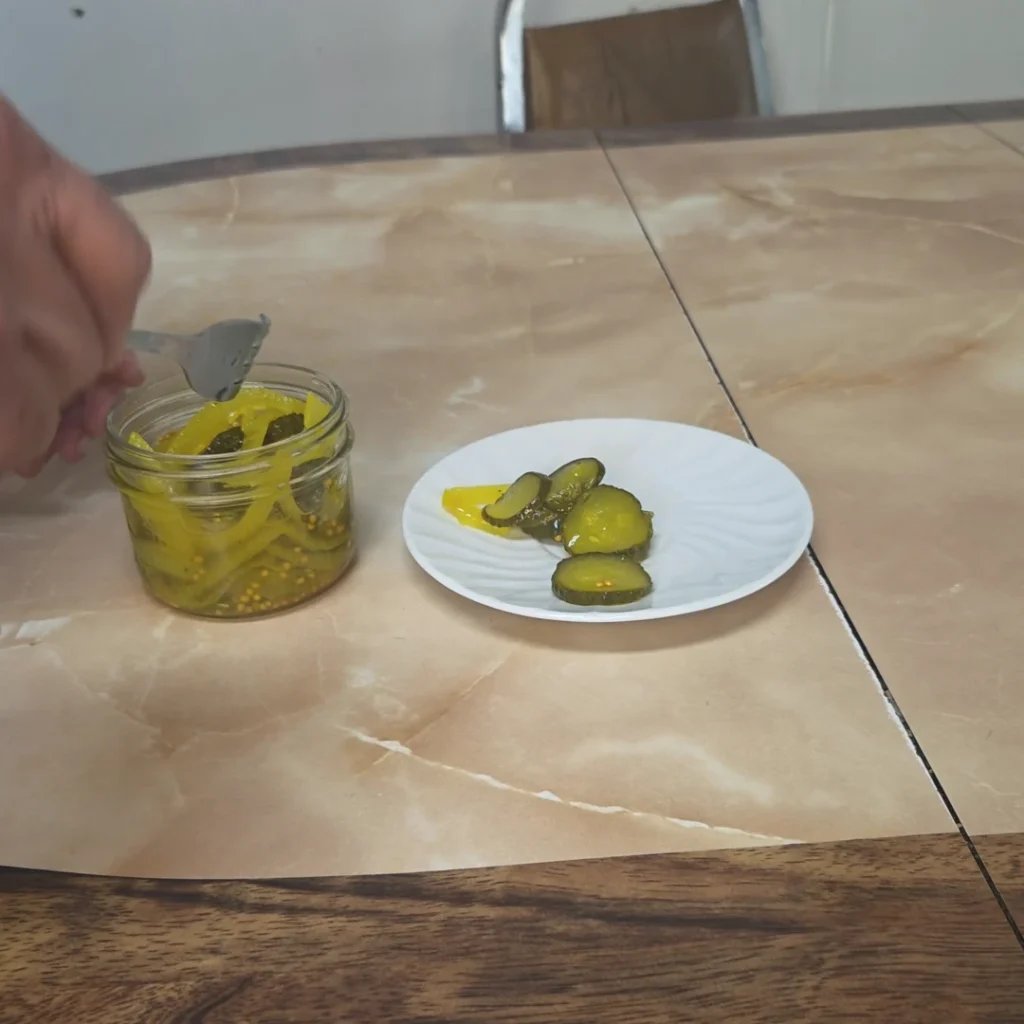
If you have more cucumbers coming out of the garden than you know what to do with, these bread and butter pickles are a good way to put some of them away. Just remember that you may not need as many cucumbers as you expect to get the 10 cups of sliced cucumbers called for in the recipe. For me, 3 pounds was enough.
Bread and Butter Pickles
Makes: About 5 pints (500 ml) or 10 half-pint (250 ml) jars
Ingredients
- 10 cups sliced, trimmed cucumbers (approximately 3 lbs)
- 4 medium onions, thinly sliced
- 1/2 cup coarse pickling salt
- 3 cups white vinegar
- 2 cups granulated sugar
- 2 tbsp mustard seed
- 1 tsp celery seed
- 1 tsp turmeric
- 1 tsp Pickle Crisp (optional)
Instructions
- Combine cucumber slices, onion slices and salt in a glass or stainless steel bowl. Mix well, cover with cold water and let stand for 2 hours. Drain and rinse thoroughly.
- Combine vinegar, sugar, mustard seed, celery seed and turmeric in a large stainless steel saucepan. Bring to a boil, stirring frequently to dissolve the sugar.
- Add the vegetables to the vinegar mixture and return to a boil.
- Meanwhile, place the jars in hot water to heat them.
- Pack the pickle mixture into hot jars, leaving a generous 1/2 inch of headspace.
- Add the hot pickling liquid to cover the pickles, again leaving 1/2 inch of headspace. If using Pickle Crisp, add 1/8 tsp to each jar.
- Remove air bubbles and adjust the headspace if required by adding more hot pickling liquid.
- Wipe the jar rims clean. Center the lids on the jars and screw the bands on fingertip tight.
- Place the jars in the canner and ensure they are covered by at least 1 inch of water.
- Cover the canner and bring the water to a full rolling boil before starting the processing time. Process the filled jars for 10 minutes, adjusting the processing time for altitude as indicated in the notes.
- When the processing time is complete, remove the canner lid and wait 5 minutes before removing the jars. Cool and store.
Notes
Boiling-Water Canning Altitude Adjustments: Processing times are based on elevations of 1,000 feet (305 m) or less. If you are above 1,000 feet, increase the processing time according to the table below.
| Elevation | Add to Processing Time |
|---|---|
| 1,001–3,000 ft (306–914 m) | 5 minutes |
| 3,001–6,000 ft (915–1,829 m) | 10 minutes |
| 6,001–8,000 ft (1,830–2,438 m) | 15 minutes |
| 8,001–10,000 ft (2,439–3,048 m) | 20 minutes |
For example, a recipe with a 10-minute processing time would be processed for 15 minutes at an elevation between 1,001 and 3,000 feet.
Cucumber amount: The 3 pounds of cucumbers is approximate. The important measurement for this recipe is 10 cups of sliced, trimmed cucumbers.
Pickle Crisp: Pickle Crisp is optional. If using it, add 1/8 tsp to each jar rather than adding it to the pickling liquid.
Print RecipeFrequently Asked Questions
How many cucumbers do I need to make bread and butter pickles?
You need about 3 pounds of cucumbers to make the 10 cups of sliced, trimmed cucumbers called for in this recipe. The exact amount can vary depending on the size and shape of the cucumbers, so measure the sliced cucumbers rather than relying only on weight.
How many jars does this bread and butter pickle recipe make?
This recipe makes about 5 pints (500 ml) or 10 half-pint (250 ml) jars.
How long do bread and butter pickles need to be processed?
Process the filled jars for 10 minutes in a boiling-water canner at elevations of 1,000 feet (305 m) or less. If you are above 1,000 feet, increase the processing time according to the altitude adjustment table in the recipe notes.
How much headspace do bread and butter pickles need?
Leave 1/2 inch of headspace in each jar after adding the cucumbers and hot pickling liquid.
Can I use Pickle Crisp in bread and butter pickles?
Yes. Pickle Crisp is optional in this recipe. If you use it, add 1/8 teaspoon to each jar before processing.
Why are the cucumbers soaked in salt water first?
Soaking the cucumbers in salt water helps draw out excess moisture before they are added to the pickling liquid. This helps the cucumbers hold their texture and keeps them from adding too much water to the pickling liquid.
How long should I wait before eating bread and butter pickles?
The pickles can be eaten after processing, but allowing them to sit for at least a week gives the cucumbers and onions time to absorb the pickling liquid and develop more flavour.
How should I adjust the processing time for altitude?
At elevations between 1,001 and 3,000 feet, add 5 minutes to the 10-minute processing time. Add 10 minutes at 3,001–6,000 feet, 15 minutes at 6,001–8,000 feet, and 20 minutes at 8,001–10,000 feet.

Leave a Reply