
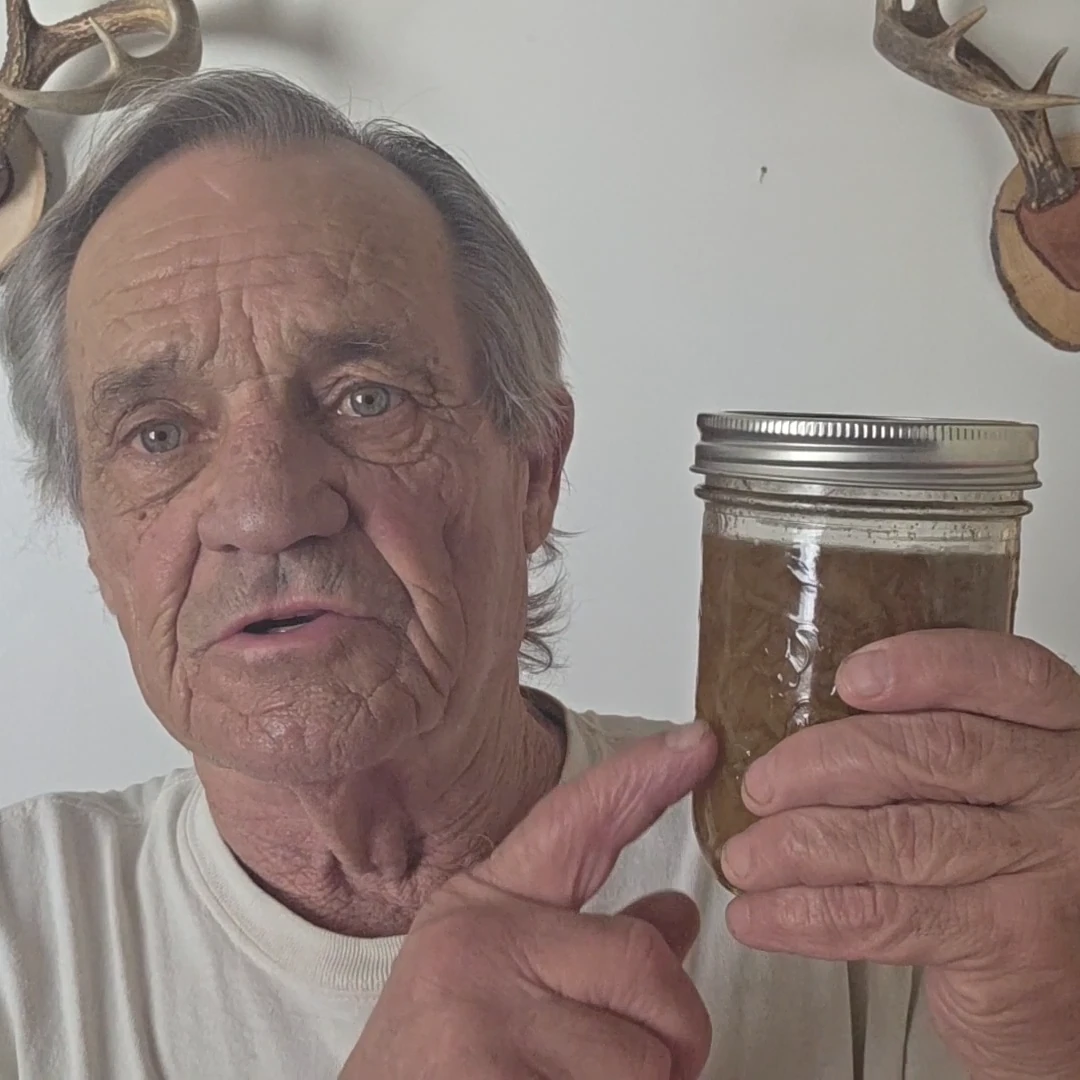
I wasn’t totally sold on this one going in. French onion soup isn’t something I usually can, and it uses a couple ingredients I tend to avoid. Olive oil and wine are both things I normally swap out, but this time I stuck pretty close to the Ball recipe and just cut the batch in half to play it safe.
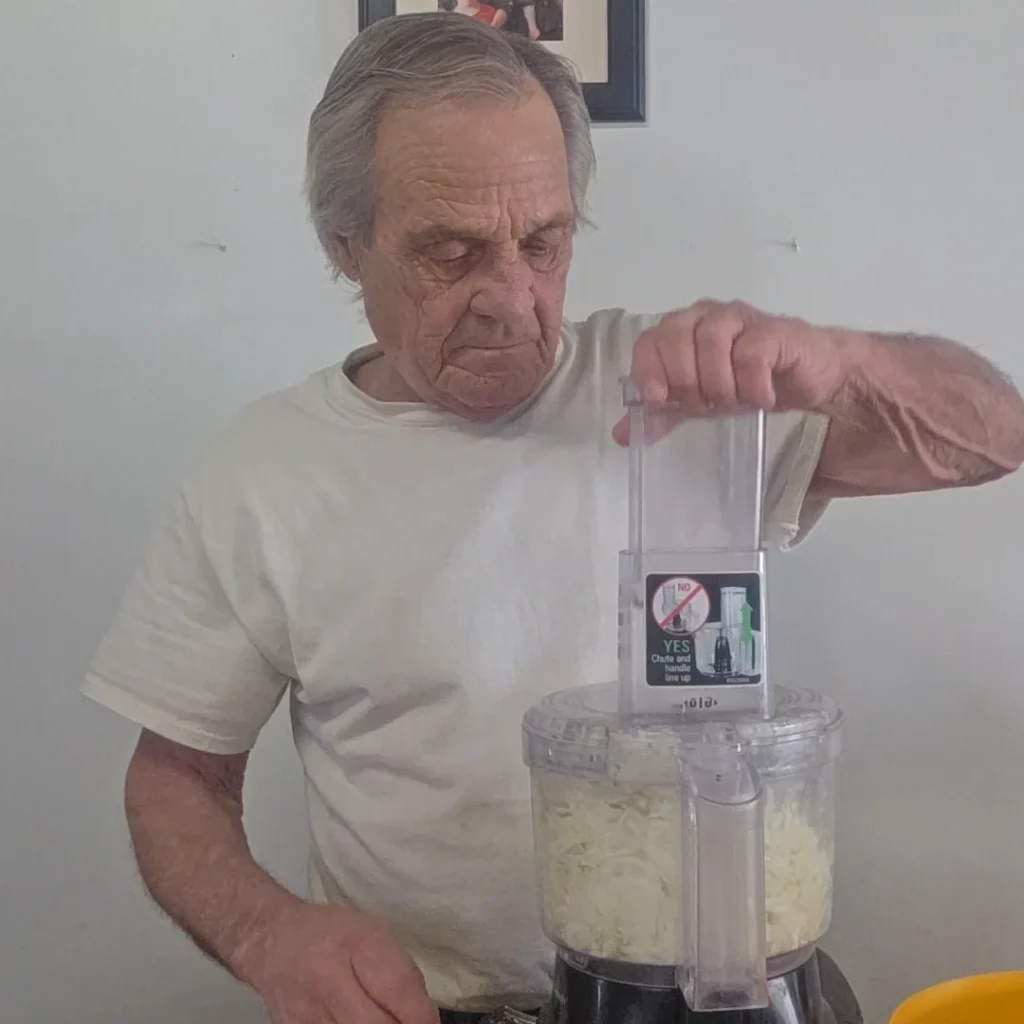
I started by running 2 pounds of yellow onions through the food processor to slice them up. That saves a pile of time and a lot of tears. From there I heated 2 tablespoons of olive oil in a large pot. I almost reached for canola like I usually do, but decided to follow the recipe as written.
Once the oil was hot, I added the onions, 1 tablespoon of pickling salt, and 1/2 teaspoon of black pepper. I stirred everything well, covered the pot, and cooked it on medium low for 1 hour. I stirred occasionally to keep the onions from sticking or burning on the bottom.
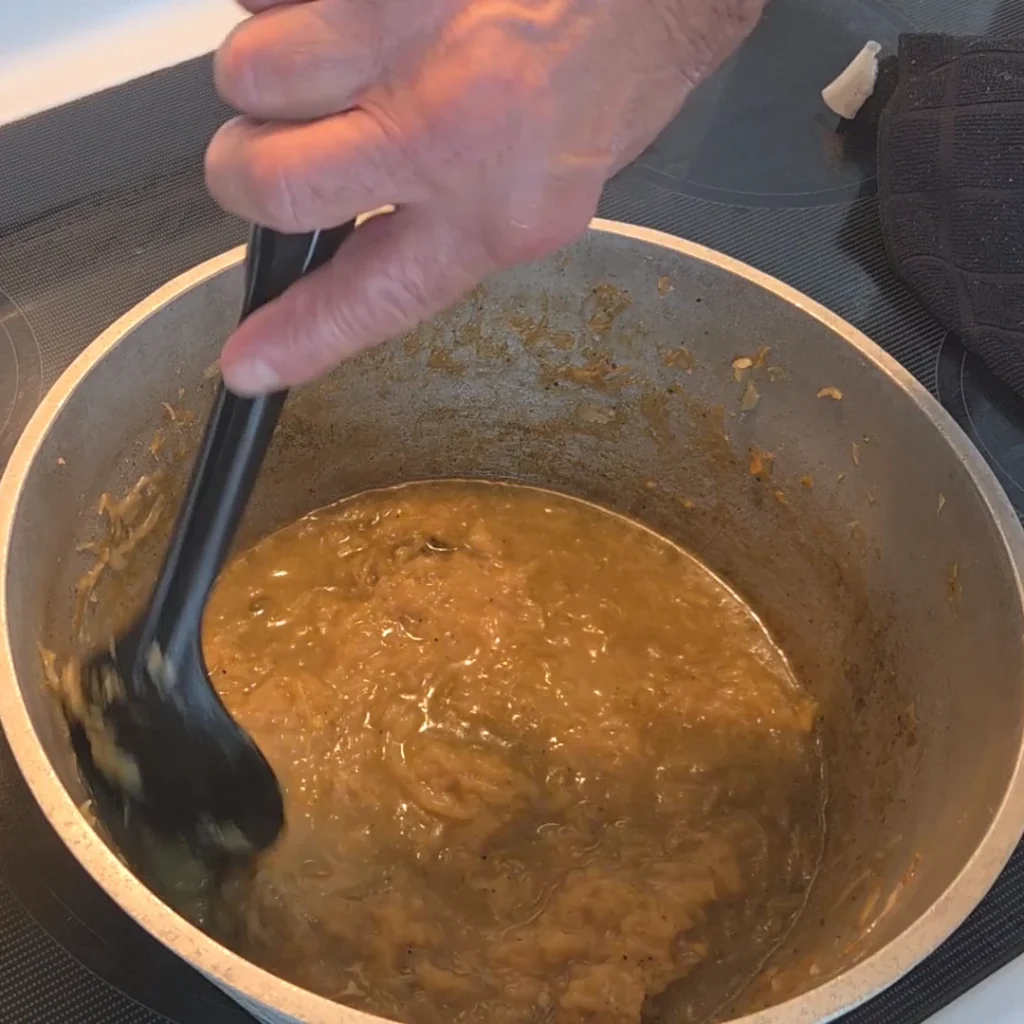
After 1 hour, the onions were soft. I removed the lid and continued cooking until the onions were caramelized. This took just over 1 hour, and I stirred frequently to build color evenly without scorching.
Once the onions were fully caramelized, I added 1 1/2 cups of dry white wine and 1/2 teaspoon of thyme. I let it simmer until the wine reduced almost completely, scraping the bottom of the pot to lift all the browned bits.
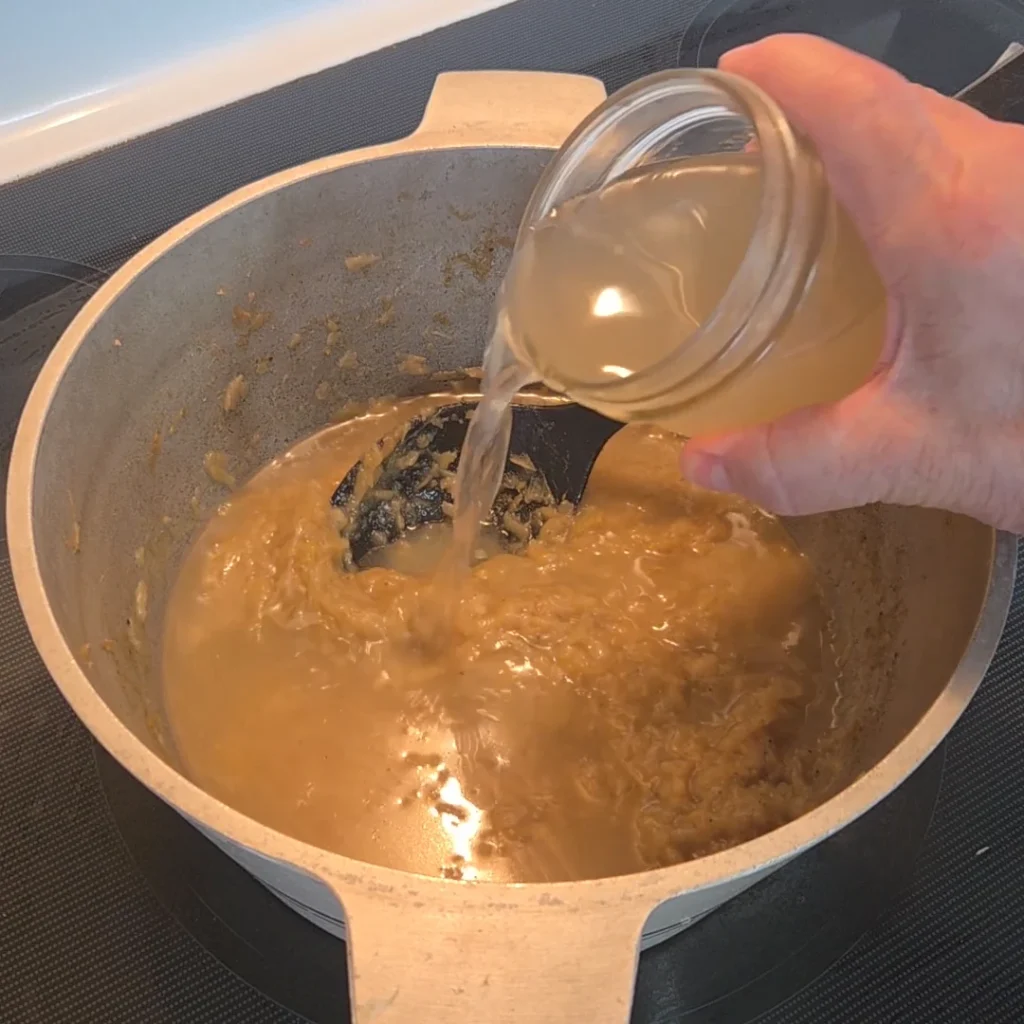
I added 3 pints of homemade beef broth, brought the pot to a boil, then reduced the heat and simmered uncovered for 15 minutes.
While the soup simmered, I placed 5 pint jars in hot water to heat for filling.
Once simmering finished, I filled the jars leaving exactly 1 inch of headspace. I wiped the rims with a paper towel dampened with vinegar, placed the lids on, and tightened the bands finger tight.
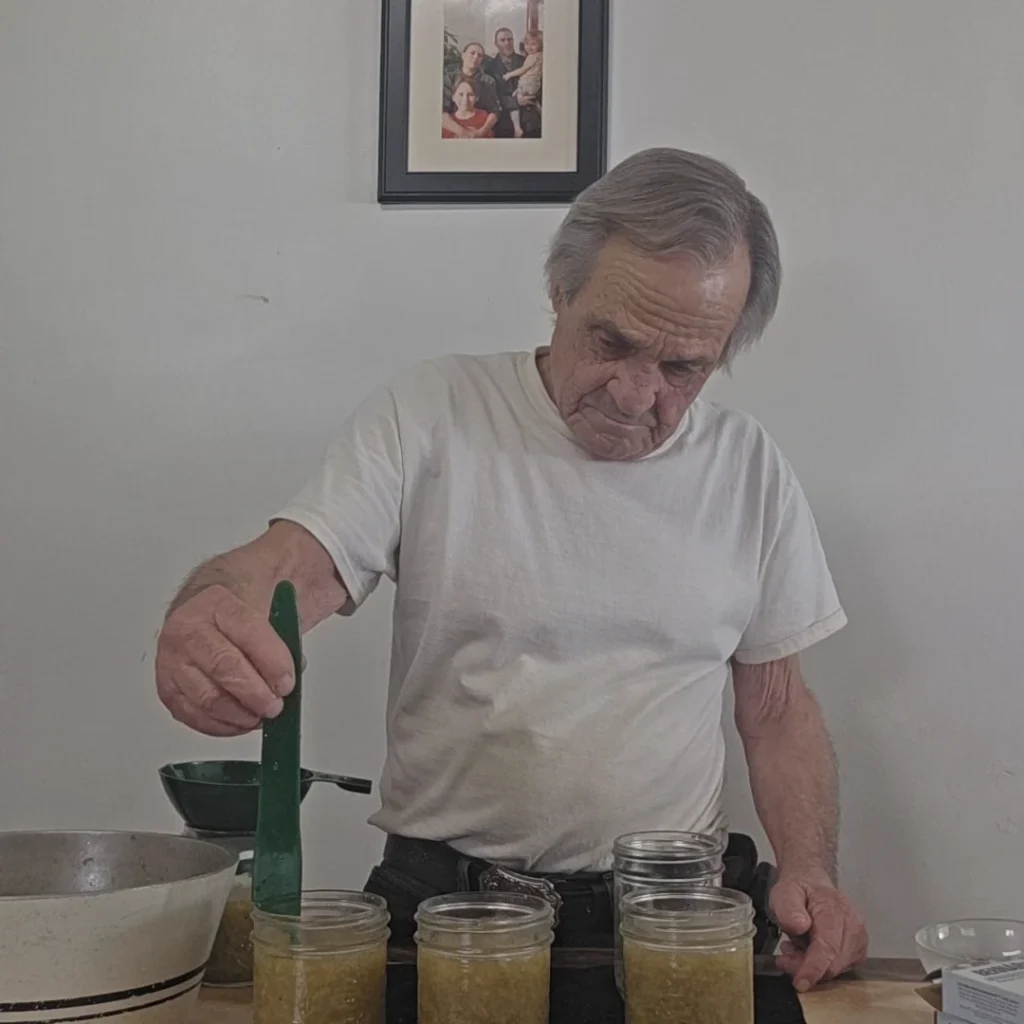
The yield was 3 1/2 pints, so I filled 2 additional jars with water and used lids to balance the load in the canner.
I added water to the pressure canner following my canner’s instructions, along with a splash of vinegar to help reduce clouding on the jars.
I vented the canner for 10 minutes, then processed at pressure for 60 minutes for pints or 75 minutes for quarts using a Carey electric pressure canner.
When the cycle finished, the canner shut off. I let it sit for 1 hour until fully depressurized.
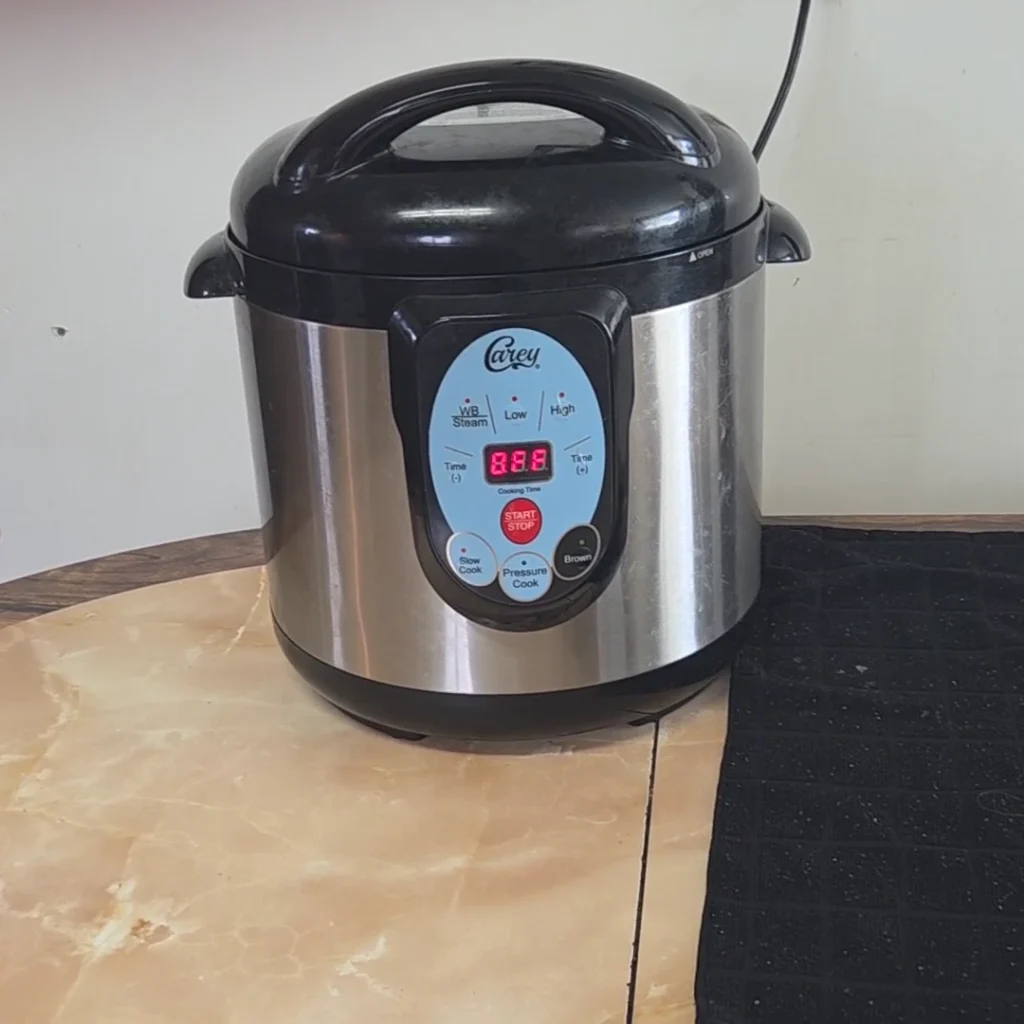
I opened the lid and let the jars rest in the canner for 10 minutes before removing them.
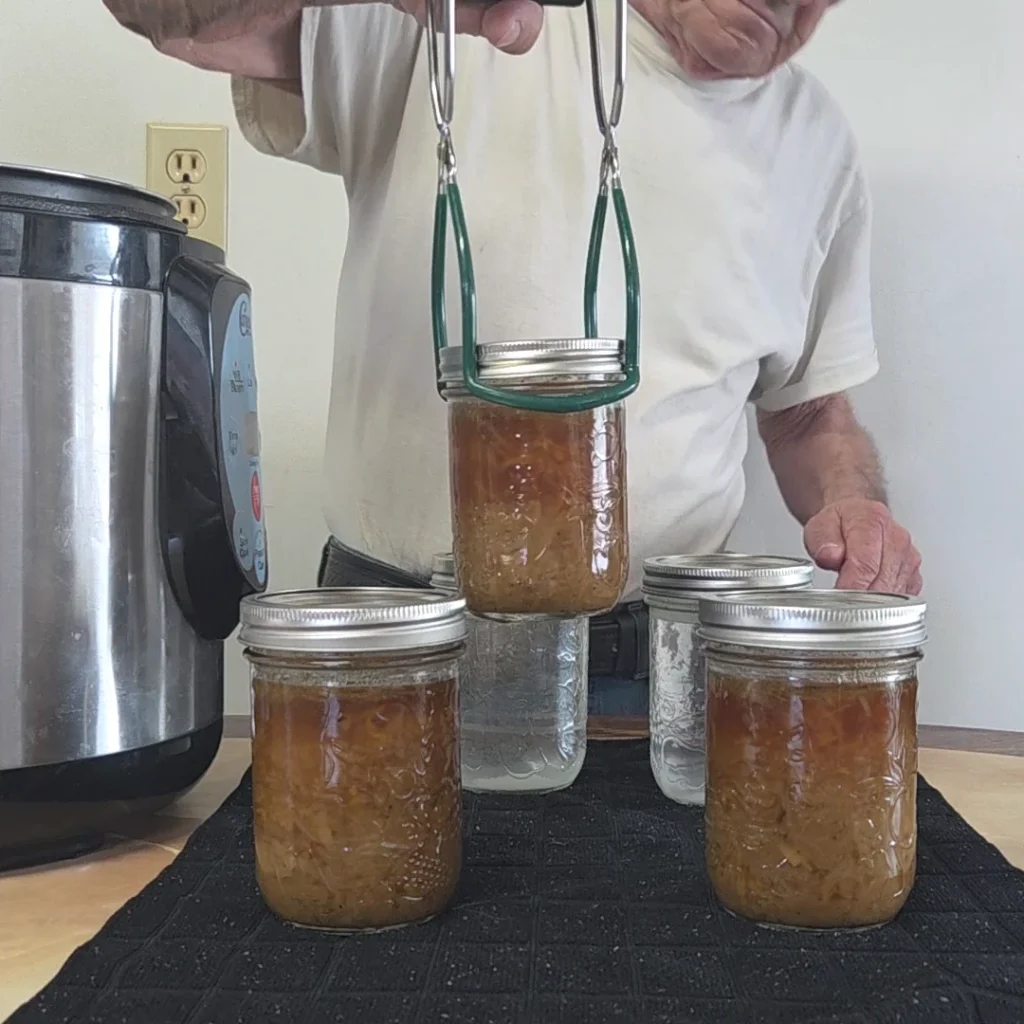
The next morning, I found one jar did not seal. That jar went straight into the refrigerator for tasting.
The flavor surprised me. Even with olive oil and wine, the soup turned out rich and balanced. It tasted like proper French onion soup.
Next time, I will run a full batch instead of cutting it in half.
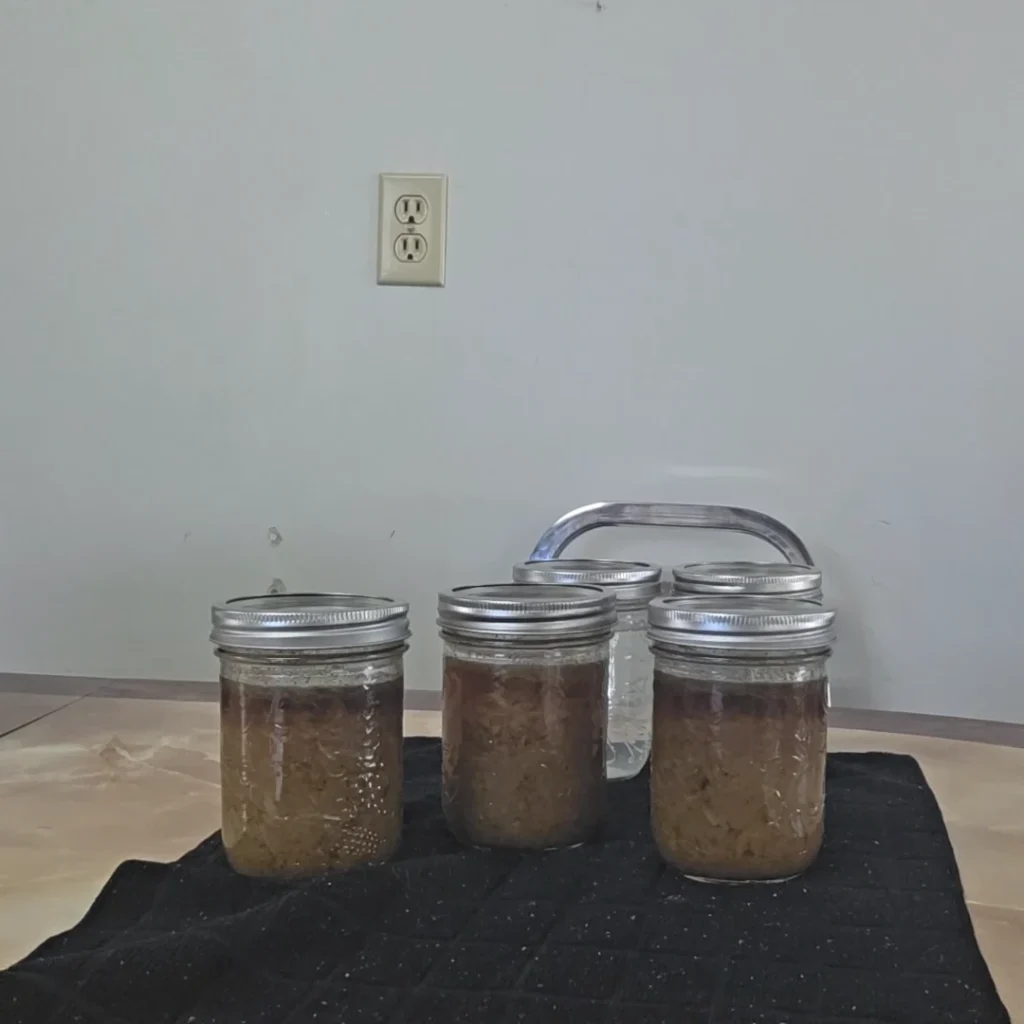
Canned French Onion Soup
Yield: 8 pints or 4 quarts
Ingredients
- 1/4 cup olive oil
- 4 lb thinly sliced onions
- 1 tablespoon salt
- 1 teaspoon black pepper
- 1 teaspoon dried thyme
- 3 cups dry white wine
- 3 quarts beef stock (chicken or vegetable stock can be substituted)
Instructions
- Heat olive oil in a large pot over medium-low heat.
- Stir in onions, salt, and black pepper.
- Cover and cook for 1 hour, stirring often, until onions are tender.
- Uncover and continue cooking, stirring constantly, until onions are caramel colored.
- Stir in thyme and wine, scraping the bottom of the pot to loosen browned bits.
- Simmer for 10 minutes or until wine has reduced to almost dry.
- Stir in broth and bring to a boil, then reduce heat and simmer for 15 minutes.
- Meanwhile, place jars in hot water to keep them hot for filling.
- Fill hot jars leaving exactly 1 inch of headspace.
- Remove air bubbles.
- Wipe jar rims clean, place lids on, and tighten bands finger tight.
- Place jars in canner and add water according to your canner instructions.
- Close canner lid and exhaust a full head of steam for 10 minutes.
- Place weight or gauge on vent and process at pressure for 60 minutes for pints or 75 minutes for quarts.
- Remove from heat and allow canner to depressurize naturally.
- Open lid and wait 10 minutes before removing jars.
- Let jars sit undisturbed overnight.
Frequently Asked Questions
Can I substitute the olive oil?
Yes. Olive oil can be substituted with a neutral oil like canola if preferred, but olive oil gives a slightly richer flavour in the finished soup.
Do I need to caramelize the onions fully?
Yes. The deep caramelization is what builds the flavour of the soup. Rushing this step will result in a lighter, less developed taste.
Can I skip the wine?
The wine helps deglaze the pot and adds depth to the broth, but it can be substituted with a mixture of vinegar and lemon juice if needed.
Why is there a full hour of cooking the onions covered?
This slow cooking step softens the onions evenly before caramelizing, which helps prevent burning and builds a smoother base flavour.
Do I need to leave exactly 1 inch of headspace?
Yes. Follow tested canning guidelines and maintain exactly 1 inch of headspace for proper sealing and safety.
Can I use chicken or vegetable stock instead of beef?
Yes. Beef stock gives a deeper flavour, but chicken or vegetable stock can be used if that is what you have available.
Why do I need to vent the canner for 10 minutes?
Venting removes trapped air so the canner reaches the correct temperature and pressure for safe processing.
Do I need to let the canner depressurize on its own?
Yes. Allowing natural depressurization helps prevent siphoning and keeps the jars stable inside the canner.

Leave a Reply