
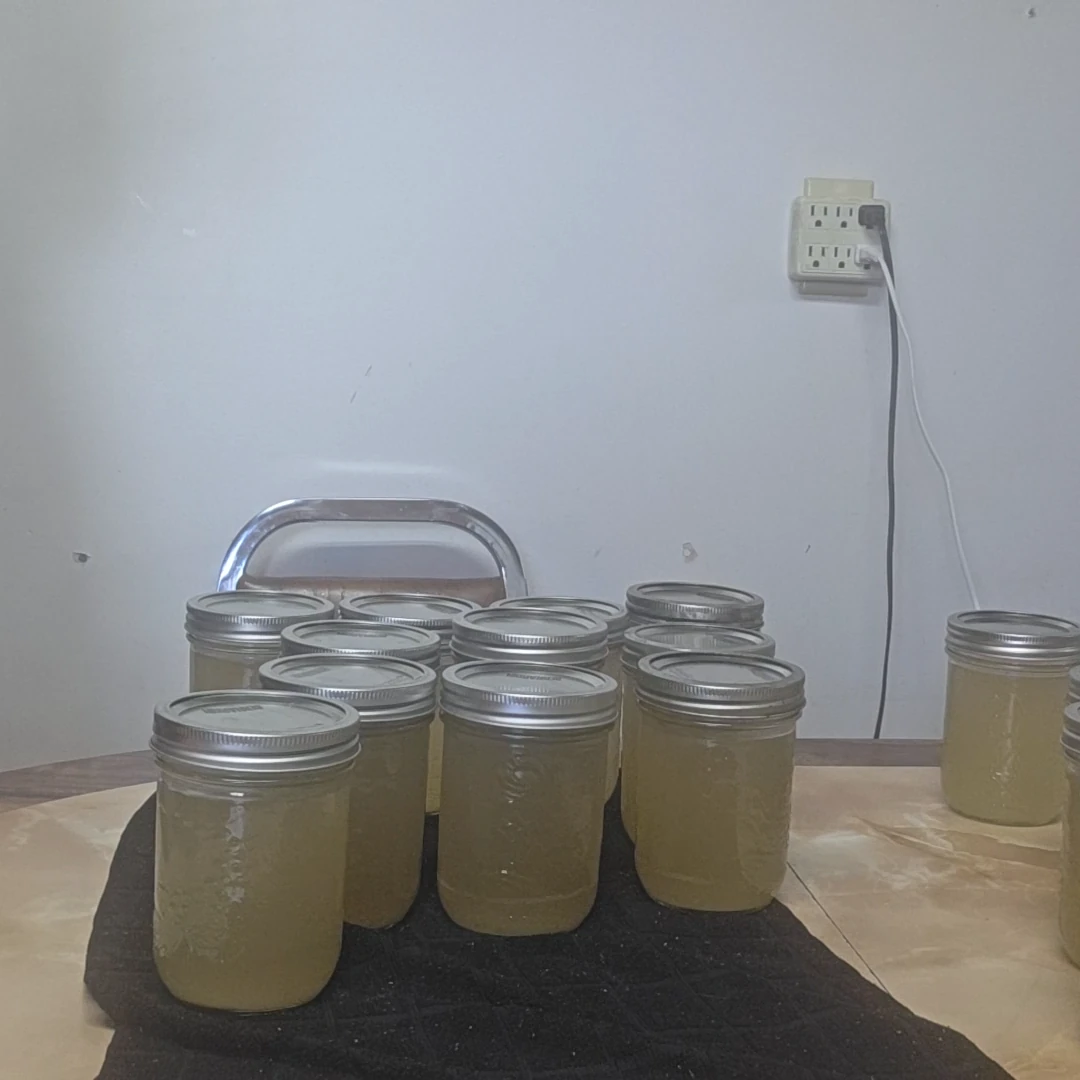
When I decided to make beef stock this time, I might have gone a little overboard. I picked up about 7 pounds of soup bones from my local butcher. Most of the recipes I had looked at called for around 4 pounds, but since I’ve got a big 5-gallon stainless steel pot I figured I might as well use them all. It just meant I’d have to can the stock in batches later, which wasn’t a big deal.
One thing I did a little differently from a lot of recipes is I didn’t add any vegetables. A lot of people throw in onions, carrots, and celery, but I wanted a pure beef stock this time. That way when I go to use it later I can season it however I want depending on what I’m making.
The first thing I did was roast the bones. I put them into a roaster with just a little bit of water in the bottom and slid them into the oven at 425°F for about 20 minutes. Roasting them first really helps bring out the flavor, and you get those nice browned drippings in the pan too.
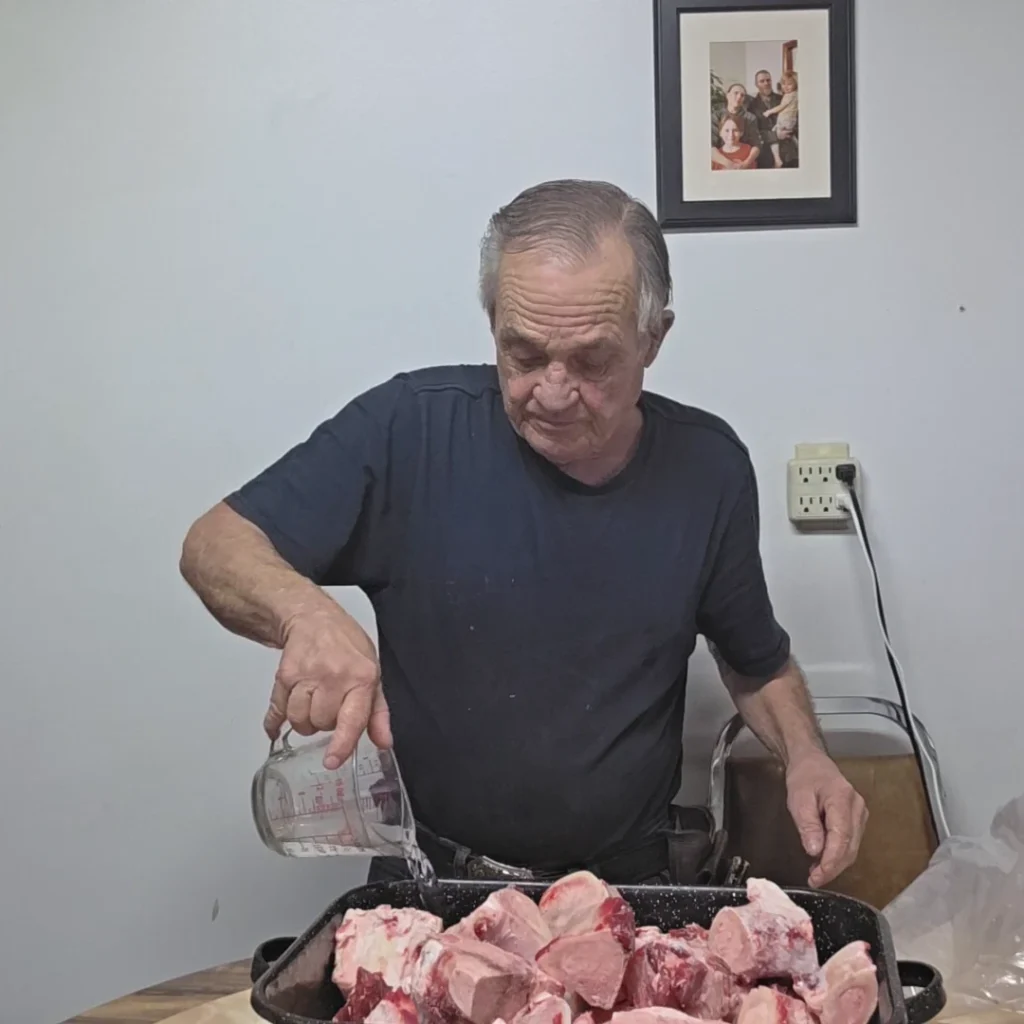
Once they were done, I transferred the bones and all those drippings into my big pot. I covered everything with water, added a bit of salt, and brought it up to a gentle boil. After about an hour I started seeing the usual foam building up on the top, so I scooped that off and gave everything a stir.
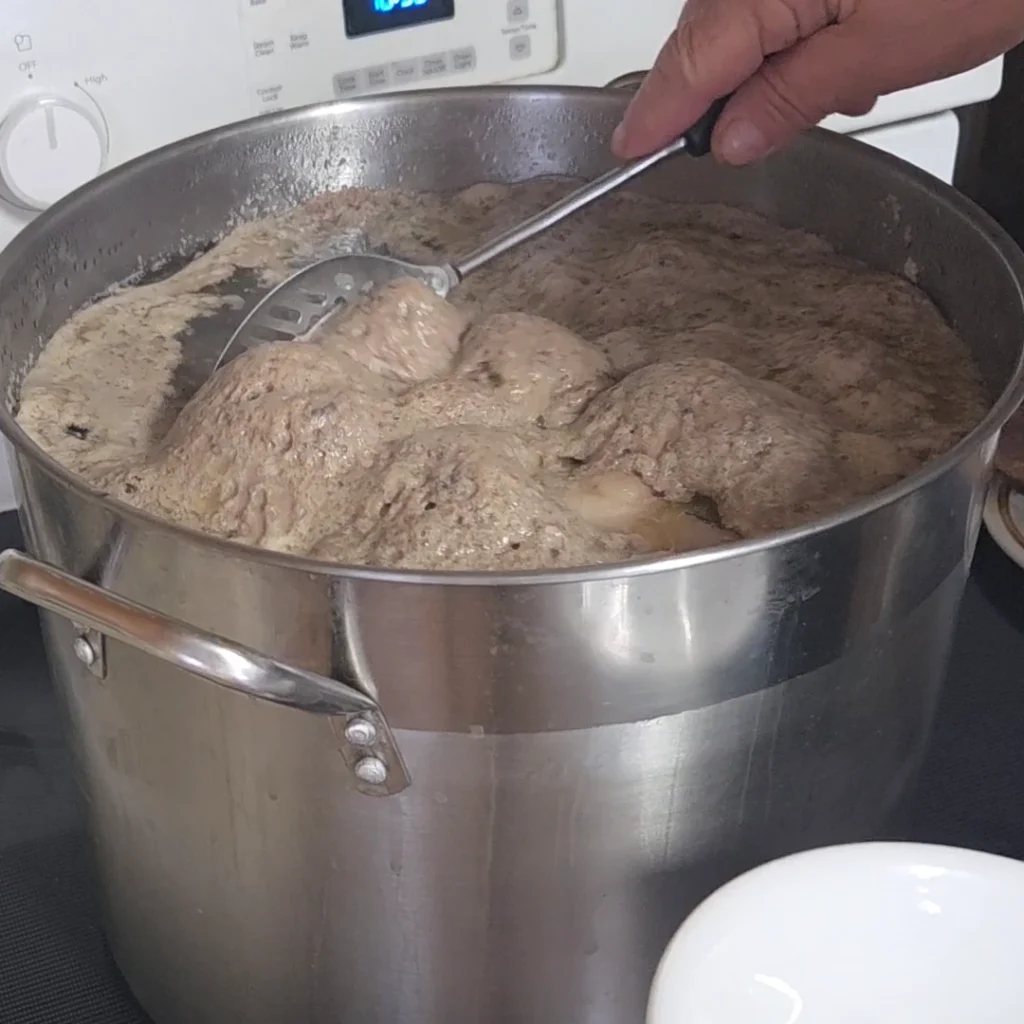
From there I turned the heat down so it would just sit at a steady simmer. On my stove that’s around the 8 o’clock position on the dial. Every hour or so I’d come back, skim off any foam that collected, and give it another stir.
After about three hours the meat on the bones was loose enough that it was ready to come off. I pulled the bones out of the pot and let them cool just long enough that I could handle them. Then I cut the meat, fat, and gristle off the bones and tossed the bones back into the pot to keep simmering.
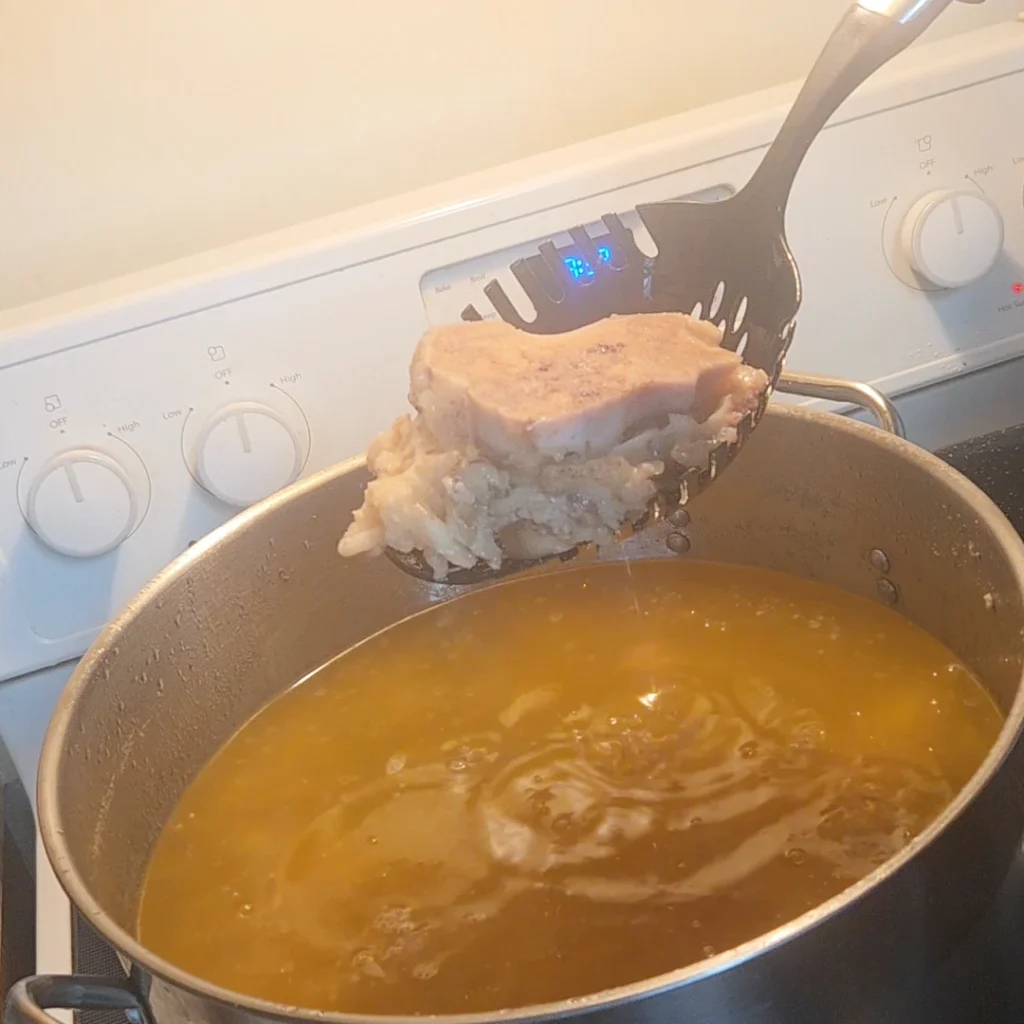
Once I finished trimming everything off, I had a small pile of meat sitting there. For a minute I thought about saving it for soup, but honestly it wasn’t the best quality. I’d rather use good meat when I’m making soup, so I just tossed it and carried on with the stock.
I let the bones keep simmering until I hit about five hours total. At that point I figured I had probably pulled about as much flavor out of them as I was going to get, so I fished the bones out for good.
Next I strained the stock through a strainer lined with cheesecloth to catch all the little bits. Once it was strained, I just let it cool down and then put the whole pot in the fridge overnight.
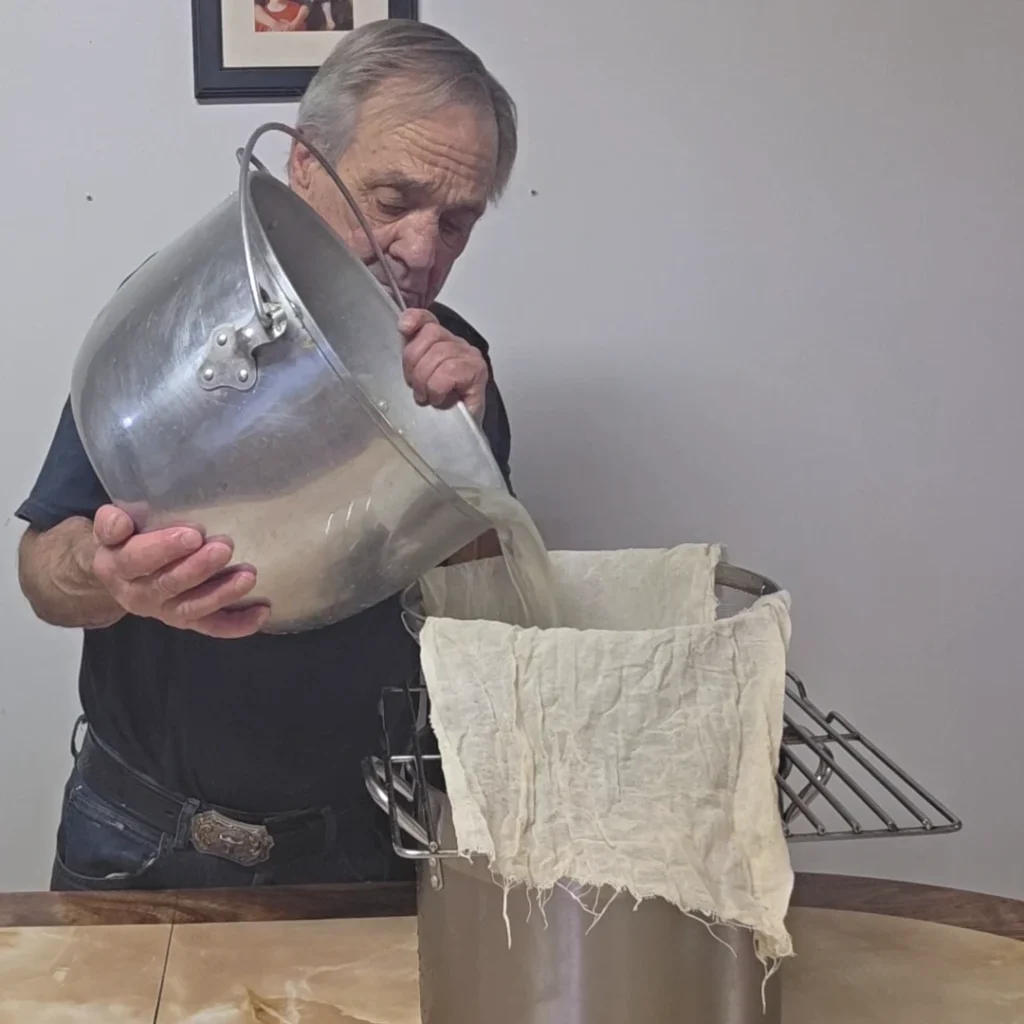
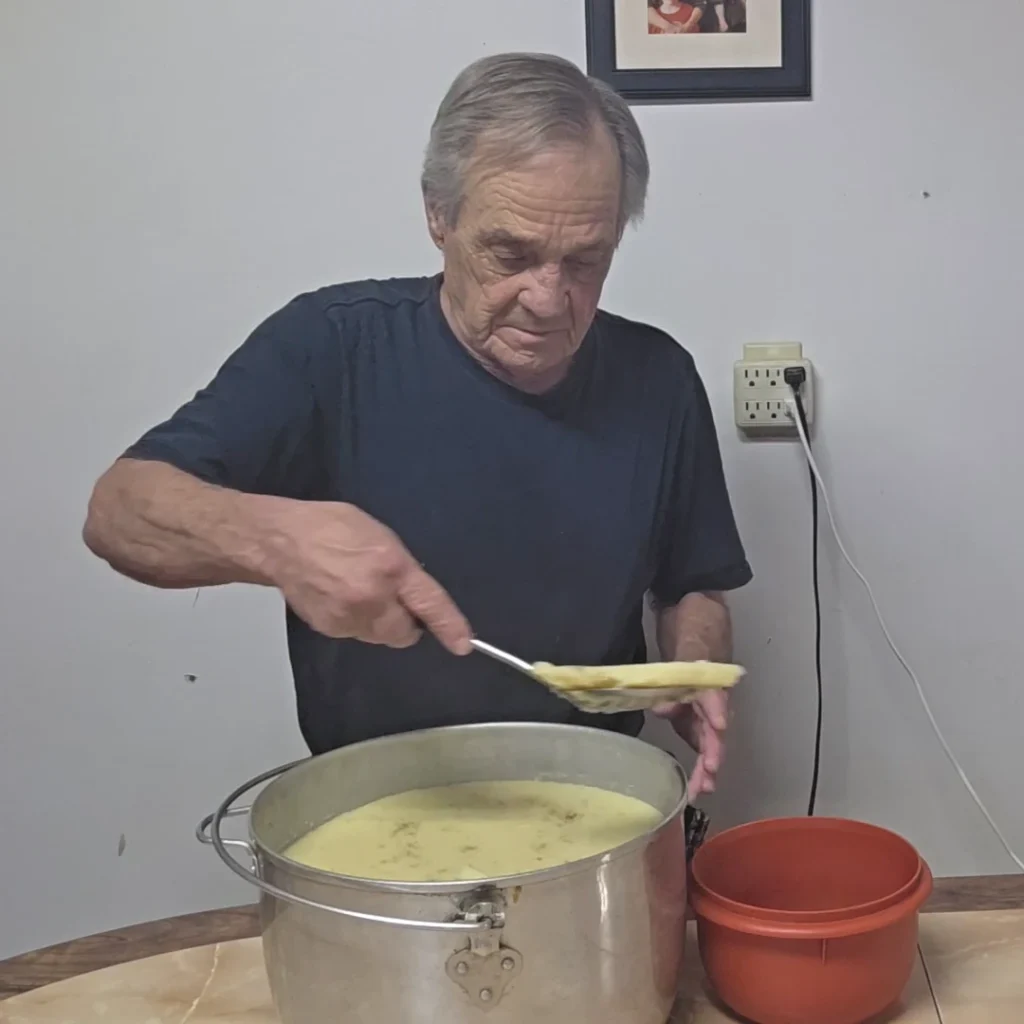
The next morning the fat had floated to the top and hardened, which makes it easy to deal with. I skimmed off as much of that fat as I could and then ran the stock through the strainer one more time just to clean it up.
When it was time to can it, I put my jars into hot water and reheated the broth to a steady simmer for about half an hour. Once everything was good and hot, I filled the jars leaving about 1 inch of headspace. I wiped the rims with a paper towel dampened with vinegar, put on the lids and bands, and tightened them finger tight.
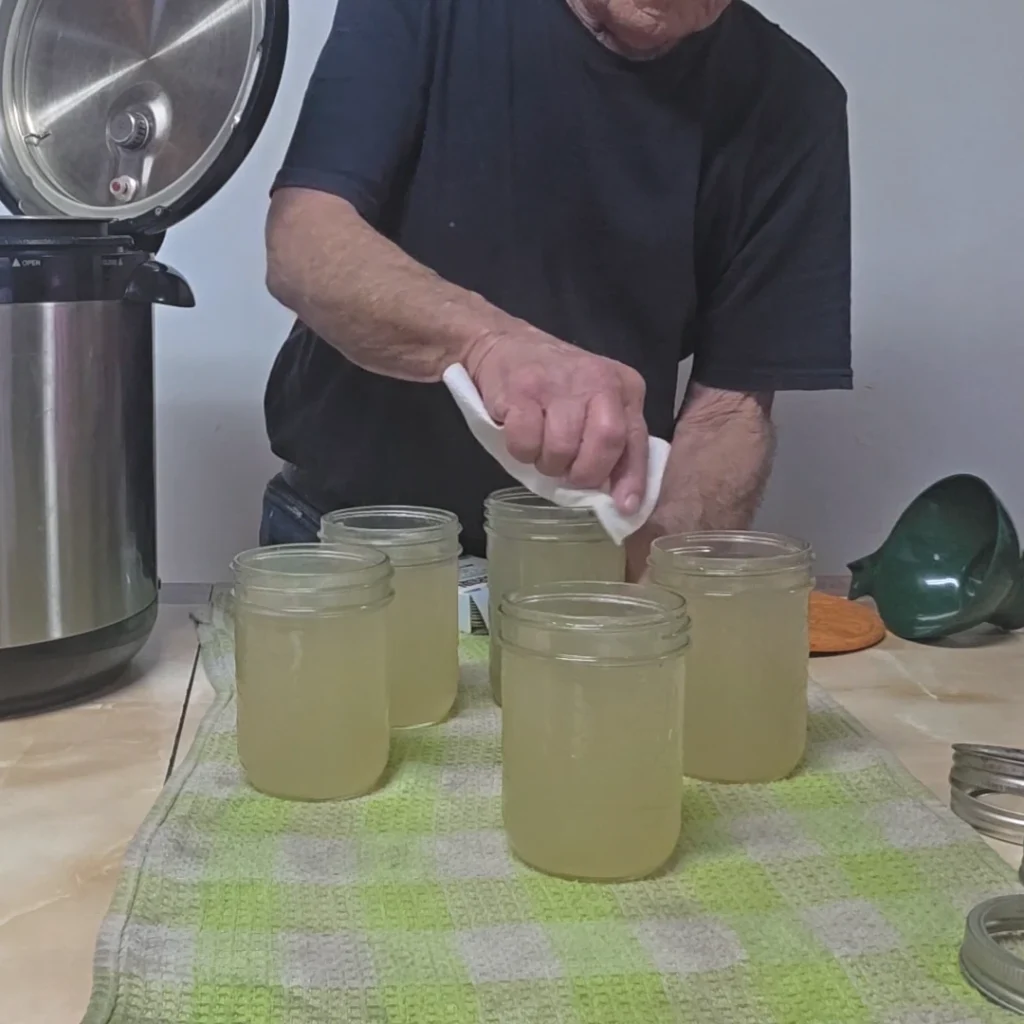
Into the pressure canner they went with about 8 cups of water, although you should always use whatever amount your canner calls for. I also added a little vinegar to the water in the canner, which helps keep the jars from getting cloudy.
After the lid was on, I let the canner exhaust steam for 10 minutes. Then I brought it up to pressure and processed the jars for 75 minutes for pints. If you’re using quarts they need 90 minutes.
When the time was up, my canner turned off and I just left the canner alone until the pressure came all the way down on its own. Once it was safe to open, I carefully lifted the lid away from me and let the jars sit in the canner for another 10 minutes before taking them out. Then I moved them onto a towel on the counter to cool.
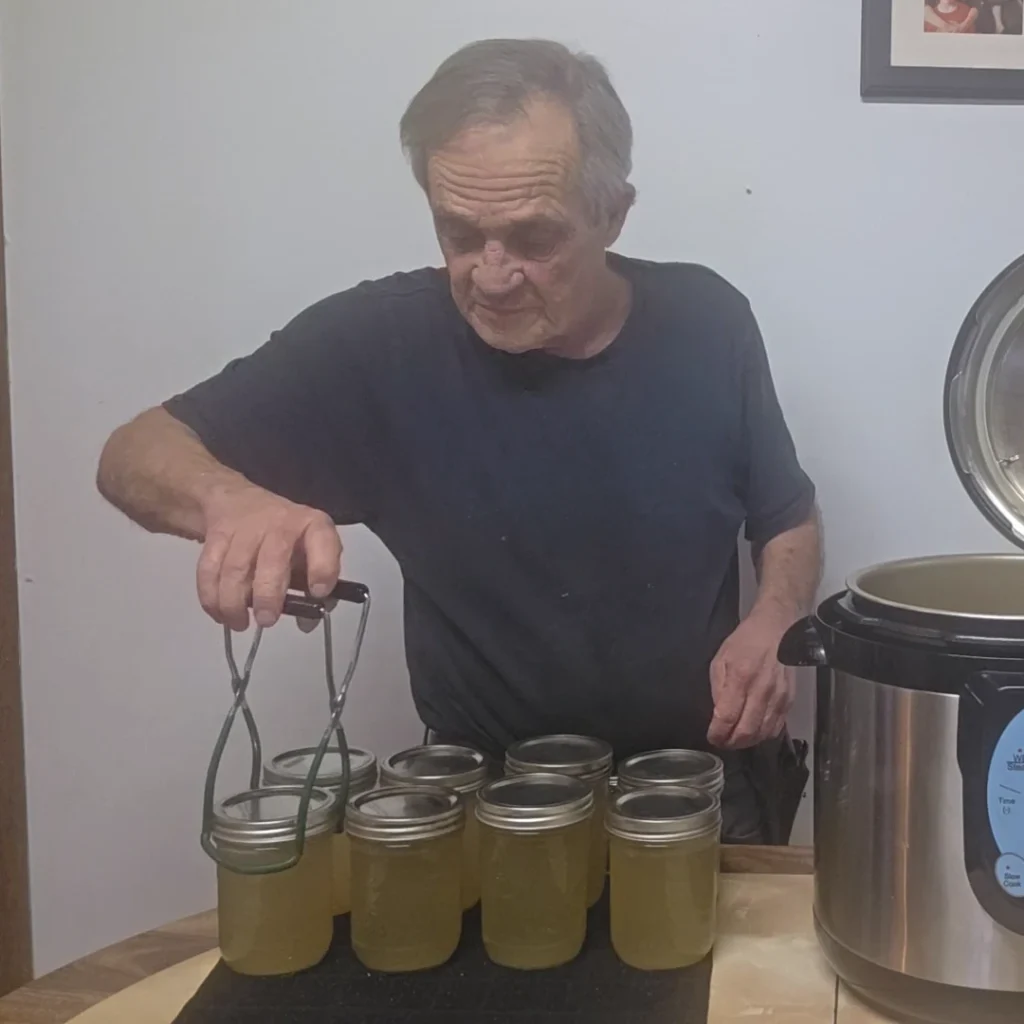
Since I had more stock than would fit in the canner at once, I had to do it in batches. I didn’t repeat the whole process though. I just reheated the remaining stock and gave it that same half hour simmer before filling the jars and running the canner again. I ended up doing that two more times and finished with 15 pints of beef stock sitting on the counter.
The next day, after about 24 hours, I checked the seals. Four of the jars didn’t seal for some reason, but that’s not a disaster. I just stuck those in the fridge and used them right away to make a pot of cabbage soup, and it turned out pretty darn good.
Pure Beef Stock
Yield: 15 pints
Prep Time: 30 min | Cook Time: 5–6 hours | Total Time: 6 hours 30 min
Ingredients
- 7 lbs beef soup bones
- Water, enough to cover bones in pot
- Salt, to taste
- Vinegar (optional, to prevent cloudy jars)
Instructions
Preheat your oven to 425°F. Place the bones in a roaster with a bit of water and roast for 20 minutes to deepen the flavor.
Transfer the roasted bones and all drippings into a large pot. Cover with water and add salt. Bring to a gentle boil, then reduce to a steady simmer. Skim off foam as it rises, stirring occasionally.
After about 3 hours, remove the bones and trim off any meat, fat, and gristle. Return the bones to the pot and continue simmering until around 5 hours total, then remove the bones completely.
Strain the stock through a cheesecloth-lined strainer to remove solids. Let cool and refrigerate overnight. The next day, skim off hardened fat and strain again for a clear stock.
Reheat the stock at a gentle simmer for 30 minutes before canning. Fill jars leaving 1 inch of headspace, wipe rims with a vinegar-dampened paper towel, and place lids and bands finger-tight. Process in a pressure canner according to your canner’s instructions (75 minutes for pints, 90 minutes for quarts).
Let the jars cool in the canner for 10 minutes after pressure release, then remove and set on a towel to finish cooling. Check seals after 24 hours. Any unsealed jars can be used immediately.
Print RecipeFrequently Asked Questions
Can I add vegetables to my beef stock?
Yes, you can add onions, carrots, celery, or any vegetables you like. For this recipe, I kept it pure beef so I could control the seasoning later, but vegetables are optional if you prefer a richer, more complex flavor.
How long should I simmer the bones?
I simmered the bones for about 5 hours total. That’s long enough to extract flavor and gelatin from the bones without overcooking them. You can adjust slightly depending on your pot and stove.
Do I need to roast the bones first?
Roasting isn’t required, but it does deepen the flavor and gives the stock a richer color. I roasted mine at 425°F for 20 minutes before simmering.
How do I know when the meat is ready to come off the bones?
After about 3 hours of simmering, the meat should be loose enough to remove easily. Trim off meat, fat, and gristle and return the bones to continue simmering for maximum flavor.
Why did some of my jars not seal?
Sometimes jars don’t seal because of improper headspace or lid placement. Unsealed jars can be used immediately in the fridge, like I did for cabbage soup, or reprocessed if you prefer.
Can I skip the second straining and fat skimming?
You can skip it, but straining twice and skimming the fat gives a clearer, cleaner stock. It also helps prevent cloudy jars when pressure canning.
How do I prevent cloudy stock in the jars?
Adding a little vinegar to the water in the canner and straining the stock thoroughly helps reduce cloudiness. Skimming the fat and solids before filling jars also improves clarity.
Can I use different sized jars?
Yes, you can use pints or quarts. Just adjust the processing time in the pressure canner: 75 minutes for pints, 90 minutes for quarts.

Leave a Reply