
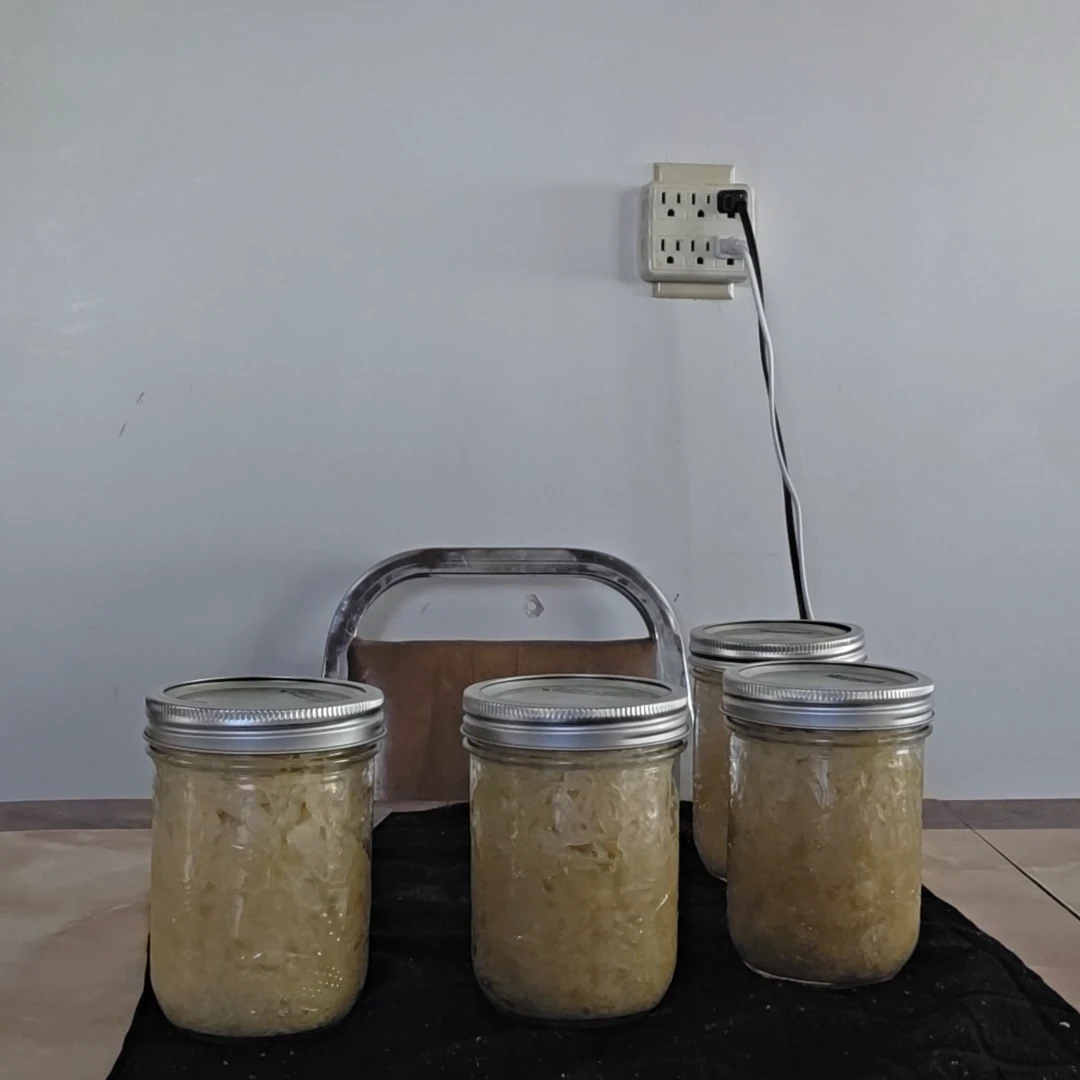
The first time I made sauerkraut, I wasn’t looking to go all in with a giant batch. A lot of recipes jump straight to 25 pounds of cabbage, and that just felt like too much if things didn’t go right. So I grabbed a 5-pound head instead and figured I’d keep it simple and see what happened. Turns out, it worked out pretty well – and it got me thinking I should’ve tried this a long time ago.
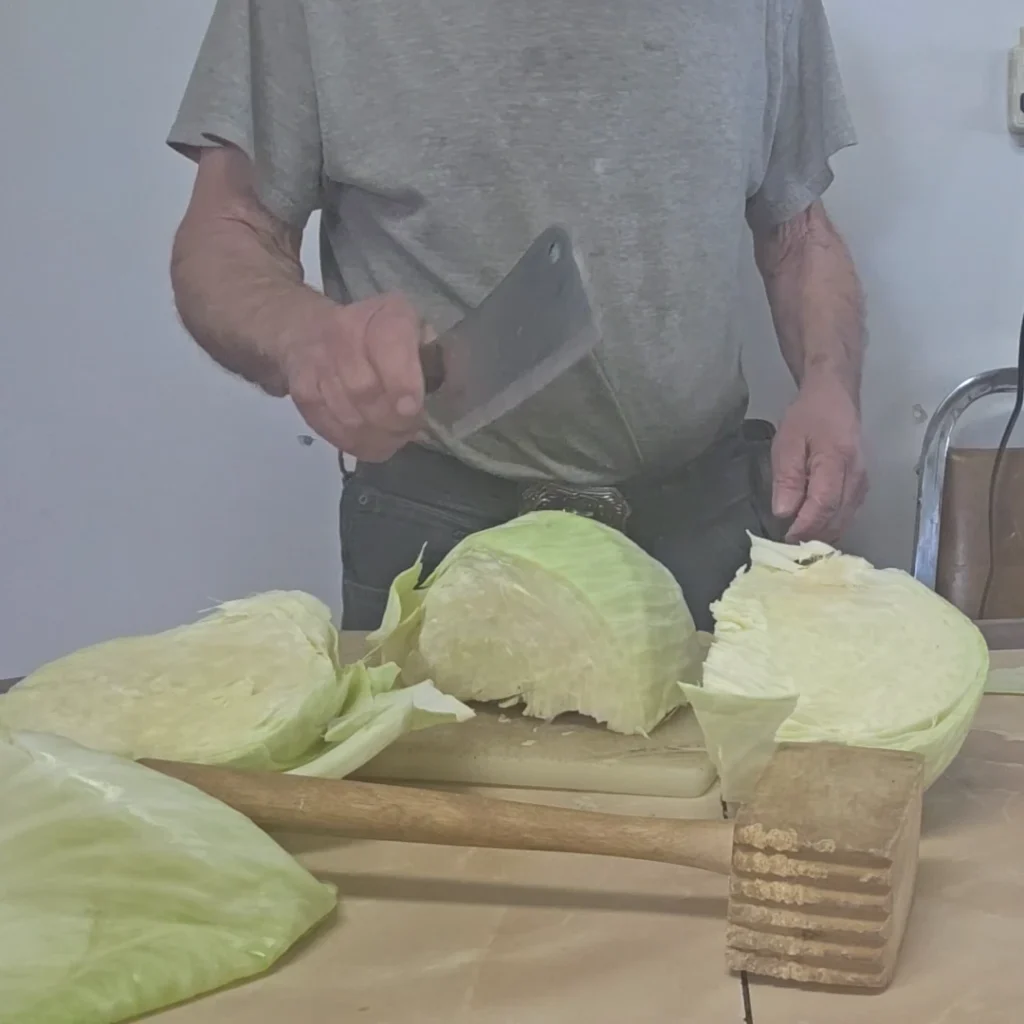
I started by giving the cabbage a good rinse, then peeled off the outer leaves and set those aside for later. Cutting it down was a bit more work than I expected. I tried using a butcher knife at first, quartering it, but it felt like I was fighting it the whole time. I switched over to a meat cleaver and that made things easier.
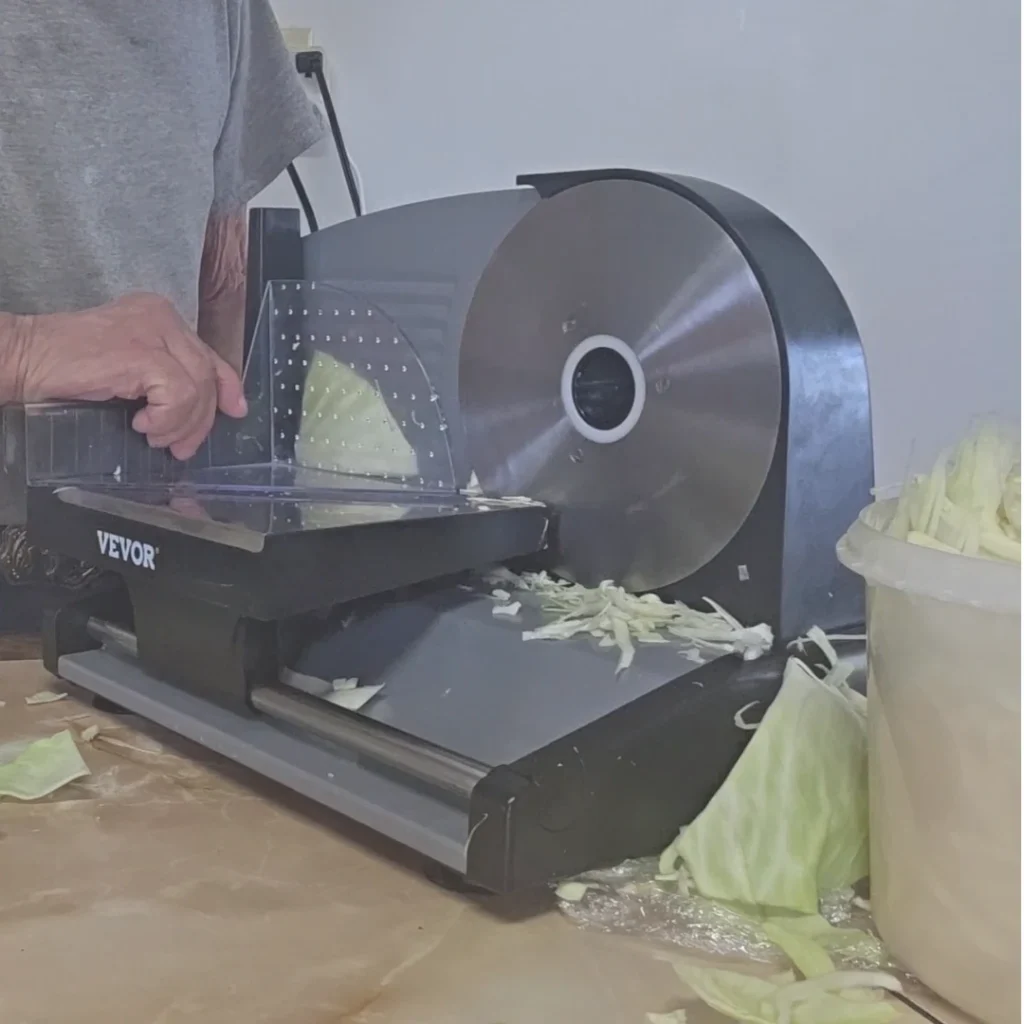
For slicing, I ran it through my electric meat slicer to get it nice and thin. It did a decent job, but not everything came out as fine as I wanted. Some pieces were a bit chunkier than the rest. Next time I’ll probably try my food processor .
Once it was all shredded, I looked at the pile and started second-guessing things. It seemed like a lot of cabbage for just 3 tablespoons of pickling salt, but I stuck with it and worked the salt through as evenly as I could. After that, I let it sit for about half an hour. When I came back, I started mixing and pressing it down, really working it to pull the juice out.
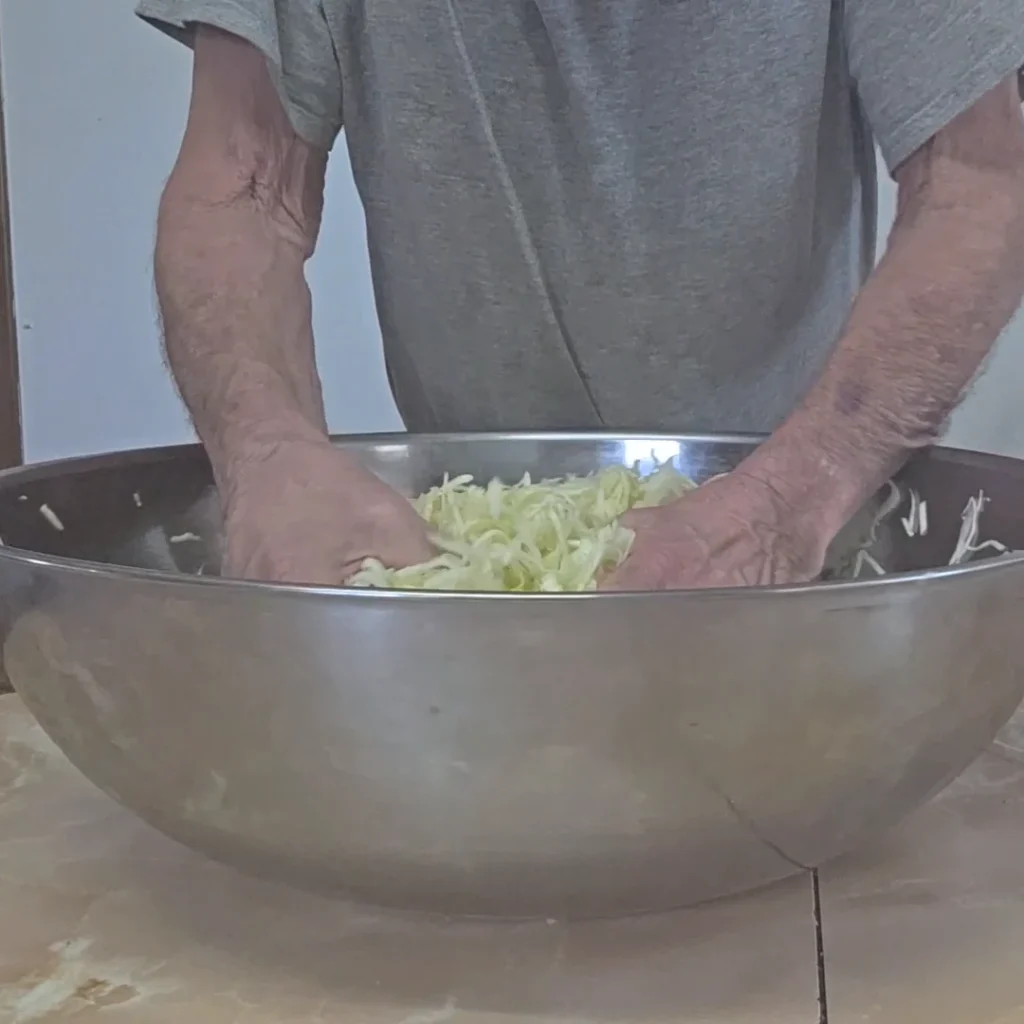
That’s when it starts to change. The cabbage softens up, and you can actually see the liquid forming. I kept at it until there was a decent amount of brine, then packed everything tightly into a 1-gallon food-grade pail. I pressed it down as hard as I could and poured whatever juice I had over the top.
It didn’t quite cover the cabbage, so I mixed up a little extra brine – about a tablespoon and a half of pickling salt to a cup of water – and topped it off just enough to get everything submerged. Then I took those outer leaves I saved and laid them over the top to hold all the shredded cabbage down.
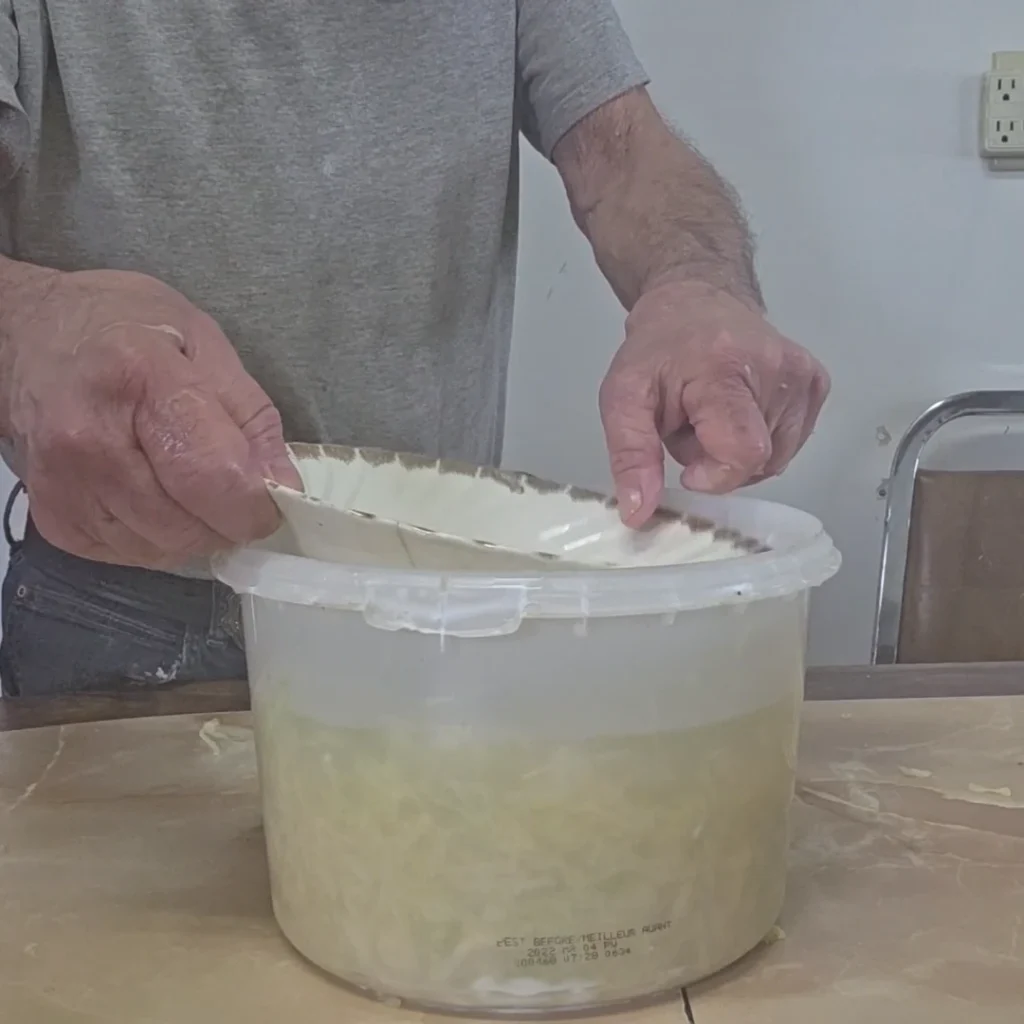
For a weight, I used a bowl that just fit inside the pail. I pressed it down into the brine so it filled up and held everything underneath. Nothing fancy, just something to keep the cabbage below the liquid. Then I covered the whole thing with a towel and left it alone.
From there, it was just a matter of checking on it once a day. Making sure everything stayed submerged, no weird smells, nothing out of place. By day 12, I couldn’t wait anymore and gave it a taste. It was already pretty good at that point, but I figured I’d let it go a bit longer to see how it changed. I scooped some out and put it in the fridge so I could compare later.

By day 16, it was getting softer than I like, so I figured that was a good place to stop. I packed most of it into jars and water bathed four pints. I kept a smaller portion fresh in the fridge, along with some of the brine to top it up.
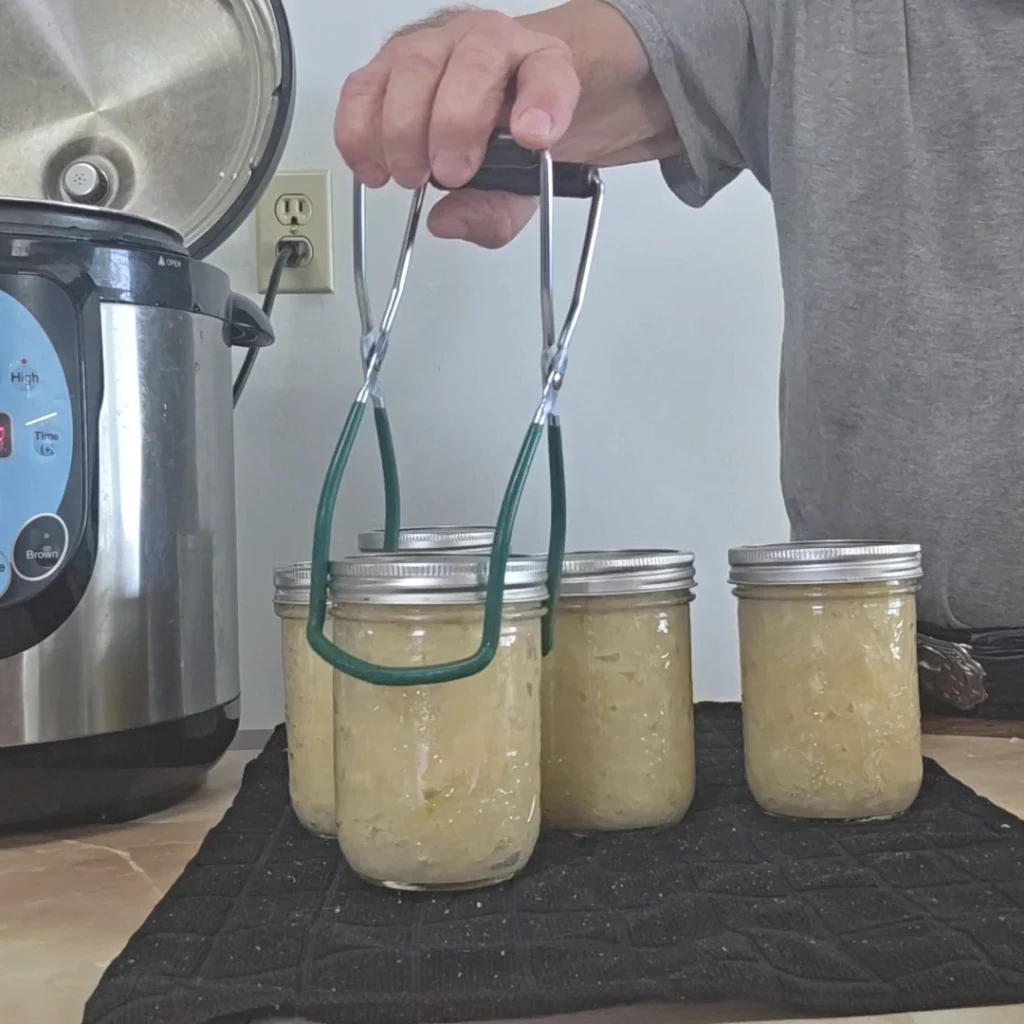
One thing I learned along the way is that once you can sauerkraut, you’re losing those live probiotics from the fermentation. But you still end up with postbiotics, which still have some of the same benefits, so it’s not like you’re losing everything.
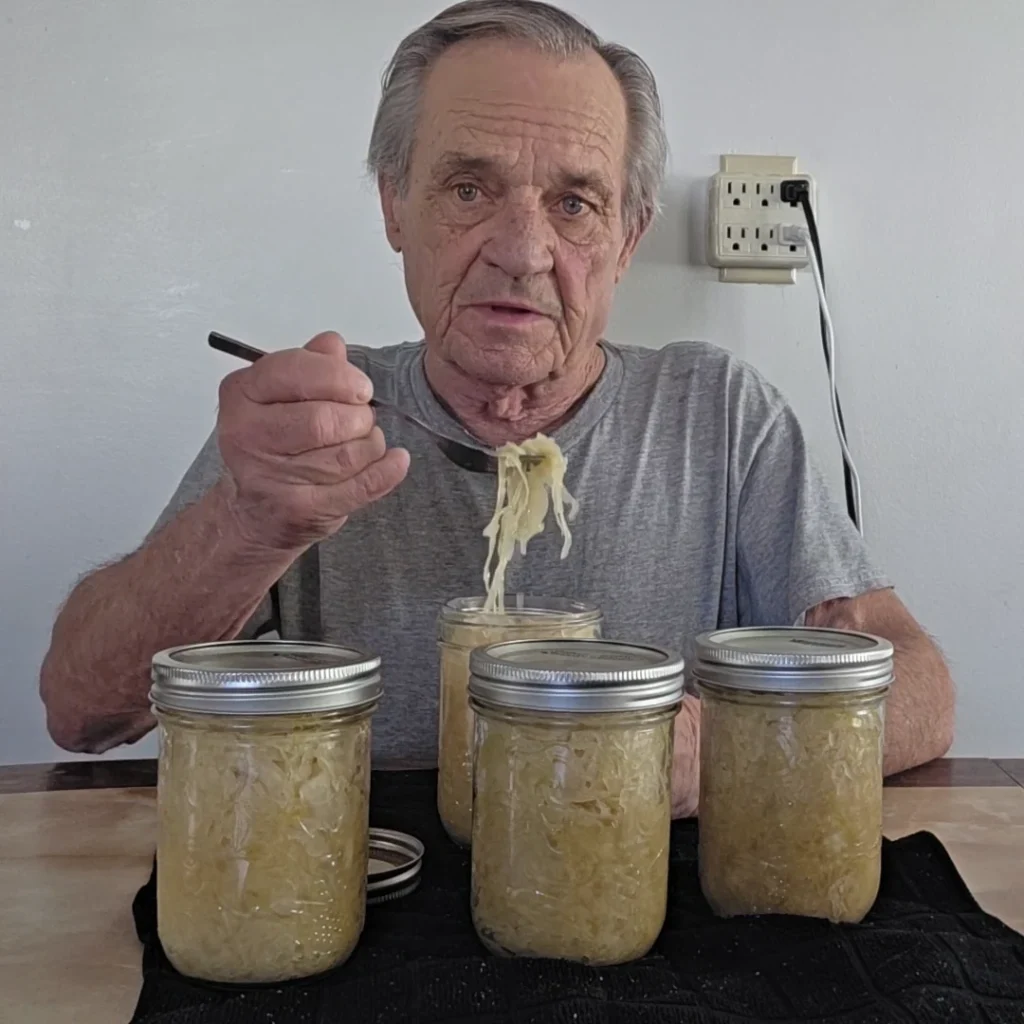
Ref: PubMed CentralThe next day, I cracked open one of the jars just to see how it held up. Flavor-wise, it was pretty much the same, maybe just a bit less brine. As I ate it, I added a bit of brine back from the batch I saved in the fridge, and that brought it right back where I wanted it.
Now that I’ve gone through the whole process once, I feel a lot better about doing a bigger batch. I’m even thinking about growing my own cabbage and going for the full 25 pounds next time. Only thing I’ll watch a bit closer is the brine and the ferment time – I liked the flavor where it was, just want to keep a bit more of that crunch next round.
Small Batch Sauerkraut
A simple first batch of homemade sauerkraut using one cabbage. No fancy equipment, just a bit of time and daily checking.
Ingredients
- 1 head cabbage (about 5 lbs / 2268 g)
- Salt: at least 2% of cabbage weight (≈45 g or ~3 tablespoons)
- Extra brine if needed: 1½ tbsp pickling salt per 1 cup water
Instructions
- Rinse the cabbage and remove the outer leaves. Set those leaves aside for later.
- Cut the cabbage into quarters and remove the core.
- Slice the cabbage into thin strips using a knife, slicer, or food processor.
- Place shredded cabbage in a large bowl and mix in the salt evenly.
- Let it sit for about 30 minutes to start drawing out moisture.
- Mix and press the cabbage until it begins releasing enough liquid to form brine.
- Pack the cabbage tightly into a 1-gallon food-grade container, pressing it down firmly.
- Pour the natural brine over the cabbage.
- If needed, top off with prepared brine to fully cover the cabbage.
- Place the reserved cabbage leaves on top to keep everything submerged.
- Add a weight (such as a bowl filled with brine) to hold the cabbage under the liquid.
- Cover loosely with a towel and let it ferment at room temperature.
- Check daily to ensure cabbage stays submerged.
- Start tasting around day 7. Continue fermenting until desired flavor is reached (usually 12–14 days for small batches; longer will make the sauerkraut softer).
Notes
For a crunchier texture, ferment for a shorter time. Longer fermentation softens the cabbage more.
Fresh sauerkraut kept in the fridge will retain probiotics. Canning will stop fermentation but still provides postbiotic benefits.
Storage
Store fresh sauerkraut in the refrigerator. For longer storage, it can be water bath canned, though this will reduce probiotic content.
Print RecipeFrequently Asked Questions
Do I have to use a full 25 lb batch of cabbage?
No, you can start small. A 5 lb cabbage works perfectly for a test batch and lets you get the process down before going big.
Can I use a food processor instead of slicing by hand?
Yes! A food processor makes shredding faster and more uniform. It’s especially helpful for small batches.
How much salt should I use?
Use at least 2% salt by weight of the cabbage. For a 5 lb (≈2268 g) cabbage, that’s about 45 g, or roughly 3 tablespoons. Adjust proportionally for larger or smaller batches to keep the fermentation safe and flavorful.
What if the cabbage isn’t fully submerged in brine?
You can top it off with a simple brine (1½ tbsp pickling salt per 1 cup water) to cover it, and always keep a weight on top to hold the cabbage under the liquid.
When should I start tasting it?
Start tasting around day 7. This way you can track the flavor and texture and stop fermenting when it’s just how you like it.
Will canning it destroy the probiotics?
Yes, heat from canning will kill live probiotics, but the sauerkraut will still have postbiotics, which offer many of the same health benefits.
How should I store it?
Keep fresh sauerkraut in the refrigerator. If water-bath canned, it can be stored longer but will lose live probiotics.

Leave a Reply