
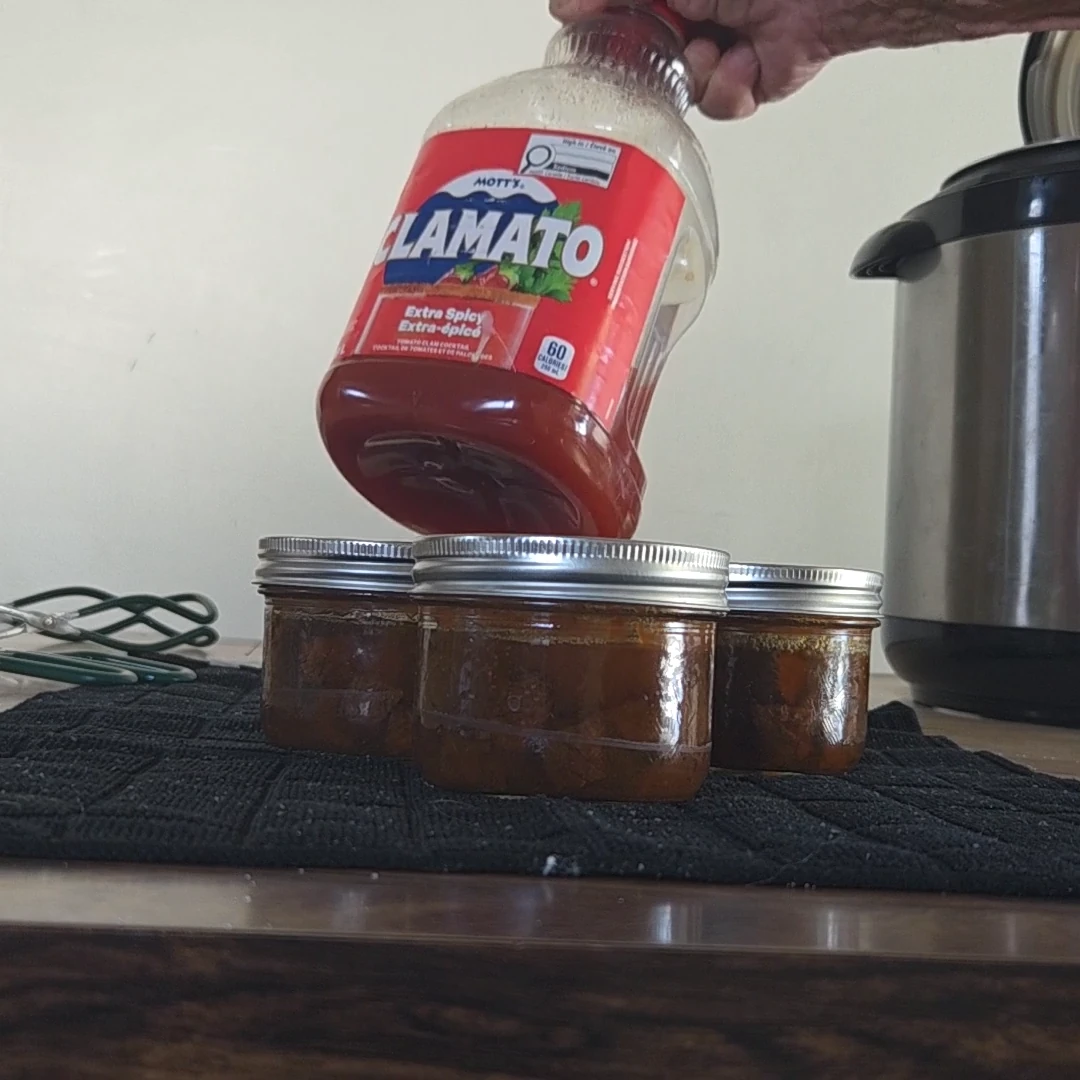
I’ve been curious for a while what moose canned in Clamato juice would taste like. It just sounded different enough that I had to try it.
And yes, it’s safe to do. I covered the whole substitution question in my post “Can You Tweak Canning Recipes? The Truth About Substitutions.” Clamato is a tomato-based juice, so we’re still working within safe guidelines for pressure canning meat.
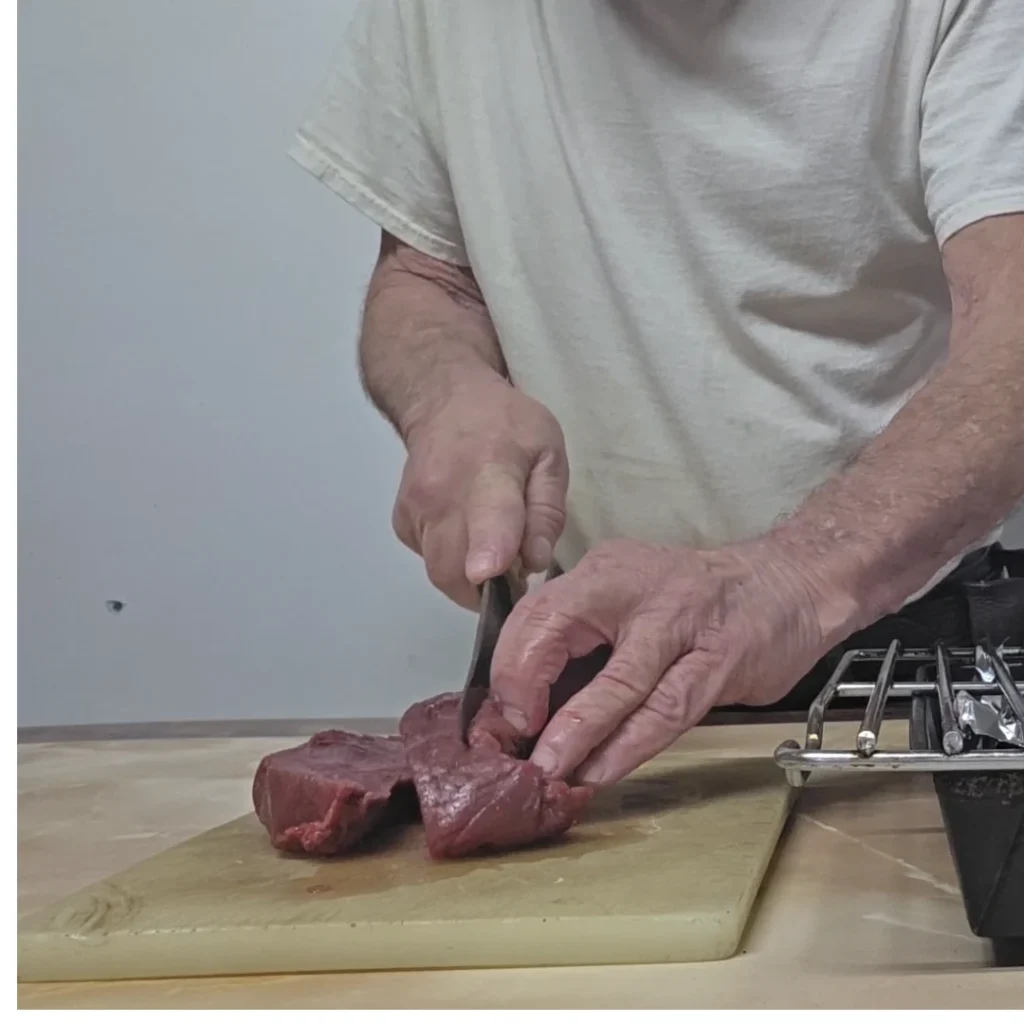
I went with the hot pack method. I used a chuck roast and sliced it into about one-inch strips, then put those in the oven. I cooked them to medium rare. The reason for that is when I’ve done raw pack before with deer and even chicken, the meat had that boiled taste to it. It was fine, but not something I was excited about eating. I wanted a bit more flavor going into the jar this time.
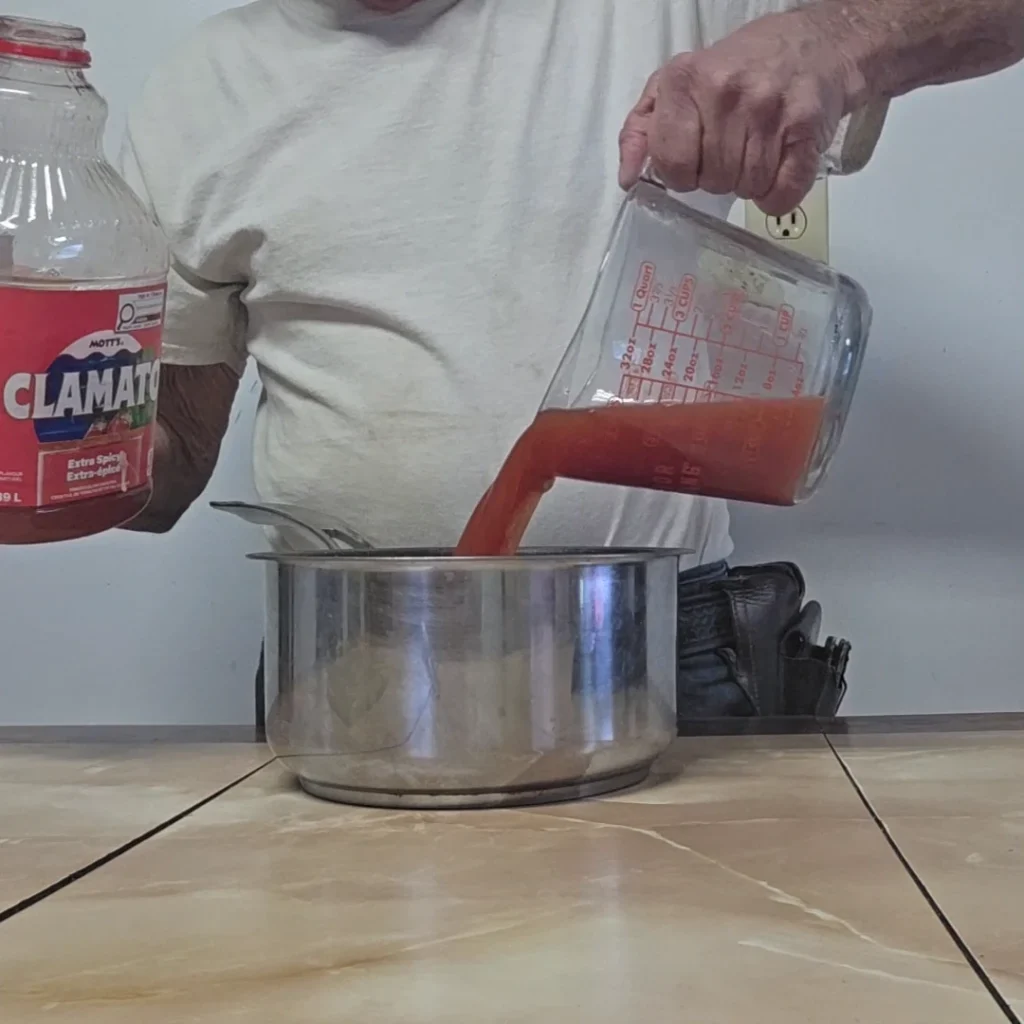
While the meat was in the oven, I brought five cups of Clamato juice to a full boil on the stove. That’s not just preference, that’s part of the actual hot pack instructions in the canning books. When you’re hot packing meat, you’re supposed to add boiling liquid. So the juice was at a full boil and ready to go.
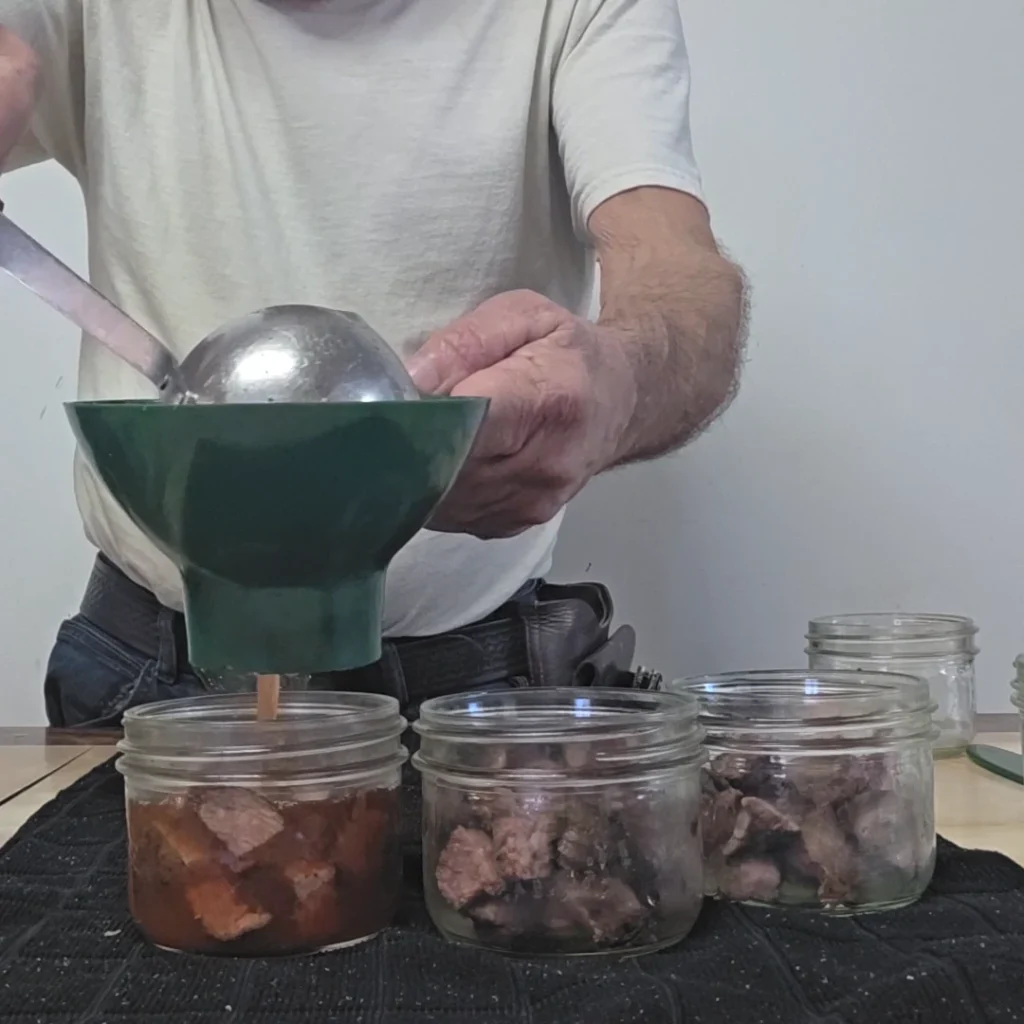
When the roast came out of the oven, I cubed the strips and filled three half-pint jars, leaving one inch of headspace. None of the books were very clear about how tightly to pack the meat, so I kept it fairly loose. I wanted to be sure there was good heat penetration all the way through. After that, I poured the boiling Clamato over the meat, still keeping that one inch of headspace.
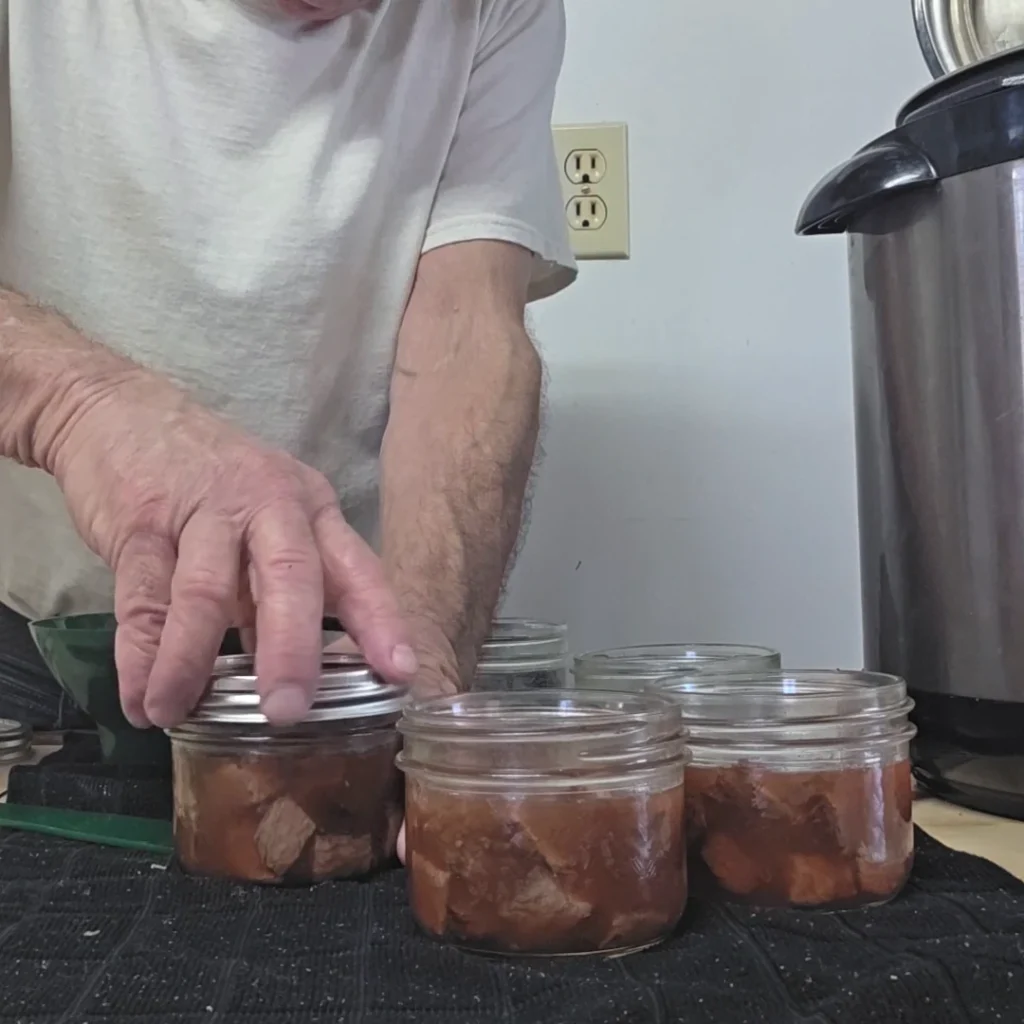
I ran a bubble remover through each jar to get rid of trapped air and checked the headspace again. Then I wiped the rims with a paper towel dipped in vinegar, put the lids on, and tightened the bands to finger tight.
Into the pressure canner they went. I vented the canner for the standard 10 minutes to exhaust the air, then brought it up to pressure and processed the half-pints for 75 minutes. If you were doing quarts, you’d go 90 minutes.
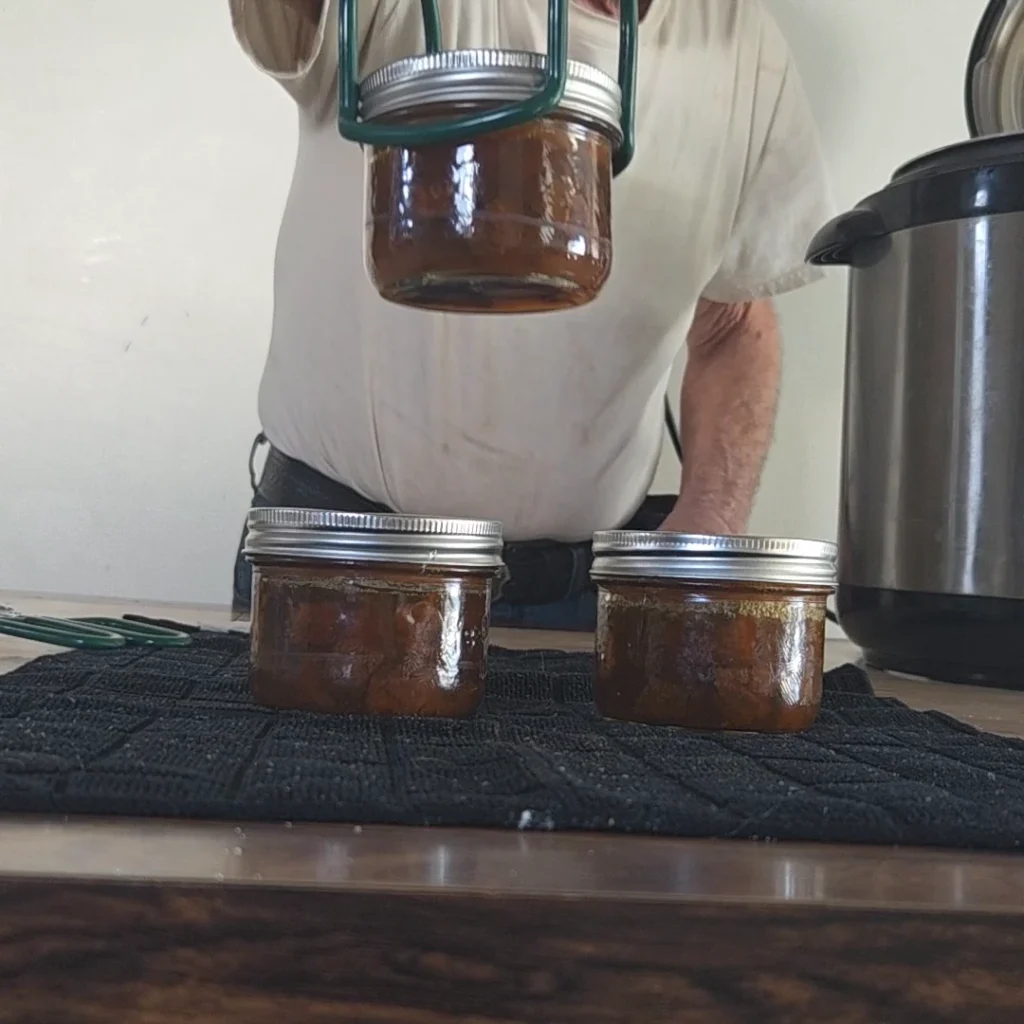
The next morning all three jars looked sealed, but one didn’t have that clear ringing sound when I tapped on it. The lid was concave and it wouldn’t flex when I pressed it, but without that ring I didn’t fully trust it. That was fine with me because I wanted to taste it anyway.
When I opened it, I got that nice pop you expect from a sealed jar, so it had actually sealed.
The flavor was good. Different, but good. The meat was tougher than I expected after being in the pressure canner. I think part of that was on me. I probably left it in the oven a little too long. Rare would likely have been better than medium rare. And instead of cubing it into one-inch chunks, I think it would have been more tender if I had sliced it thin across the grain right after it came out of the oven.
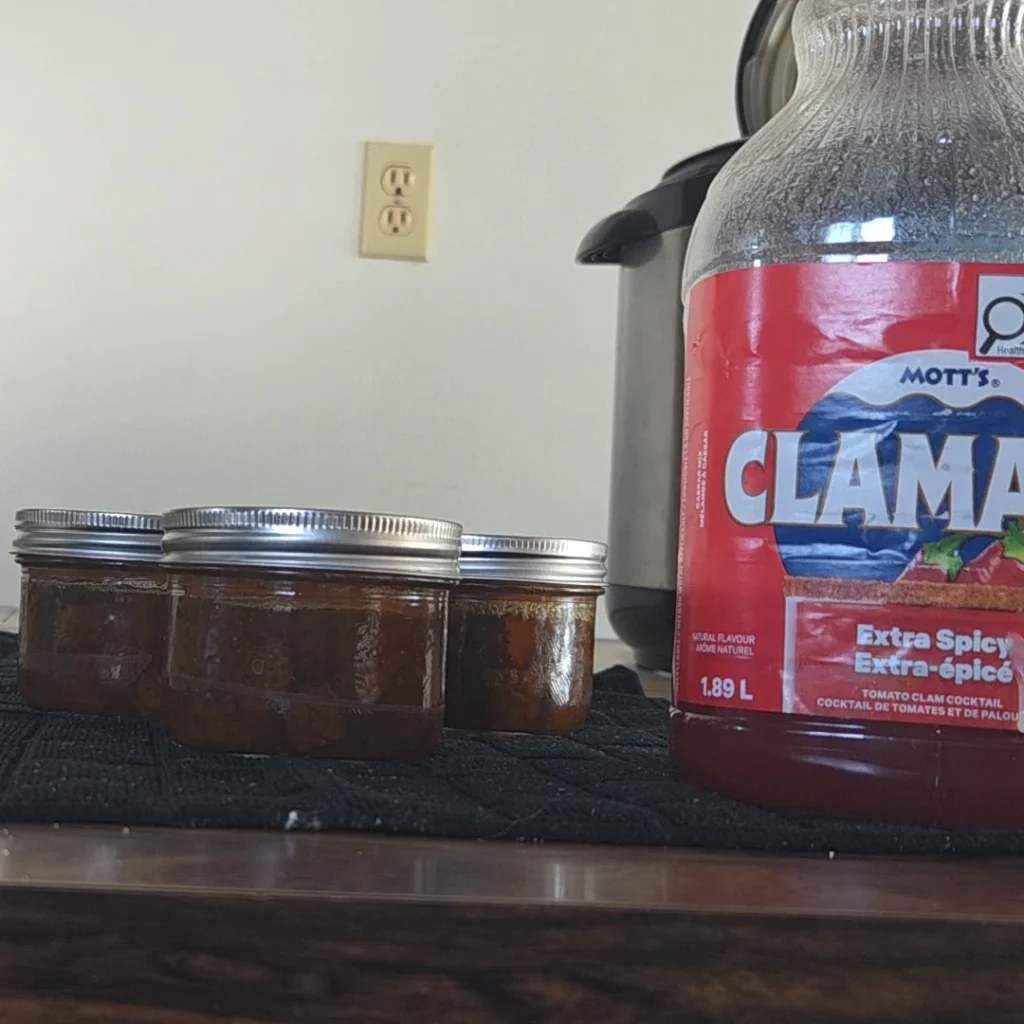
Overall, I’d call it a success. It could have used a bit more salt, but that’s easy enough to adjust next time. Somewhere down the road I’d like to can some in straight tomato juice and do a side-by-side taste test just to see which one comes out better. That’s half the fun of experimenting like this.
Moose in Clamato Juice
Yield: 3 half-pint jars
Prep Time: 20 minutes | Oven Cook Time: 15 to 20 minutes | Pressure Canning: 75 minutes (half-pints) / 90 minutes (quarts)
Ingredients
1 chuck roast (about 2–3 lbs), sliced into 1-inch strips
5 cups Clamato juice
Salt, to taste
Instructions
Preheat your oven. Cook the moose strips to rare (about 15 to 20 minutes). This prevents the boiled meat taste you get with raw pack.
While the meat is cooking, bring 5 cups of Clamato juice to a full boil on the stove. This is part of the hot pack instructions.
Once the roast is done, cut the meat into 1-inch cubes or slice thin across the grain for more tender pieces.
Fill 3 half-pint jars with the meat, leaving 1 inch of headspace. Add salt to the jars if desired. Keep the pack loose to allow proper heat penetration.
Pour the boiling Clamato juice over the meat, maintaining 1 inch of headspace.
Remove air bubbles with a bubble remover or a small spatula, then double-check headspace.
Wipe the rims with a paper towel dampened with vinegar. Place lids on jars and tighten bands to finger tight.
Exhaust the pressure canner for 10 minutes, then process jars at full pressure: 75 minutes for half-pints, 90 minutes for quarts.
Once complete, let the canner depressurize naturally. Remove jars and allow them to cool overnight.
Check seals the next day. The lid should be concave and not flex when pressed.
Store in a cool, dark place.
Print RecipeFrequently Asked Questions
Can I use a different cut of moose for this recipe?
Yes, you can use other cuts like shoulder or round. Keep in mind that tougher cuts may require slightly longer pre-cooking in the oven to reach rare before canning.
Is Clamato juice safe for pressure canning with meat?
Yes, Clamato is safe for pressure canning because it is tomato-based. Always use the hot pack method and follow recommended processing times for your jar size.
Should I add salt to the jars?
Adding salt is optional. It enhances flavor but is not required for safety when pressure canning meat.
How should I cut the meat for best texture?
You can cut the meat into 1-inch cubes or slice it thin across the grain. Slicing thin across the grain usually gives a more tender texture after canning.
How do I know if my jars sealed properly?
After cooling, the lids should be concave and not flex when pressed. A proper seal ensures the contents are safe for storage.
How long can I store canned moose in Clamato juice?
Store in a cool, dark place for up to 12 months. Always check the seal and appearance before using.
Can I use quarts instead of half-pints?
Yes, you can use quarts. Just increase the pressure canning time to 90 minutes while keeping other steps the same.
Share this

Leave a Reply