
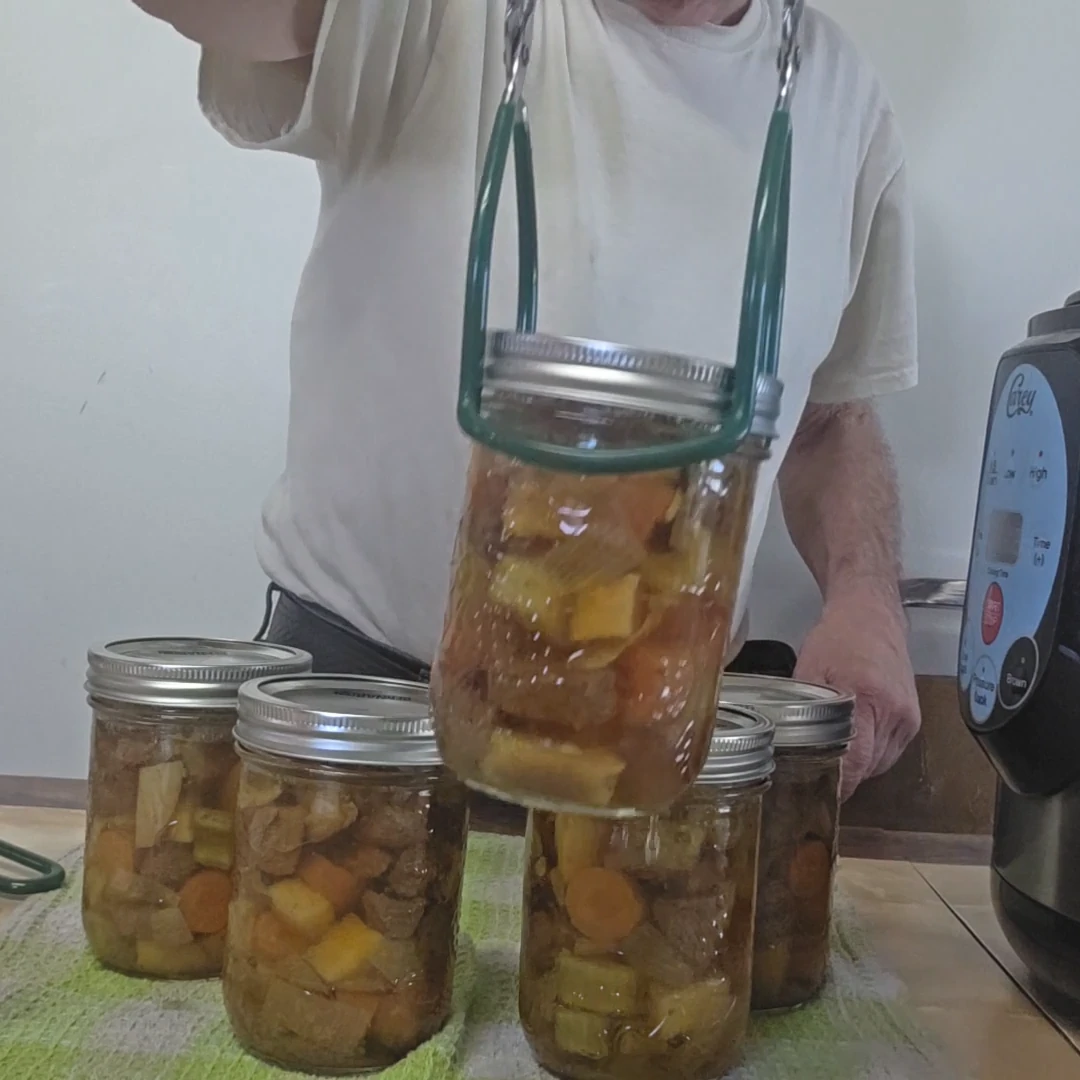
If you’re new to pressure canning, beef stew is one of the easiest meals in a jar you can make. It’s simple, forgiving, and when you’re done you’ve got a full meal sitting on the shelf ready to go. On those days when you don’t feel like cooking, all you have to do is open a jar, warm it up, and dinner is basically ready.
I’m calling this beef stew, but in my case it actually started with a couple of moose outside round roasts that I cut into cubes. That works just fine. Beef, moose, venison, even chicken will work for a meal like this. These are usually tougher cuts of meat, but that’s exactly what stewing and pressure canning are good at. By the time the jars are finished processing, that meat comes out nice and tender.
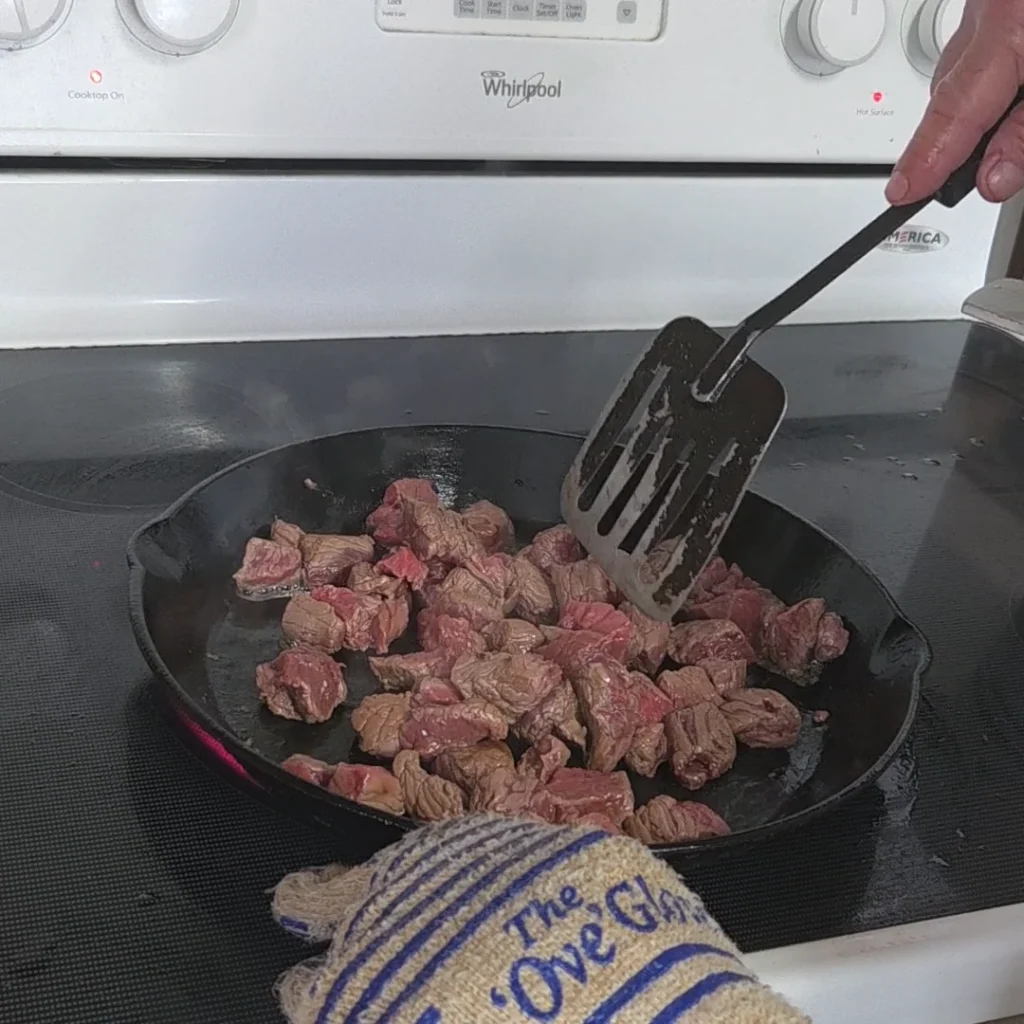
I started by browning the cubed meat in batches in a frying pan with a little canola oil. You don’t want to crowd the pan, so doing it in batches works best. You’re not trying to cook the meat through here, just getting a bit of color on it. That browning adds a lot of flavor to the stew later on.
The recipe I was following from Ball calls for six cups of cubed potatoes, but honestly that felt like a bit much to me, so I cut it back to four cups. That’s one of the nice things with a recipe like this. You can reduce the vegetables or swap them around a bit as long as they’re vegetables that are safe for canning.
I also ran short on carrots, so instead of the four cups the recipe suggested, I ended up with about three cups of sliced carrots. Along with that I sliced up about a cup and a half of celery and chopped two onions.
At first I thought I could do everything in my Dutch oven, but once the meat and vegetables started going in it became obvious it wasn’t going to be big enough. So I switched everything over to my three-gallon pot where I had a little room to work.
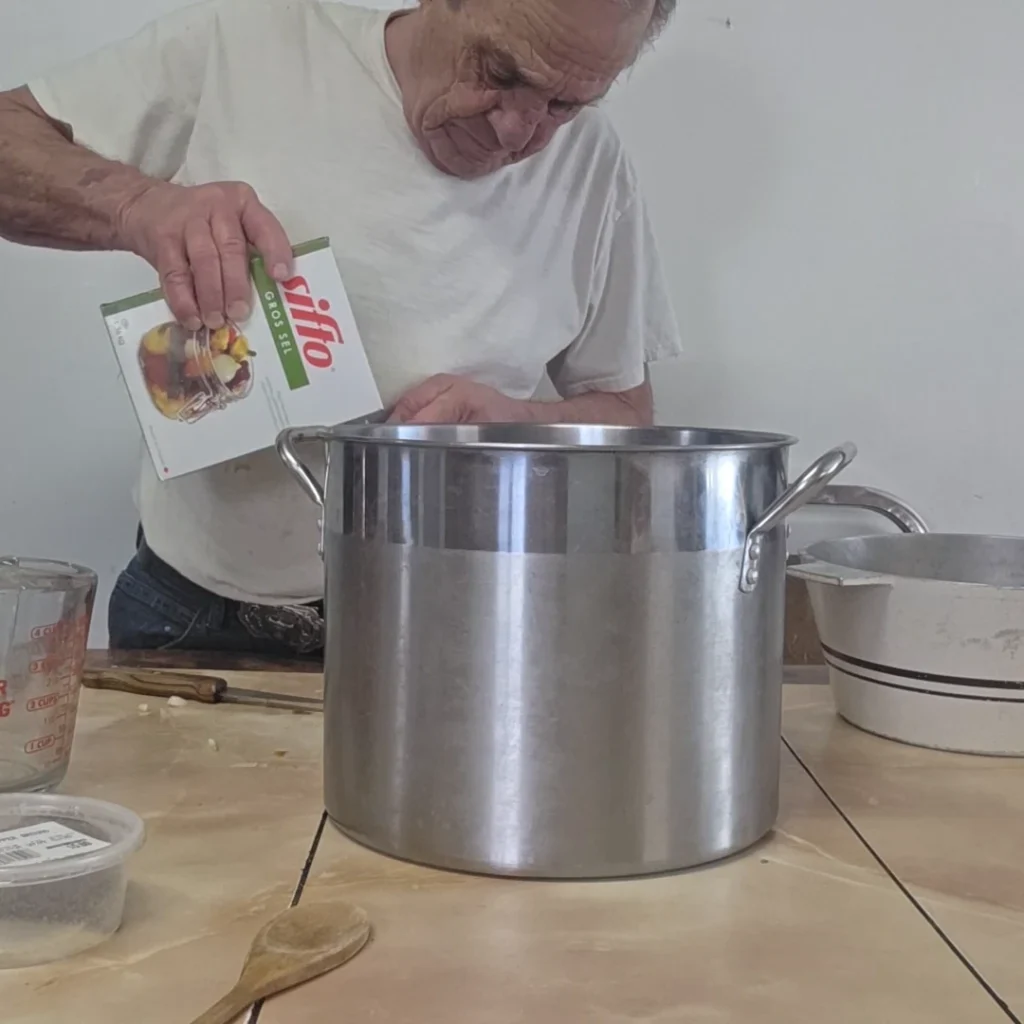
Once everything was in the pot I added the seasoning: about three-quarters of a teaspoon of pickling salt, half a teaspoon of thyme, and a quarter teaspoon of pepper. After giving that a good stir, it was time to add the liquid.
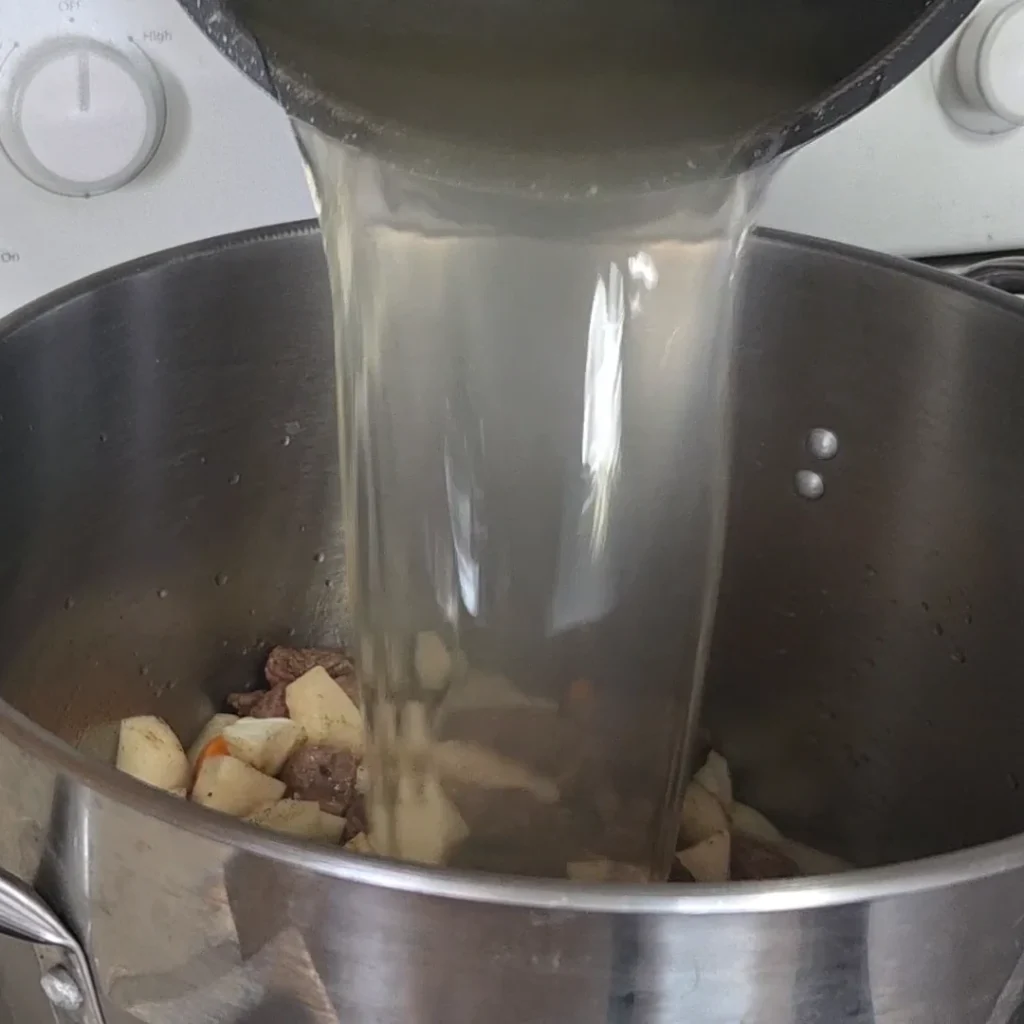
Ball’s recipe suggests using water, which works perfectly fine, but I had some beef stock on the shelf that I canned earlier so I decided to use that instead. Either way works. The main thing is bringing the liquid to a boil and adding enough to cover the stew mixture. In my case it took five pints of stock to get everything covered. Looking back I probably could have used half stock and half water, or even just water, and it would still have turned out fine.
While the pot was coming back up to a boil, I put my jars into hot water to warm them up. Once the stew was boiling, I started filling the jars. I packed the solids in first until they were just under one inch of headspace, then I ladled in the hot stock until everything was covered and the headspace was right at that one-inch mark.
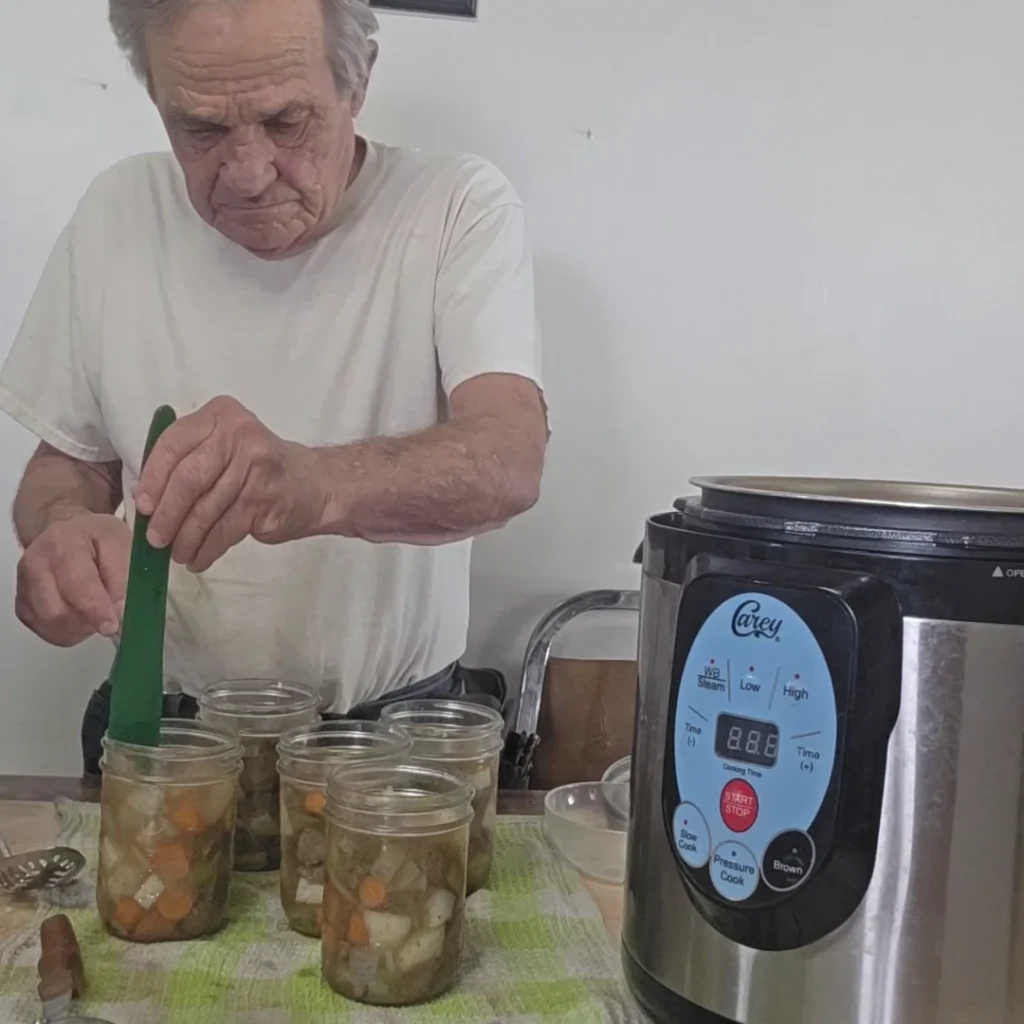
After that I wiped the jar rims with a paper towel dampened with a little vinegar to make sure they were clean. Then the lids went on and the bands were tightened just finger tight.
The jars went into my Carey electric pressure canner. My manual calls for eight cups of water in the canner, so that went in along with a splash of vinegar to help keep the jars from getting cloudy during processing.
I set the canner for 75 minutes of pressure canning, which is what the recipe calls for. At the start I left the vent open so the canner could do its ten minutes of exhausting. When the canner beeped to let me know those ten minutes were done, I closed the pressure vent and let it come up to pressure. Once it reached pressure, the 75-minute countdown started.
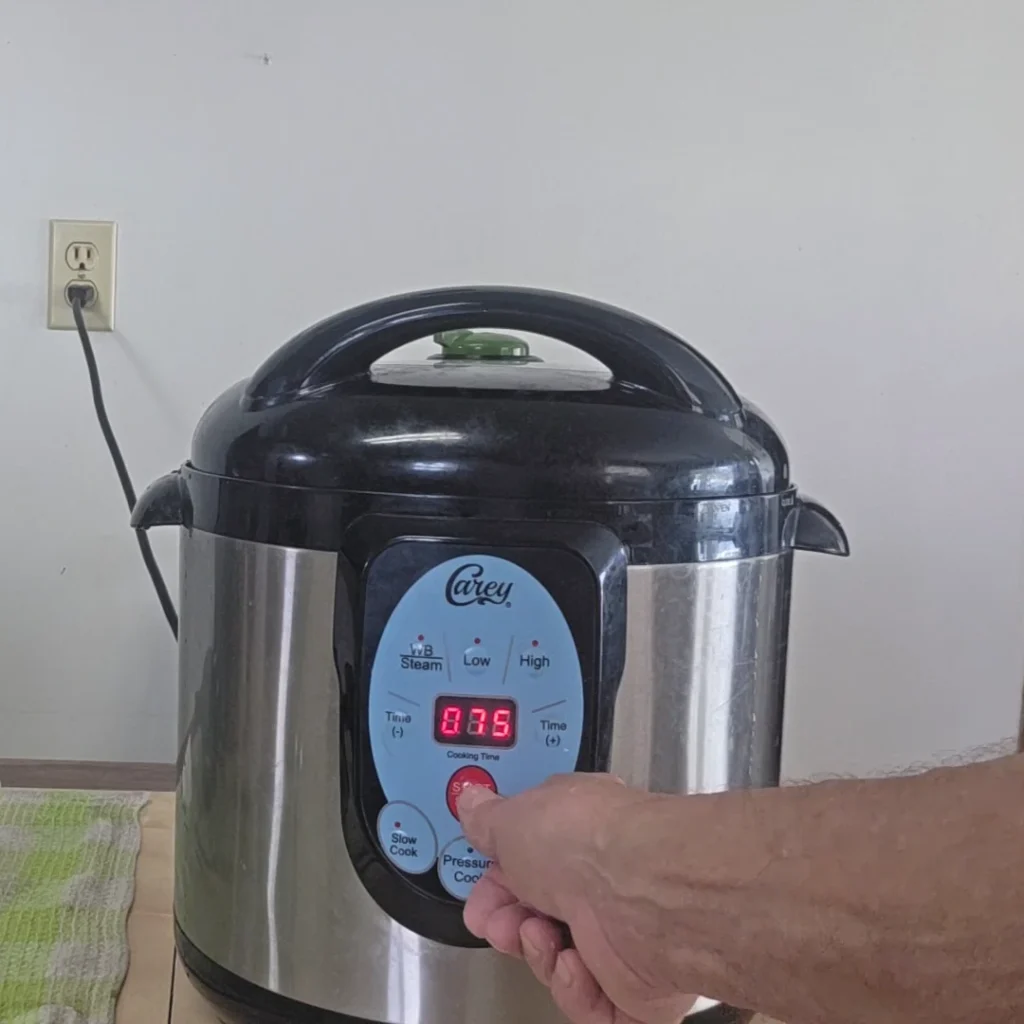
When the processing time was finished, the canner shut itself off. I just left it alone and waited until it depressurized on its own. After that I carefully opened the lid and let the jars sit in the canner for another ten minutes before taking them out.
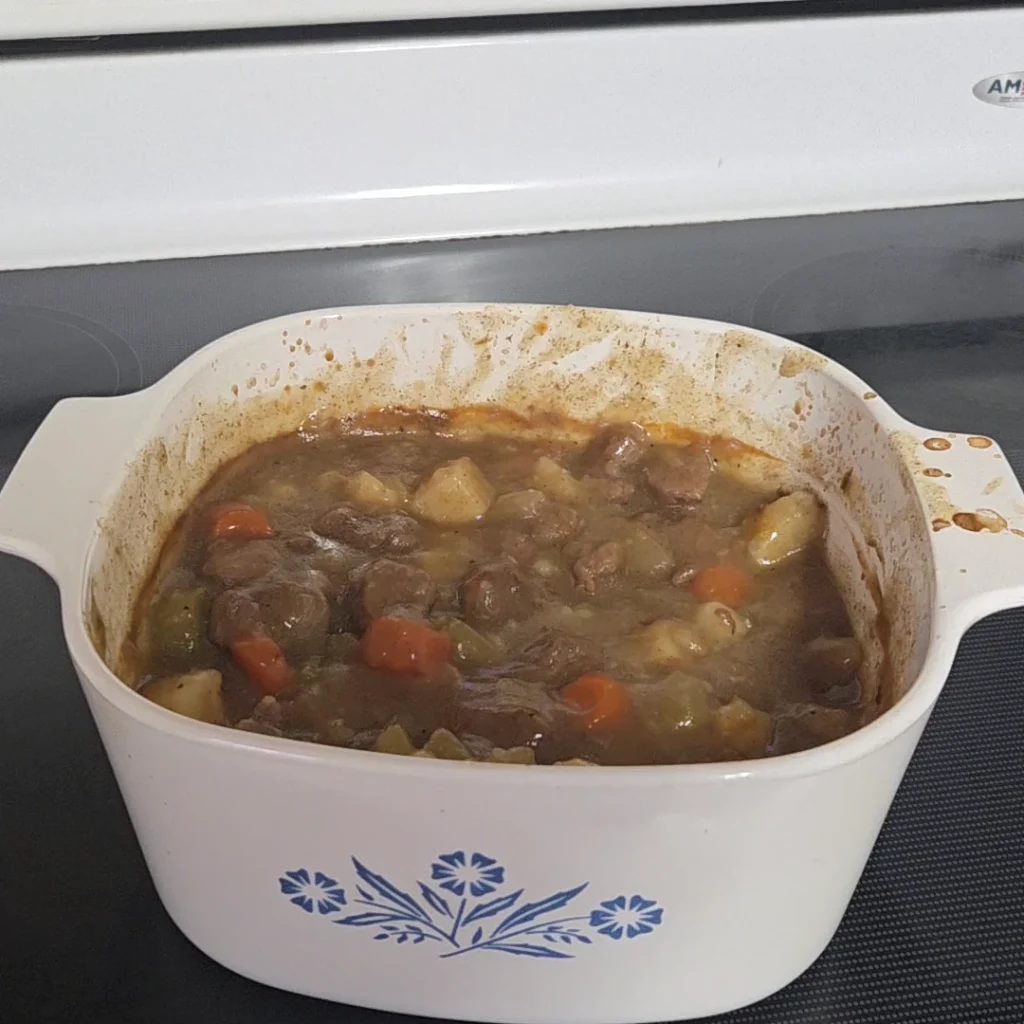
There was a little stew left over that didn’t quite make a full jar, so I put that into a casserole dish, added a bit of thickener, and set it in the oven at about 220 degrees for the rest of the day. By supper time it had thickened up nicely and tasted great.
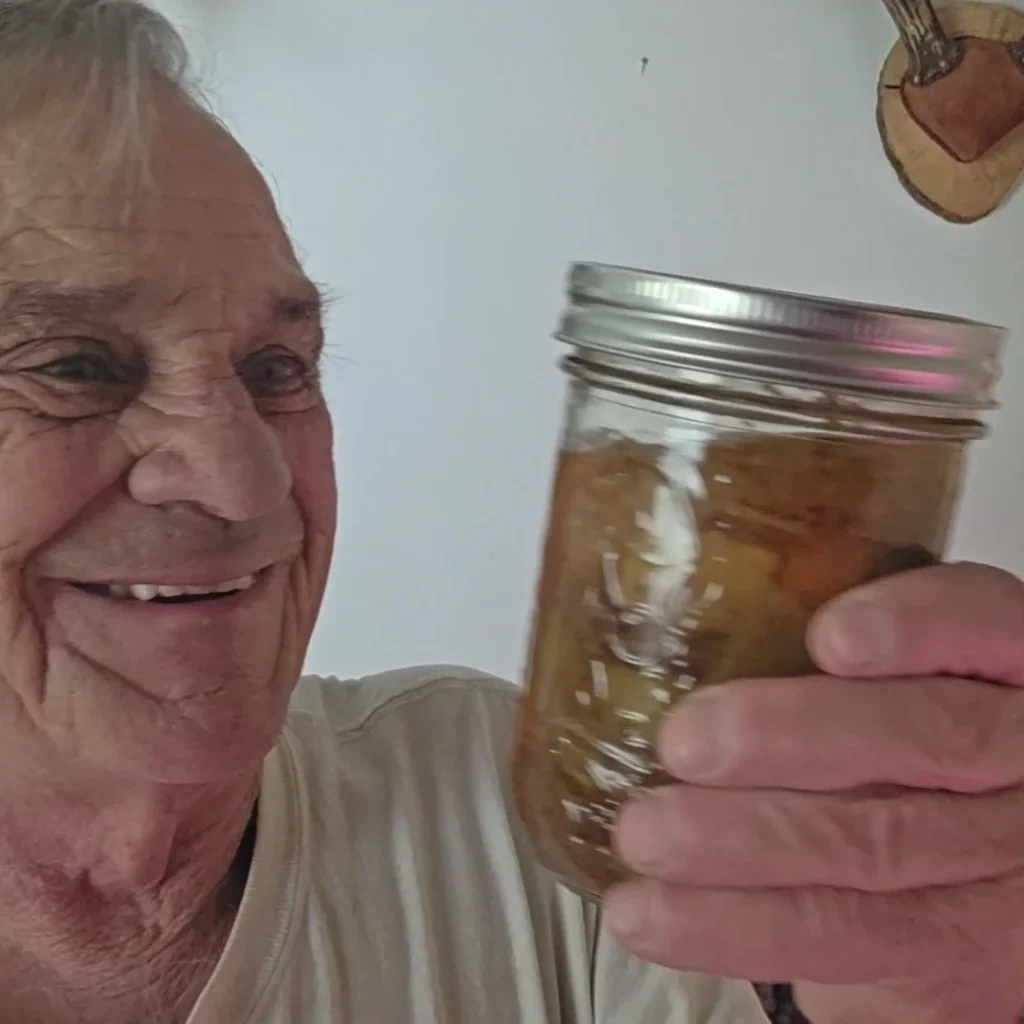
The next morning I checked the jars and every one of them had sealed properly, so they went onto the shelf for storage.
If you’re looking for a good, simple meal-in-a-jar recipe to start with, this is a hard one to beat. It’s straightforward, it uses ingredients most people already have, and when you open one of those jars later on you’ve got a hearty stew ready to warm up and eat.
Beef Stew – Meal In A Jar For Beginners
This simple pressure canned beef stew makes a hearty meal ready whenever you need it. Beef, moose, venison, or even chicken can be used. Once the jars are sealed and on the shelf, all you have to do is heat it up for an easy meal.
Ingredients
- 2–3 lbs cubed beef, moose, venison, or chicken
- Canola oil for browning
- 4 cups cubed potatoes
- 3 cups sliced carrots
- 1½ cups sliced celery
- 2 onions, chopped
- ¾ tsp pickling salt
- ½ tsp dried thyme
- ¼ tsp black pepper
- Hot beef stock or water (enough to cover stew)
Instructions
- Brown the cubed meat in batches in a frying pan with a little canola oil. You’re just adding color and flavor, not cooking it all the way through.
- Place the browned meat into a large pot and add the potatoes, carrots, celery, and onions.
- Add the pickling salt, thyme, and pepper. Stir everything together.
- Bring beef stock or water to a boil and pour it into the pot until the stew mixture is covered.
- Bring the stew back up to a boil.
- While it heats, place your canning jars in hot water to warm them.
- Fill the hot jars with the meat and vegetable mixture, leaving about 1 inch of headspace.
- Ladle hot broth over the solids until the jars still have 1 inch headspace.
- Wipe the jar rims with a paper towel dampened with vinegar.
- Place lids on the jars and tighten the bands finger tight.
- Place the jars into the pressure canner and add the amount of water required by your canner. A splash of vinegar in the water can help prevent cloudy jars.
- Leave the vent open and allow the canner to exhaust steam for 10 minutes.
- Close the vent and bring the canner up to pressure.
- Process jars using the correct time:
- Pints – 75 minutes
- Quarts – 90 minutes
- When processing time is complete, allow the canner to depressurize naturally.
- Open the lid carefully and let the jars sit in the canner for about 10 minutes before removing.
- Remove jars and allow them to cool undisturbed for 12–24 hours.
- Check the seals the next day and store sealed jars in a cool, dark place.
Notes
You can reduce or change the vegetables as long as they are safe for pressure canning. This recipe works well with beef, moose, venison, or chicken. When ready to eat, heat the contents of the jar. If you prefer thicker stew, add a thickener after opening and heating.
Print RecipeFrequently Asked Questions
Can I use moose or venison instead of beef?
Yes, you can. Moose, venison, beef, or even chicken will work for this recipe. Tougher cuts like outside round are actually great for stewing because the pressure canning process makes them tender.
Do I have to brown the meat first?
Browning isn’t required for safety, but it adds a lot of flavor to the finished stew. Taking the time to brown the meat in batches before adding it to the pot makes a noticeable difference.
Can I change the vegetables in the stew?
You can reduce the amount of vegetables or swap them for other vegetables that are safe for pressure canning. Just avoid thickening the stew before canning.
Can I use water instead of beef stock?
Yes. Many tested recipes use water. Beef stock simply adds a little more flavor, but either one works well for this stew.
Can I thicken the stew before canning?
No. Thickening agents like flour, cornstarch, or roux should not be added before pressure canning. If you prefer a thicker stew, add the thickener after opening the jar and reheating it.
How long do I pressure can beef stew?
Process pint jars for 75 minutes and quart jars for 90 minutes at the pressure recommended for your canner and altitude.
Why do I wipe the jar rims with vinegar?
Wiping the rims removes any grease or food particles that might prevent a good seal. Vinegar helps cut through any fat from the meat.
Why let the jars sit in the canner before removing them?
Letting the jars sit for about 10 minutes after opening the lid helps reduce pressure shock. This can help prevent liquid loss and helps the jars settle before moving them.
How long should the jars sit before checking the seals?
Let the jars cool undisturbed for 12 to 24 hours. After that you can check the seals and move the sealed jars into storage.
How do I serve the stew after opening the jar?
Just pour the contents into a pot and heat it up. If you like thicker stew, you can add a little flour, cornstarch, or another thickener while reheating.

Leave a Reply