
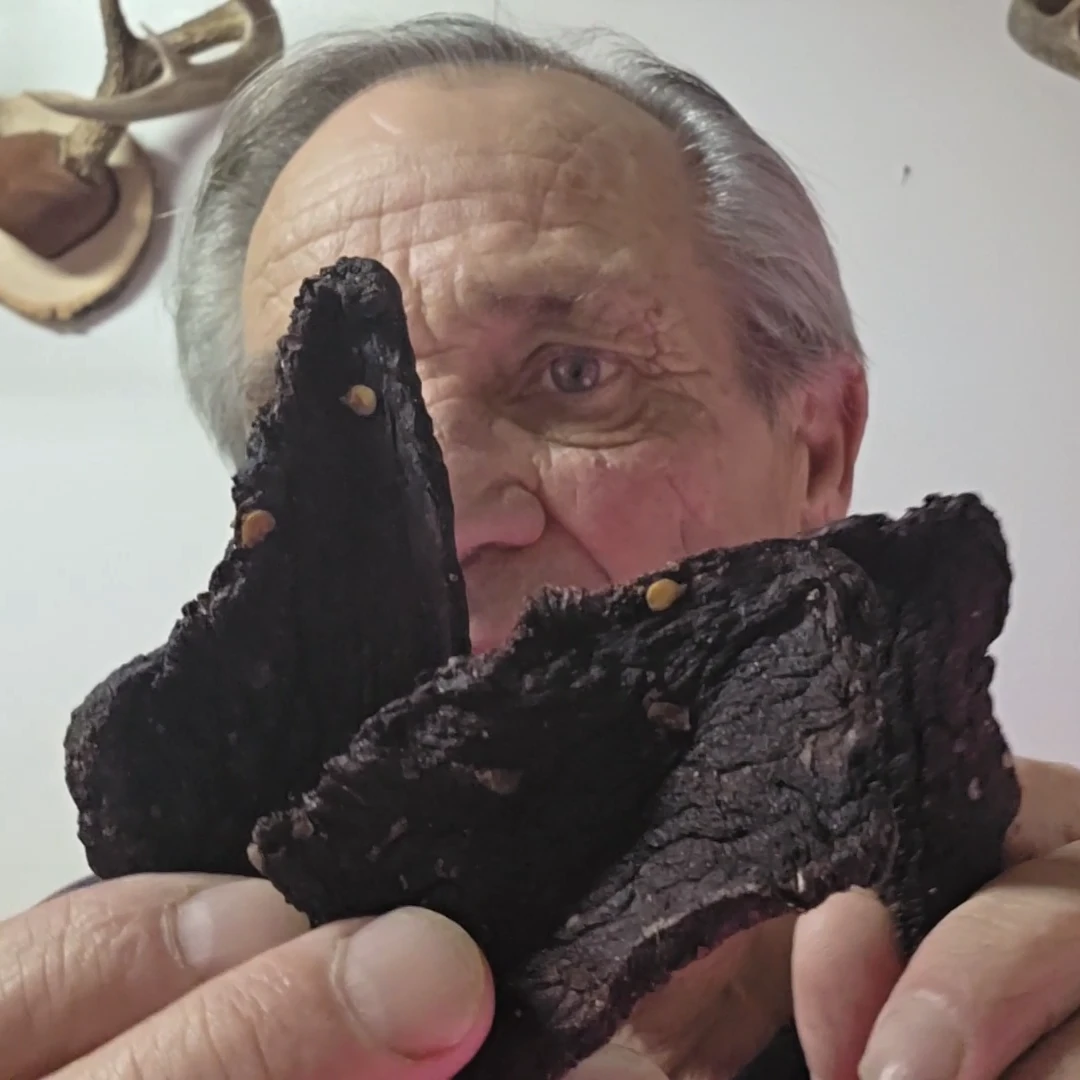
A buddy of mine handed me this jerky recipe a while back, so around here it’s just called Al’s Jerky. Nothing fancy about it – just one of those recipes you keep making because it works.
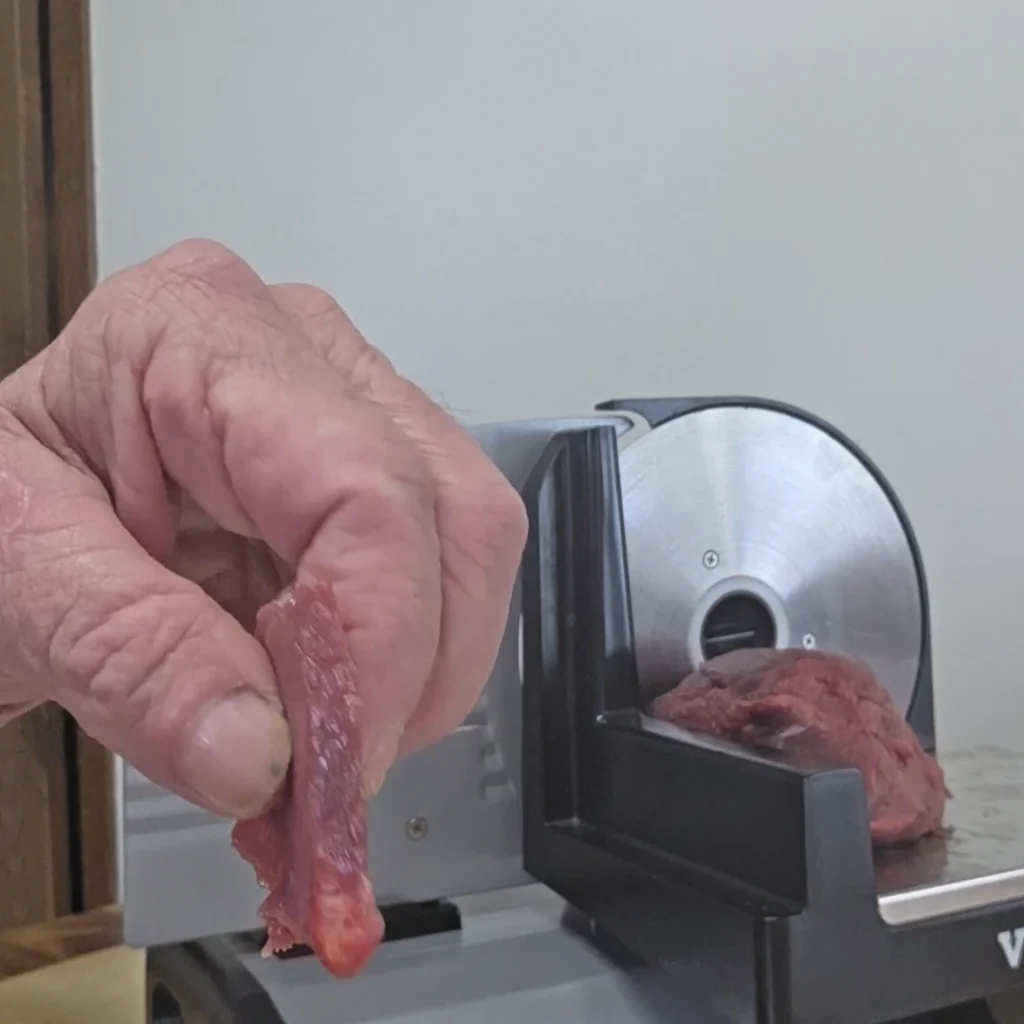
I started with a pound of moose chuck roast. I let it thaw just enough so it was still a bit firm, then sliced it about a quarter inch thick across the grain. Cutting across the grain matters more than people think… it’s the difference between chewable jerky and something that feels like you’re fighting rope.
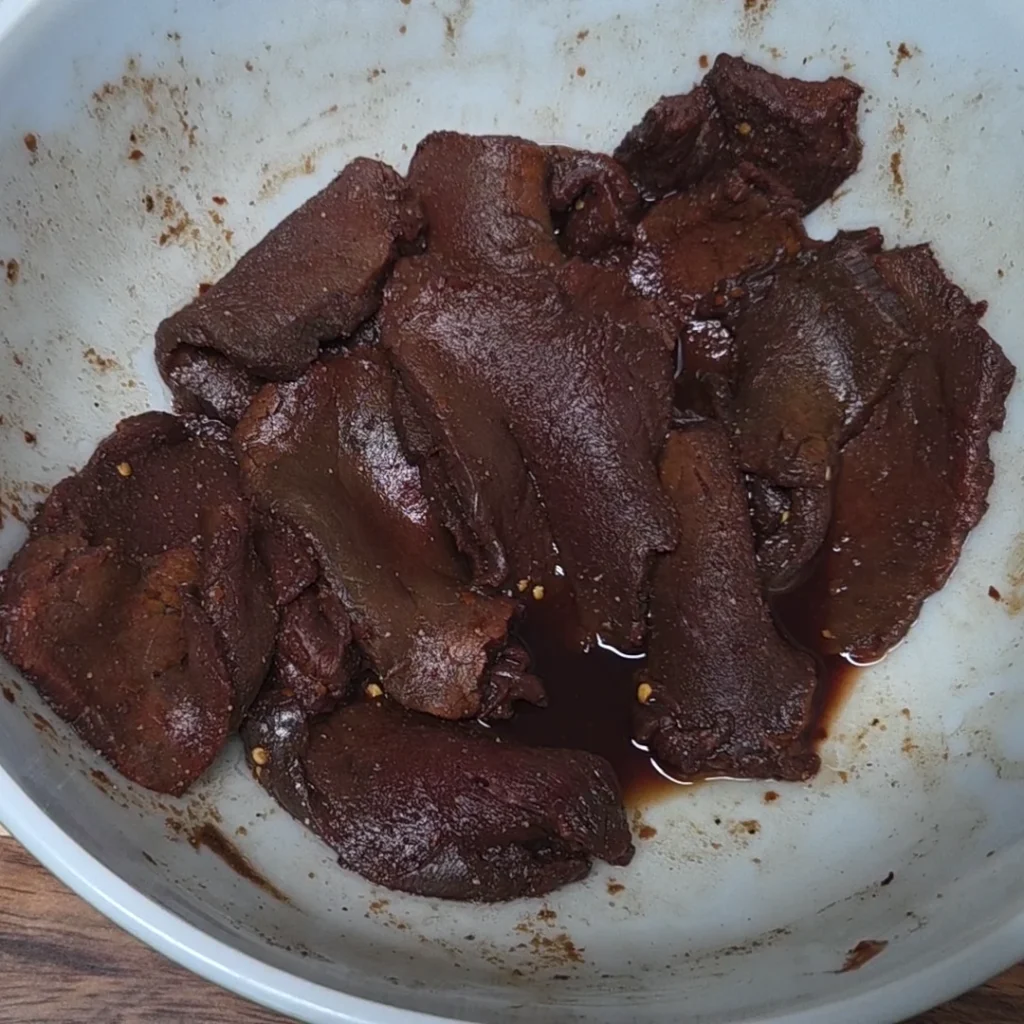
The slices went into a glass bowl and I mixed in the marinade: soy sauce and Worcestershire, a bit of ketchup, pepper, garlic powder, and cure. I stirred it around so everything got coated and put it in the fridge overnight, giving it a stir a couple times whenever I walked past.
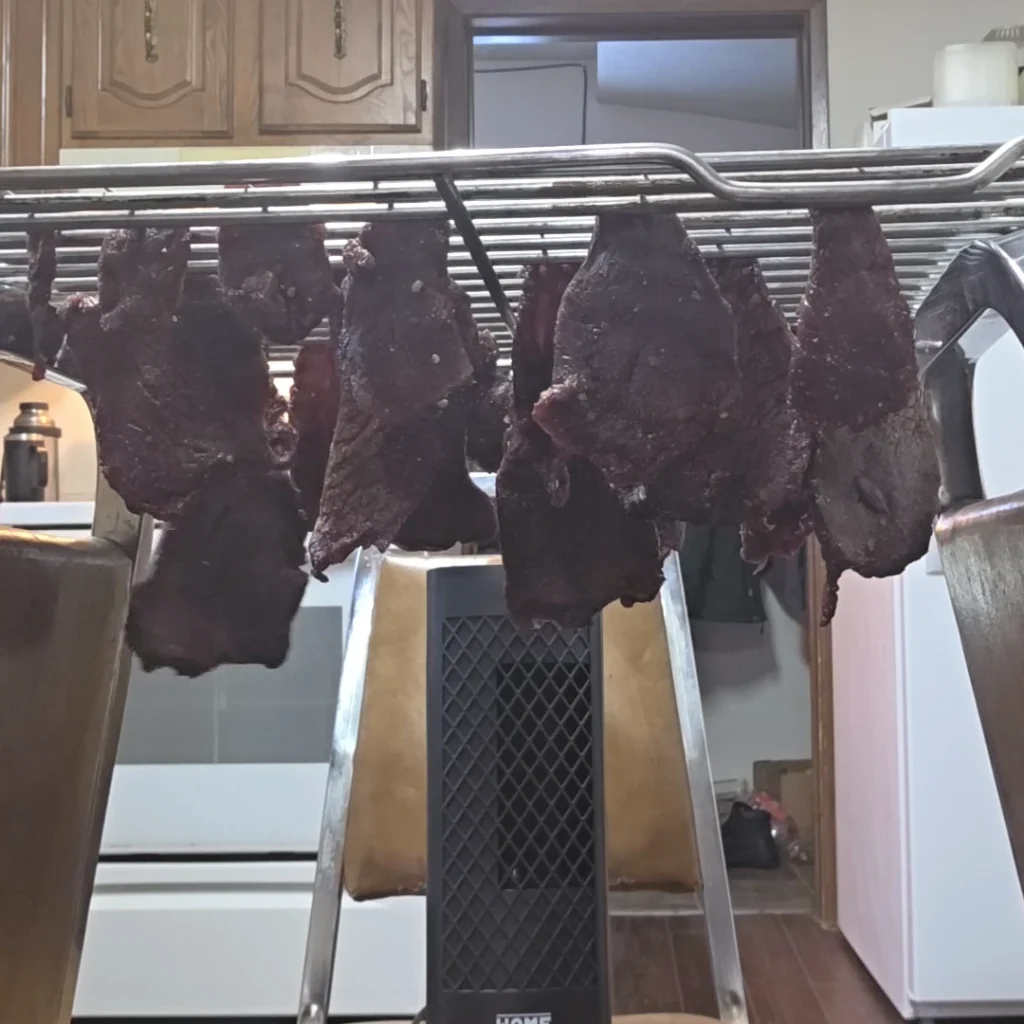
Next morning I tried hanging the strips from the smoker rack using toothpicks and set them in front of a fan in the house to dry. In theory that should help form the pellicle, but honestly it just wasn’t doing much. So into the smoker they went instead and I set it low at 120°F to dry the surface.
After about an hour the meat had that slightly tacky feel called the pellicle – so I bumped the smoker up to 160°F and started the smoke generator. I used hickory this time. It worked fine, but I already know I’ll go back to maple next time. I just like maple better. Use whatever smoke you prefer.
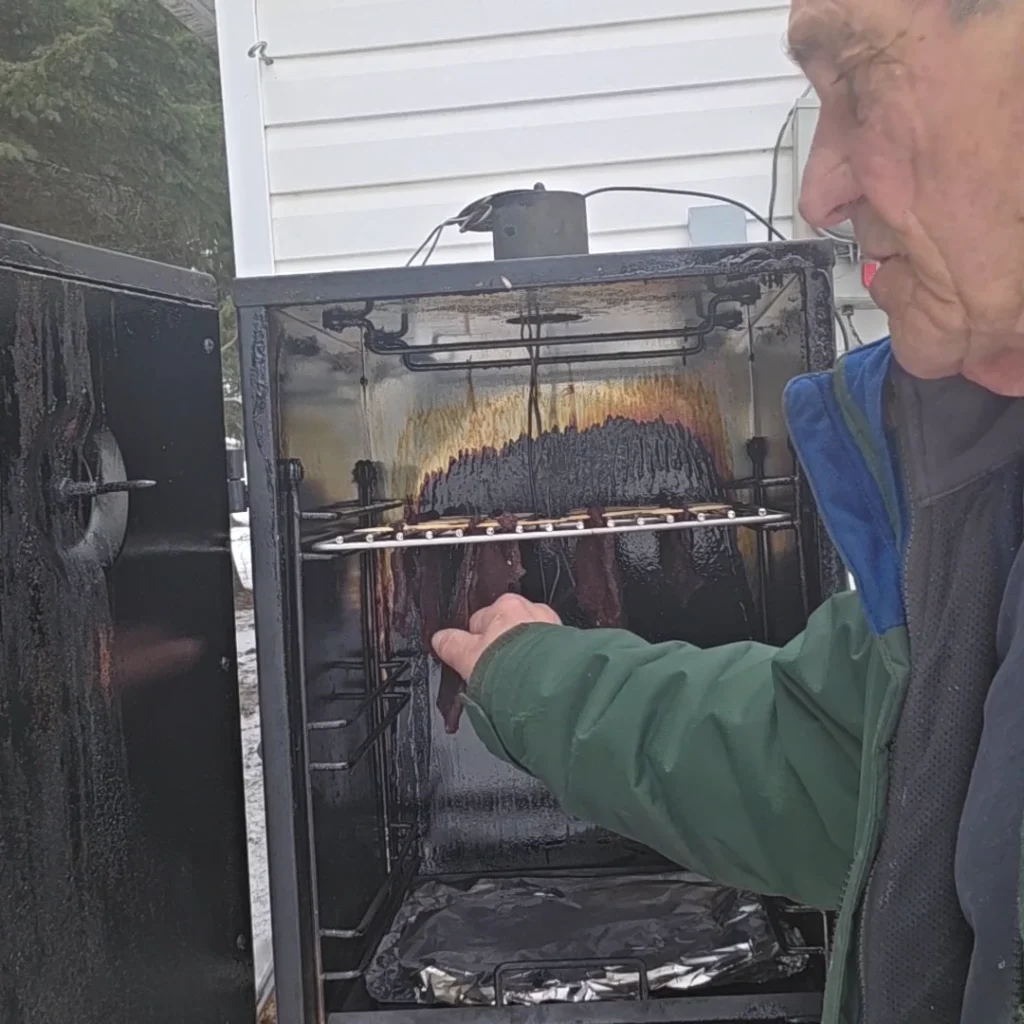
They stayed at 160°F for about two hours, then I raised the temperature again to 180°F to finish drying.
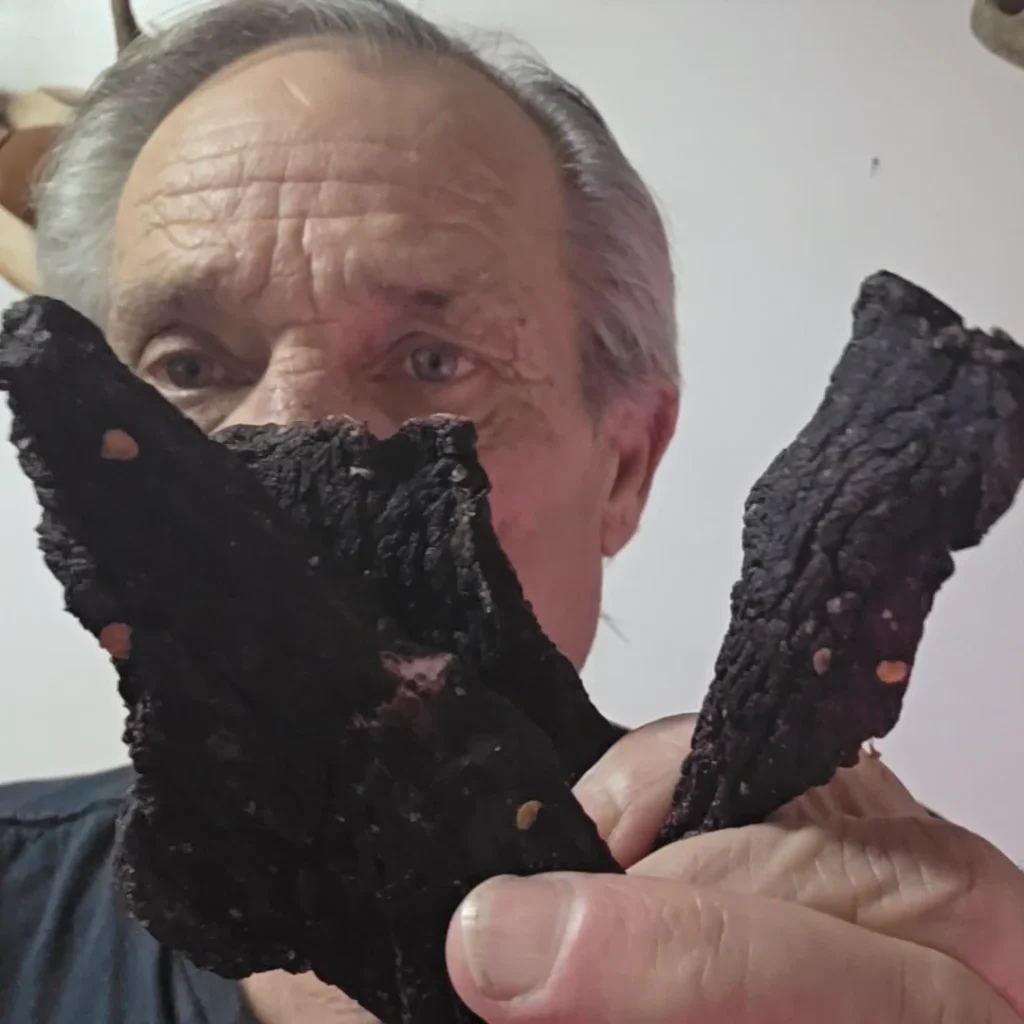
Jerky is technically done when it cracks but doesn’t snap when you bend it, but here’s the problem: warm jerky lies to you. It feels softer than it really is. So every once in a while I brought a piece into the house, let it cool on the counter, then bent it to check. That’s the only reliable way.
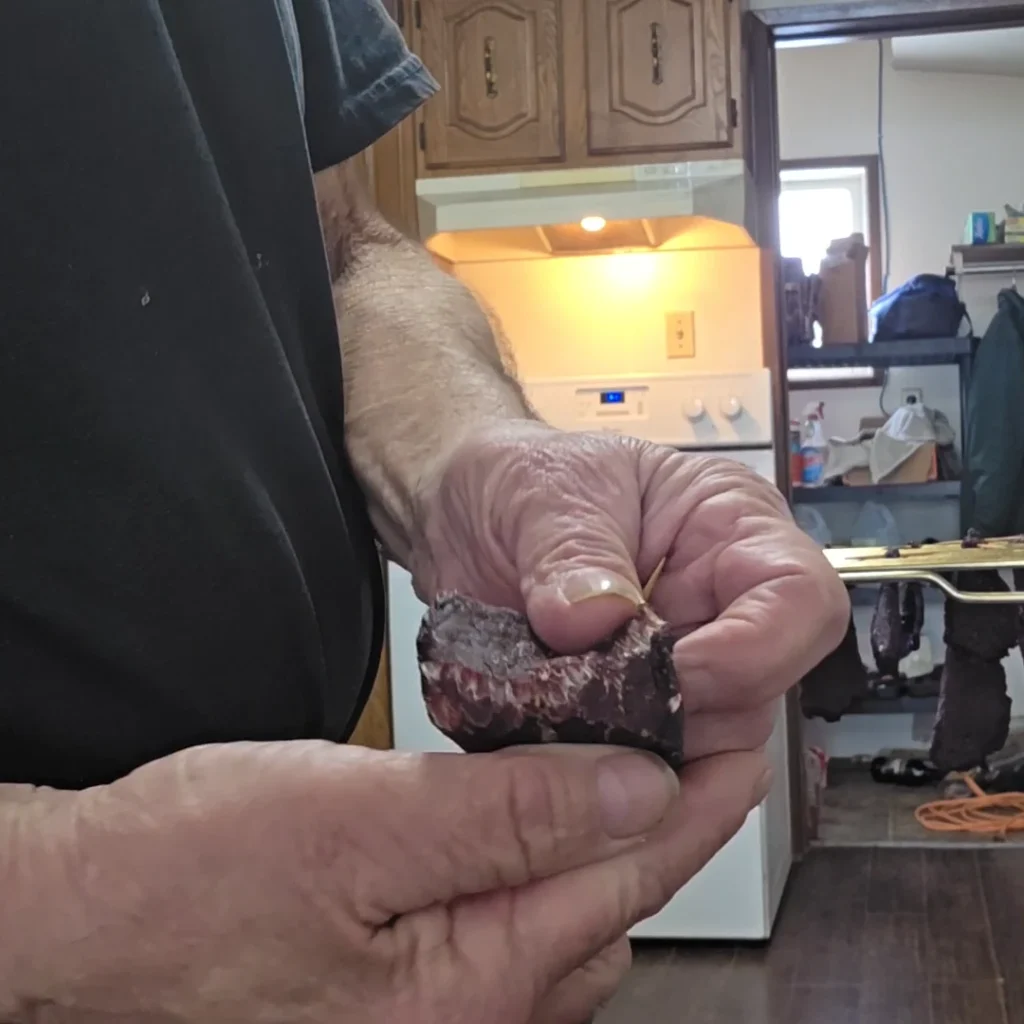
Because of the low smoking temperatures this batch took over four hours, and that’s exactly why I used cure. Slow smoking without it gets risky. Al actually just runs his at 200°F for about two hours, and honestly I might try his way next time just to compare.
The flavor turned out really good though.
One thing worth mentioning – don’t seal fresh jerky in a plastic bag right away. If there’s even a little moisture left it’ll sweat and soften. I leave mine in a paper bag or a jar at first so it can breathe. After it’s fully dry, then it can be vacuum sealed and frozen if I want to keep it longer.
Al’s Jerky
A simple smoked jerky made with a basic marinade and slow drying for a classic texture.
Ingredients
- 1 lb meat (moose, beef, or similar)
- 4 tbsp soy sauce
- 4 tbsp Worcestershire sauce
- 1 tsp ketchup
- 1/4 tsp black pepper
- 1/4 tsp garlic powder
- 1/4 tsp onion powder
- 1/4 tsp red pepper flakes (or to taste)
- 1/4 tsp cure
Instructions
- Partially thaw the meat so it is still firm and slice 1/4 inch thick across the grain.
- Place slices in a glass bowl and mix in all marinade ingredients until evenly coated.
- Refrigerate overnight, stirring a couple of times.
- Hang the strips from racks using toothpicks or hooks.
- Dry at 120°F for about 1 hour until the surface becomes slightly tacky (pellicle forms).
- Raise smoker temperature to 160°F and apply smoke for about 2 hours.
- Increase temperature to 180°F and continue drying until jerky cracks but does not break when bent after cooling.
Alternate Faster Method
- Smoke at 200°F for about 2 hours or until properly dried.
Notes
- Test doneness only after the jerky cools — warm jerky feels softer than it really is.
- Do not seal in plastic immediately. Let it rest in a paper bag or jar first to release remaining moisture.
- Once fully dry, vacuum seal and freeze for long storage.
Jerky FAQ
Do I need to use cure for this jerky?
It’s optional, but I highly recommend it if you’re smoking at low temperatures for several hours. Cure helps prevent bacterial growth during the long drying process.
How do I know when the jerky is done?
Jerky is done when it cracks but doesn’t break when bent. Warm jerky can feel softer than it is, so it’s best to test a piece after it cools.
Can I use different types of wood for smoking?
Absolutely. I prefer maple for a slightly sweet flavor, but hickory, cherry, or oak all work. Use whichever you enjoy the taste of most.
Can I store jerky in plastic bags right after smoking?
No, it’s best to let it cool and rest in a paper bag or jar first so any remaining moisture can escape. Once fully dry, you can vacuum seal or freeze it for longer storage.
Do I have to hang the jerky with toothpicks?
Hanging helps airflow and forms a good pellicle, but you can also lay strips flat on the smoker racks if needed. Just make sure air can circulate around each piece.
How long should I marinate the meat?
Overnight is ideal. It lets the soy, Worcestershire, and spices soak in evenly. Give it a stir a couple times while it’s in the fridge.

Leave a Reply