
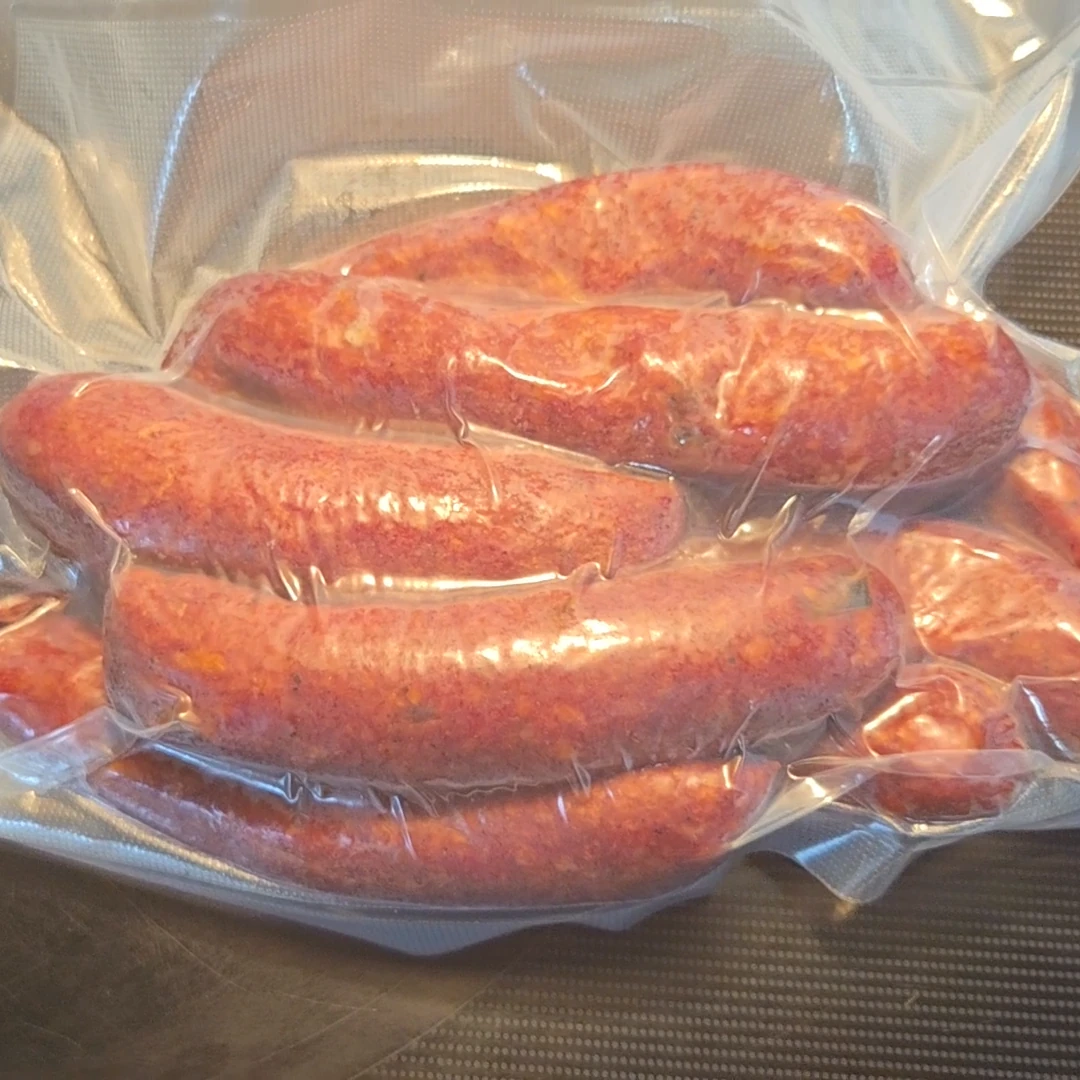
This batch of jalapeño and cheddar smokies was one of those sausage-making days where nothing went right. I started out confident and ended up wondering why I even bothered. Just about everything that could go wrong did, and more than once I thought these were headed straight for the garbage can. Somehow, though, they still turned out pretty good.
I was trying out a new version of the recipe, so I only used 2½ pounds of ground beef for this batch. The original recipe is written for 10 pounds, so I scaled it down to a quarter to see how it would work. I’ll include the full 10-pound version at the end so you don’t have to do the math if you want a bigger batch.
I ran the beef through the grinder a second time with a fine plate, then put it back in the fridge to chill. Cold meat is your friend when you’re making sausage because warm meat smears fat and won’t bind properly, and when things start moving slower than planned—which they did—that really matters.
While the meat chilled, I mixed up the seasoning: salt, pepper, onion powder, garlic powder, mustard seed, corn sugar, marjoram, a little cayenne, cure, shredded cheddar, chopped jalapeños, and cold water. Once the meat came out again, I mixed everything together until it was well combined, then put it back in the fridge while I set up the stuffer.
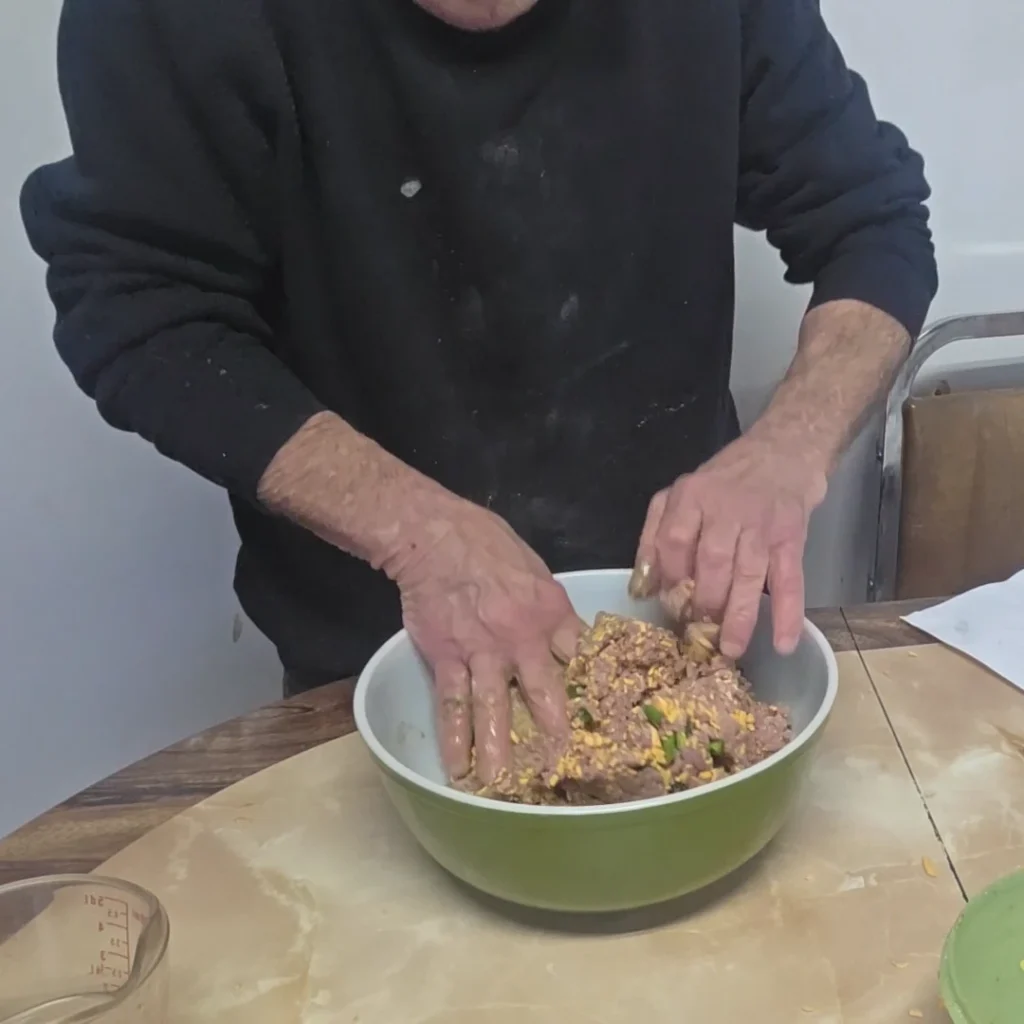
And that’s when things started to go sideways.
I had planned to use cellulose casings because they peel off before eating—they’re easier on sensitive teeth—and I’d used them before with no problems. But these had passed their prime and tore on the stuffing tube. I tried using collagen casings next. No problem, I grabbed some, but stuffing them was a mess—they tore and split, and I couldn’t use them.
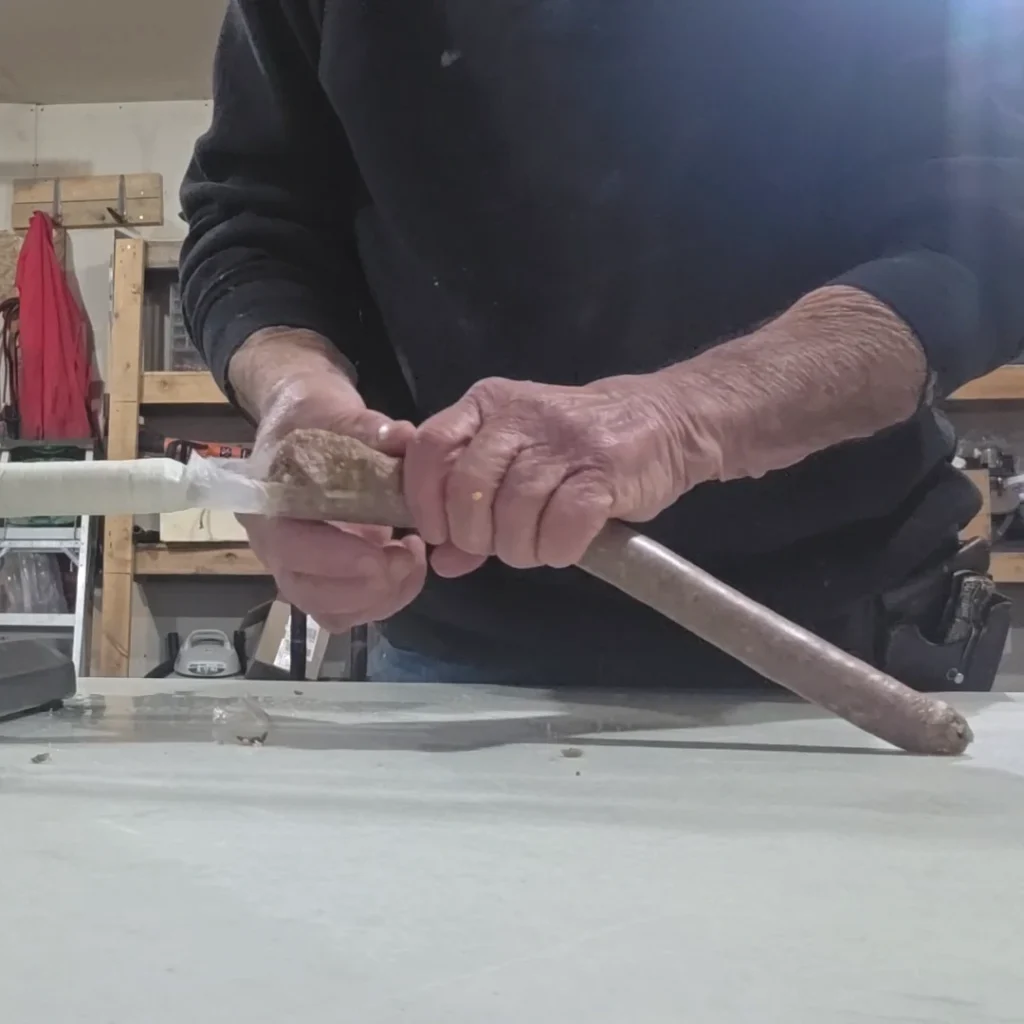
Finally, I rinsed some hog casings and soaked them in water with a little baking soda for about fifteen minutes. Normally, I soak natural casings overnight, but these stuffed perfectly. Problem solved, even if it wasn’t the plan.
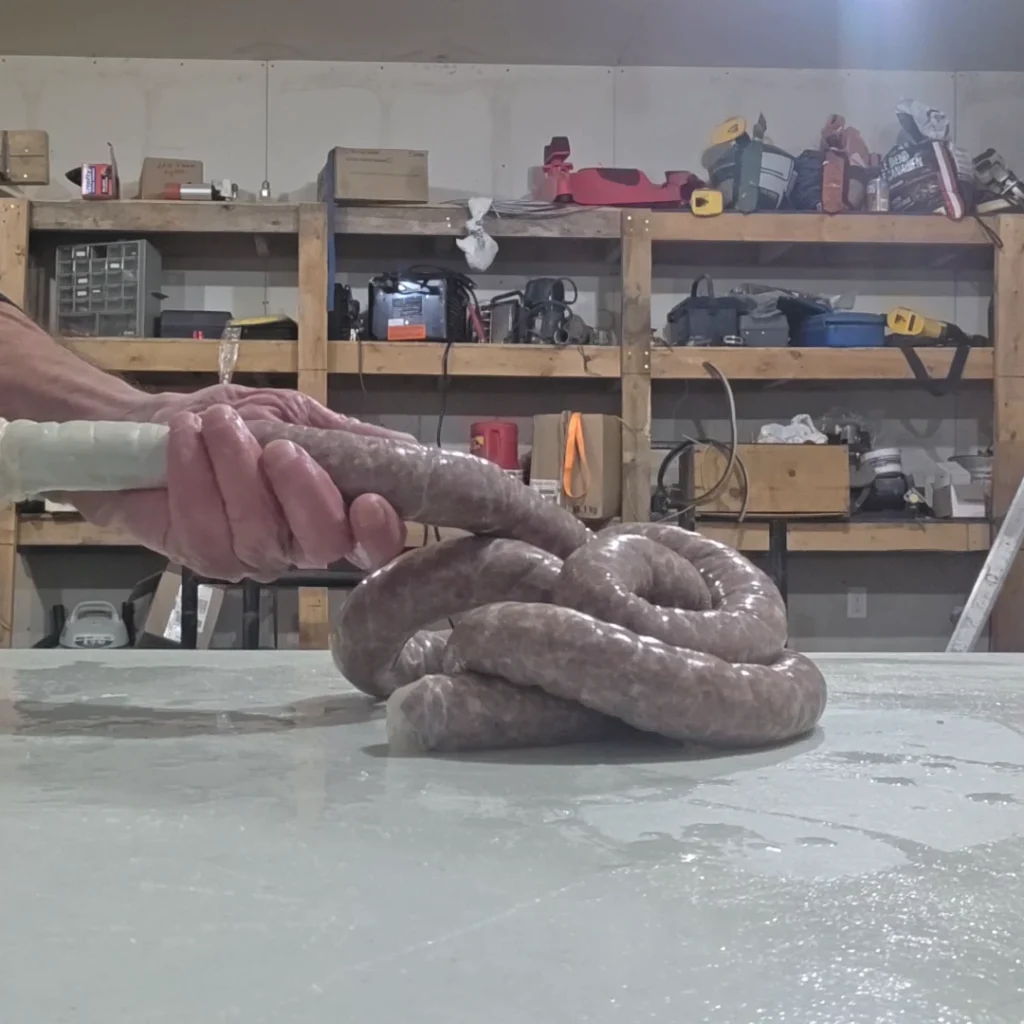
I linked the sausages into five-inch links, but somehow twisted every single one the same direction instead of alternating. I bagged them up and let them rest in the fridge overnight so the cure and spices could meld. The next morning, I fixed the twist by turning every second link the opposite way.
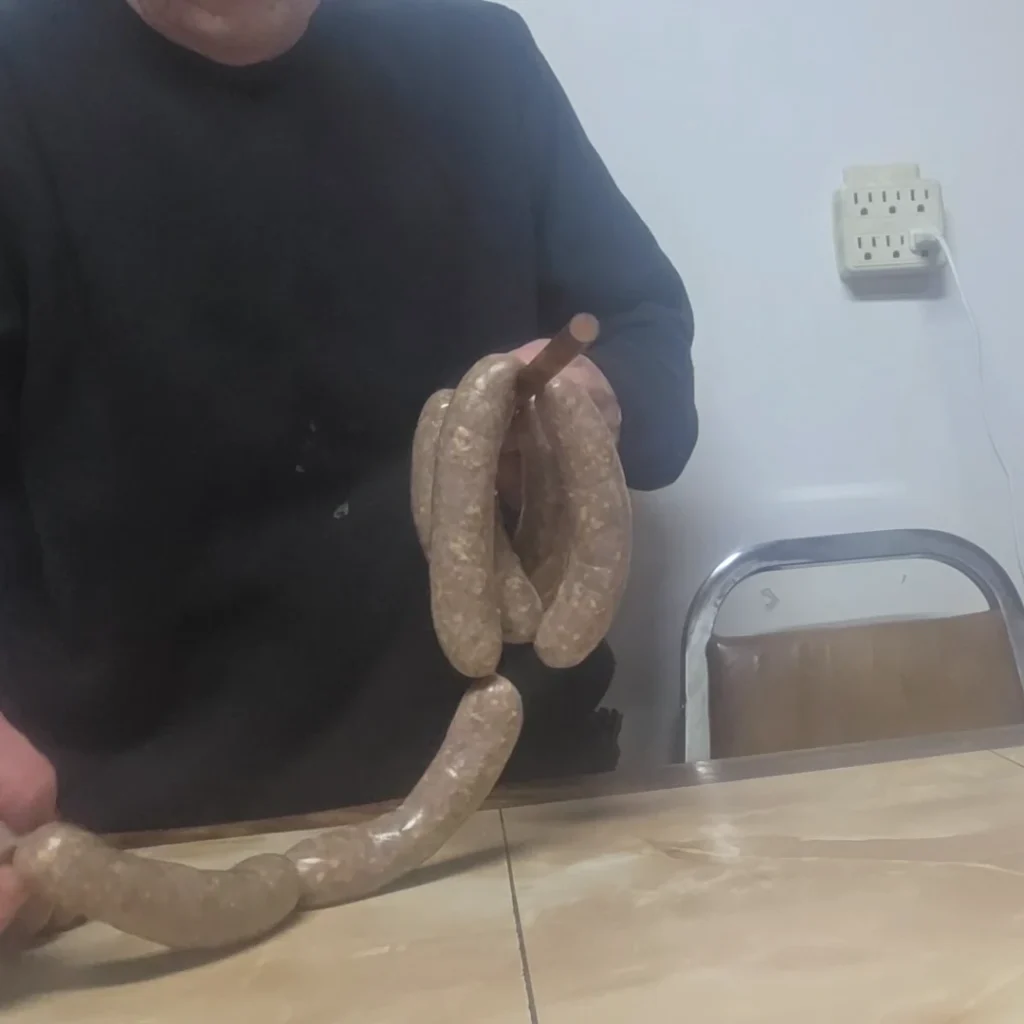
They went into the smoker at 120°F with the vent wide open to dry the casings and form a pellicle. After that, I brought the temp up to 145°F and started the smoke. Things went fine for the first couple of hours, then the PID controller decided to quit cooperating. The temp started dropping, so I unplugged it, plugged it back in, and repeated that cycle more times than I’d like to admit.
Normally, after two hours at 145°F, I’d raise the smoker to around 175°F to push the sausages to an internal temp of 152°F. That didn’t happen this time, so I let the smoker run at whatever temperature it could manage. Luckily, it was about -18°C outside, so it never climbed above 200°F. Once the sausages hit 152°F, I pulled them and dunked them in ice-cold water for ten minutes.
After that, they hung at room temp for a few hours, then went into the fridge overnight.
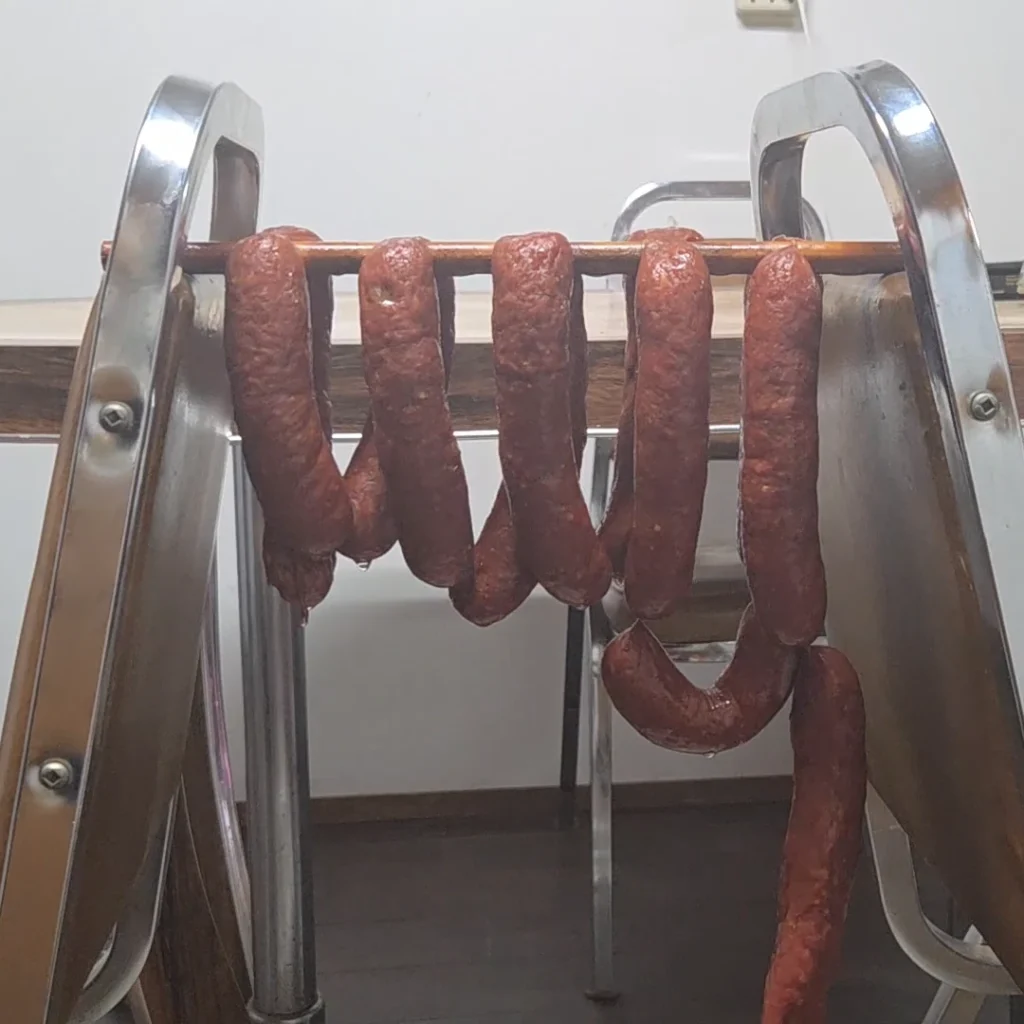
When I finally tried them, they were slightly drier than I like when eaten cold. Cooked, though, they were perfect. I wondered if the beef didn’t have enough fat, but the pepperoni snack sticks I made from the same batch were fine, so the temperature swings during the smoke were probably the culprit.
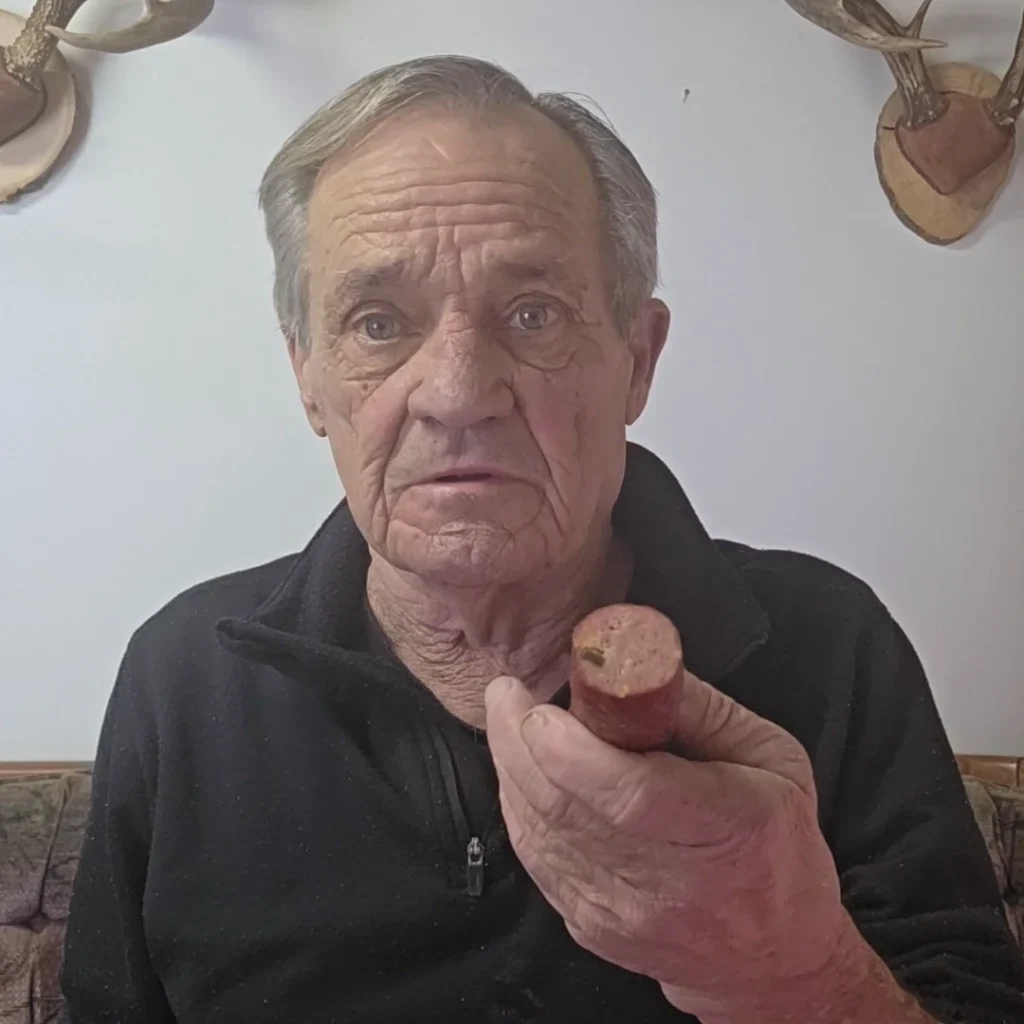
Even with all the chaos, the flavor came through exactly as I wanted. The cheddar and jalapeño balanced nicely, and the seasoning was spot on. Considering everything that went wrong, I’m more than happy with how they turned out. This is definitely going to be my go-to smokies recipe, with or without cheese and jalapeños.
Jalapeño & Cheddar Smokies
Ingredients
- 10 lbs ground meat
- 3 tbsp salt
- 3 tbsp ground pepper
- 3 tbsp onion powder
- 3 tbsp garlic powder
- 3 tbsp mustard seed
- 2 tbsp corn sugar
- 1 tbsp marjoram
- ½ tsp cayenne pepper
- 2 tsp cure
- 4½ cups shredded cheddar
- 2 cups fresh chopped jalapeño peppers
- 2 cups ice cold water
- 2 cups binder (plus extra water if your binder calls for it – do not add extra water for milk-based binder)
Instructions
- Run the ground meat through a grinder twice with a fine plate and chill in the fridge.
- Mix together salt, pepper, onion powder, garlic powder, mustard seed, corn sugar, marjoram, cayenne, cure, cheddar, jalapeños, and water.
- Add the spice mixture to the chilled meat and mix until well combined. Chill again while setting up the stuffer.
- Stuff sausages into prepared casings and link into approximately 5-inch links.
- Hang or place in a smoker at 120°F with the vent wide open for 1–2 hours to dry casings and form a pellicle.
- Raise smoker temp to 145°F and smoke for 2 hours.
- Increase heat to around 175°F (or up to 200°F if needed) until sausages reach an internal temp of 152°F.
- Immediately dunk in ice-cold water for 10 minutes, then hang at room temperature to dry.
- Refrigerate overnight before cooking or storing. Wrap, vacuum seal, or freeze as desired.
Frequently Asked Questions
Can I make these smokies without cheese?
Yes! The cheddar adds flavor and a bit of moisture, but you can leave it out if you prefer a plain jalapeño smokie. Just adjust the seasoning slightly if needed.
What type of casing should I use?
It’s mostly a matter of personal preference. Natural hog casings, collagen, and cellulose casings all work.
Why is cold meat important when making sausage?
Cold meat binds better and prevents the fat from smearing. This keeps the sausage texture firm and prevents greasy, crumbly links.
Can I freeze these sausages?
Absolutely. After smoking and cooling, you can wrap or vacuum seal them and freeze for later. They’ll keep for several months in the freezer.
How do I know when the sausages are done?
Use a meat thermometer and pull the sausages when they reach an internal temperature of 152°F. Immediately dunk in ice-cold water to stop the cooking process and set the texture.

Leave a Reply