
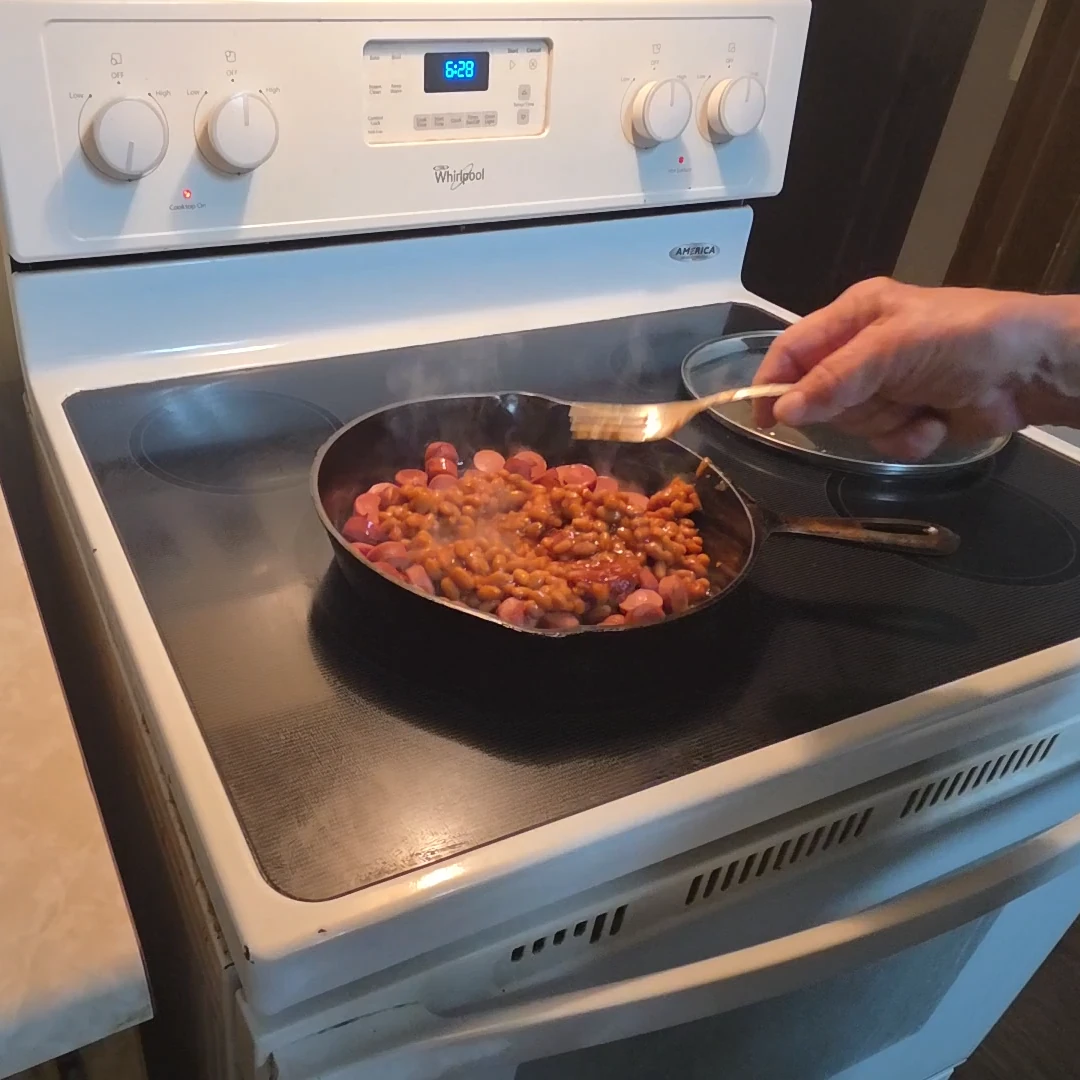
I’ve canned beans before, so this wasn’t my first time, but every batch seems to teach you something. This time, I started with what I thought was the right amount of navy beans – two and a half cups – but later realized I’d written down the wrong amount. The recipe actually calls for more, so I ended up with fewer jars than I would have liked, but it didn’t affect the process.
I soaked the beans overnight in distilled water. I’ve learned from experience that well water can make beans hard, so I always use distilled now, from start to finish. By morning, the beans had absorbed plenty of water and were ready to cook.
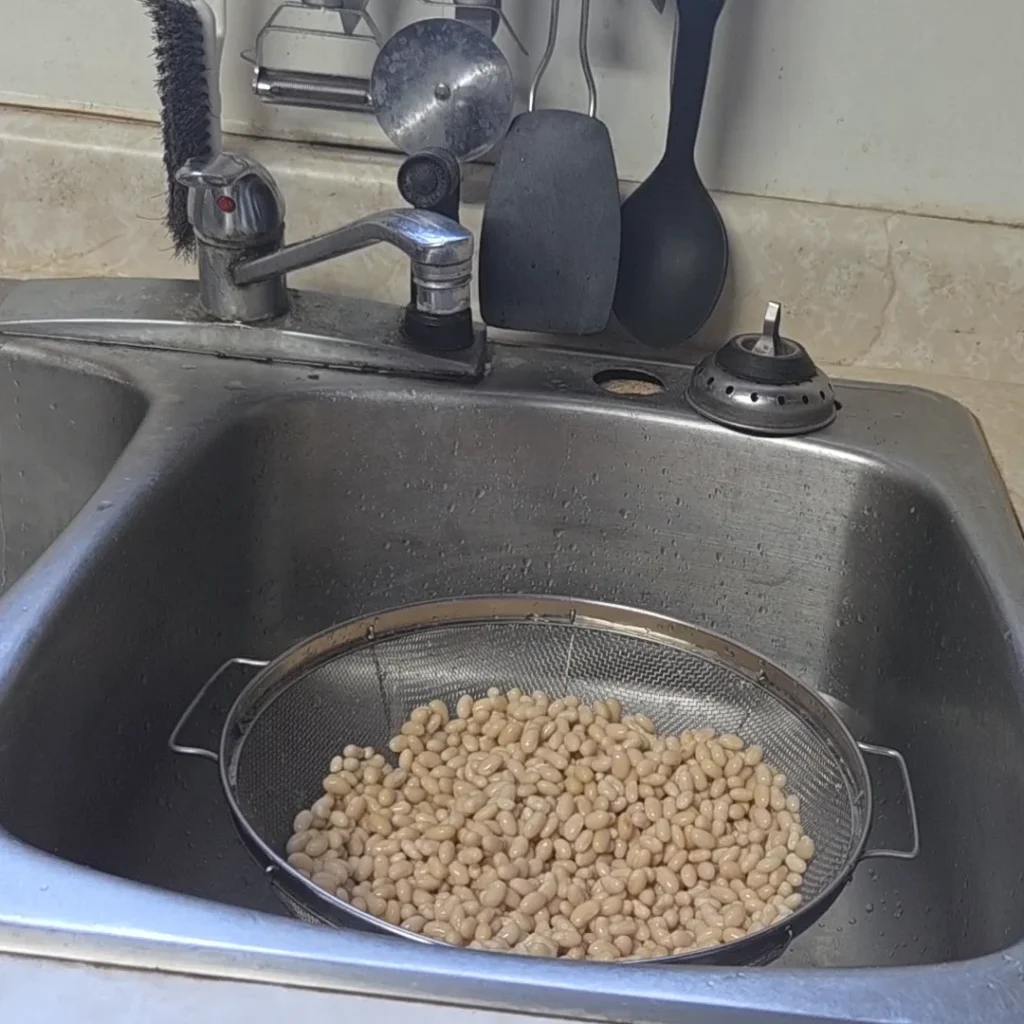
I drained them and covered them with boiling distilled water, then brought them back to a boil for 3 minutes, then I removed them from the heat and let them stand for 10 minutes before draining again. While that was happening, I brought the tomato sauce together – just tomato juice, chopped onion, a little sugar, salt, and a touch of allspice and clove – and let it come to a boil so it would be ready for the jars.
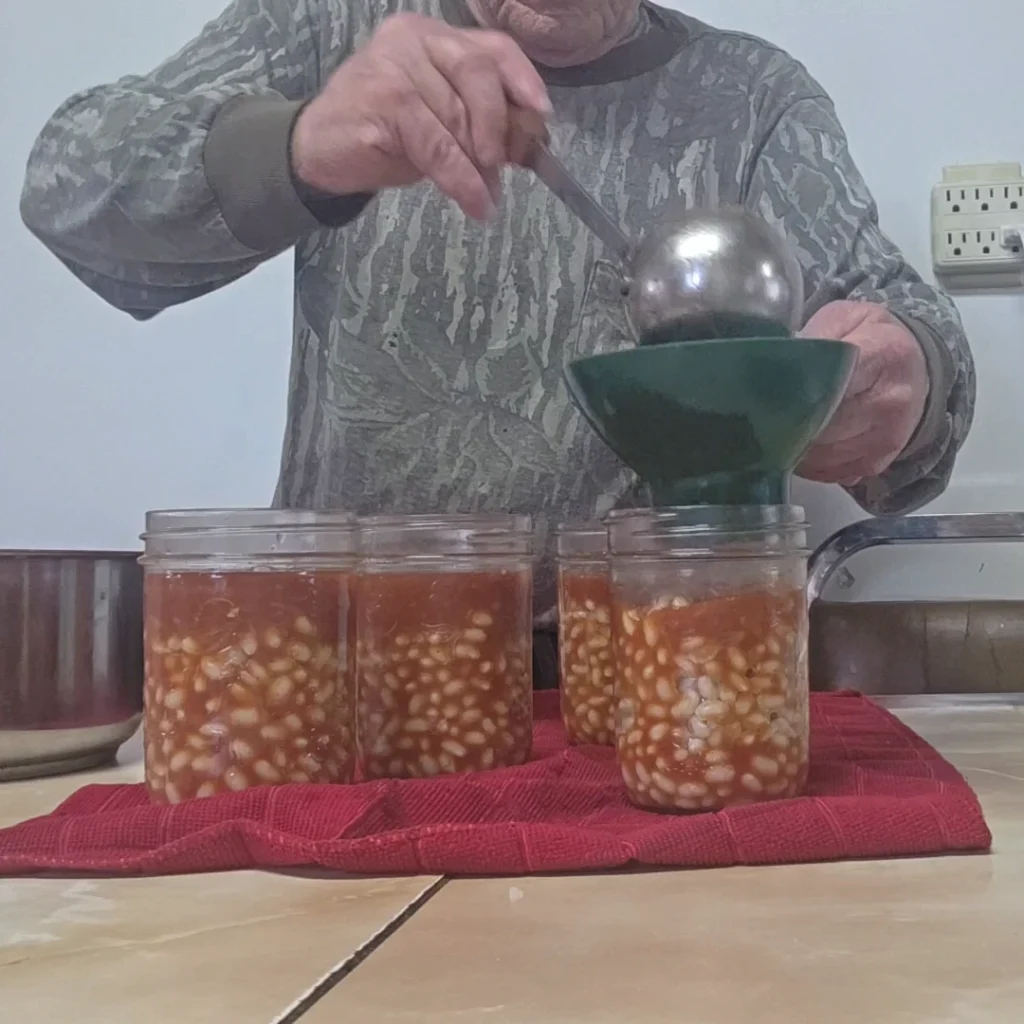
The jars were kept hot so adding the beans and sauce wouldn’t crack them. I filled each jar about three-quarters full with beans and then topped with sauce, leaving about an inch of headspace. I wiped the rims with vinegar to make sure the lids would seal, then put the lids and bands on finger tight. Into the canner they went.
I let a good head of steam build, exhausted for 10 minutes, then pressure cooked for 65 minutes for 500 ml (pints) or 75 minutes for 1 liter (quarts). The depressurization at the end is an important part of the cooking process, so I let it release naturally.
When the pressure had fully released, I opened the lid carefully and let the jars sit in the canner for five minutes before removing them. After that, I let them sit undisturbed for 24 hours to finish cooling and sealing.
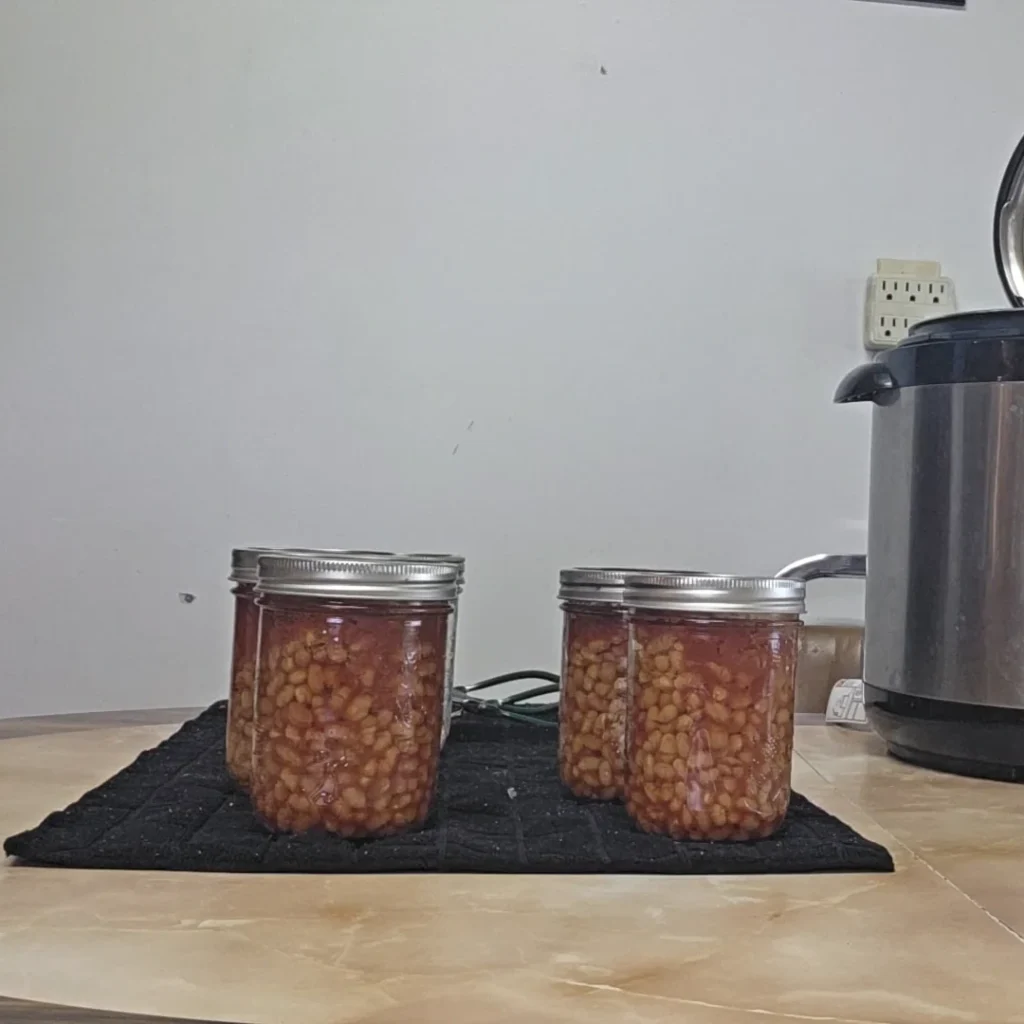
When everything cooled, I checked the seals. One jar hadn’t sealed because I accidentally put two lids on it, but that jar went straight into the fridge and became dinner that night. The rest sealed properly. Even though I ended up with fewer jars than the full recipe would have made, the batch worked perfectly, and I felt confident with every step.
Next time, I’ll plan for a full canner load and maybe do two batches to get more jars. Soaking, boiling, filling, and processing all just flows, and in the end, you have shelf-stable beans in tomato sauce ready to use whenever you need them.
Beans in Tomato Sauce
Ingredients
- 4 cups (1000 ml) dried navy beans, about 2 lb / 1 kg
- 4 cups (1000 ml) tomato juice
- 1 cup (250 ml) chopped onion, about 1 medium
- 3 tbsp (45 ml) sugar
- 2 tsp (10 ml) salt
- 1/4 tsp (1 ml) cloves
- 1/4 tsp (1 ml) allspice
- 1/4 lb (125 g) salt pork, cut into equal pieces
- Distilled water for soaking and cooking
- Vinegar for wiping jar rims
Yield
Makes about 6 x 500 ml or 3 x 1 L jars
Instructions
- Measure 4 cups of dried navy beans.
- Soak the beans overnight (about 18 hours) in distilled water.
- Drain the beans and cover with fresh boiling distilled water. Boil for 3 minutes
- Remove from heat and let them stand for 10 minutees, then drain.
- While beans are boiling, prepare the sauce by combining tomato juice, chopped onion, sugar, salt, cloves, and allspice. Bring just to a boil and keep hot.
- Fill hot jars three-quarters full with beans, then pour in hot sauce, leaving 1 inch headspace. Top with a piece of pork if desired.
- Wipe jar rims with vinegar, and place lids and bands finger-tight.
- Place jars in the pressure canner and add water according to your canner’s instructions to prevent tipping. Build a good head of steam, exhaust for 10 minutes, then pressure cook according to the recipe: 65 minutes for 500 ml (pints) or 75 minutes for 1 liter (quarts).
- Let the pressure release naturally. When fully released, open the lid carefully and let jars sit in the canner for 5 minutes before removing.
- Place jars on a towel or rack and leave undisturbed for 24 hours. Check seals; refrigerate any unsealed jars and use immediately.
- Store sealed jars in a cool, dark place for up to 12 months.
Notes
- Always use distilled water, especially if you have well water, to avoid hard beans.
- The depressurization is part of the cooking process, so always let it release naturally.
- Follow Ball, Bernadin, or USDA-approved canning times for safety.
Frequently Asked Questions
Do I have to use distilled water?
Yes, especially if you have well water. Distilled water prevents the beans from becoming hard during soaking and cooking.
Can I use fewer beans than the recipe calls for?
Yes. Using fewer beans will just result in fewer jars, but the process and safety remain the same.
How long should I soak the beans?
Soak the beans overnight, about 18 hours. This ensures they absorb enough water and cook evenly.
What if a jar doesn’t seal?
If a jar doesn’t seal, refrigerate it and use it immediately. Check the lid to make sure only one is used, and follow proper filling instructions next time.
Are the canning times the same for all canners?
Exhausting is always 10 minutes, but pressure-cooking times vary by recipe. For this recipe, it’s 65 minutes for 500 ml (pints) and 75 minutes for 1 liter (quarts), following Ball, Bernadin, and USDA guidelines.
Can I make this recipe ahead of time and store the beans?
Yes! Once properly canned and sealed, the beans in tomato sauce are shelf-stable and can be stored in a cool, dark place for up to a year. Refrigerate any unsealed jars.
Can I adjust the seasoning?
Yes, you can adjust the sugar, salt, or spices to taste, but don’t reduce the salt too much, as it helps with preservation.
Can I use other types of beans?
This recipe works best with navy beans, but other small white beans can work as long as you adjust soaking and cooking times accordingly.

Leave a Reply