
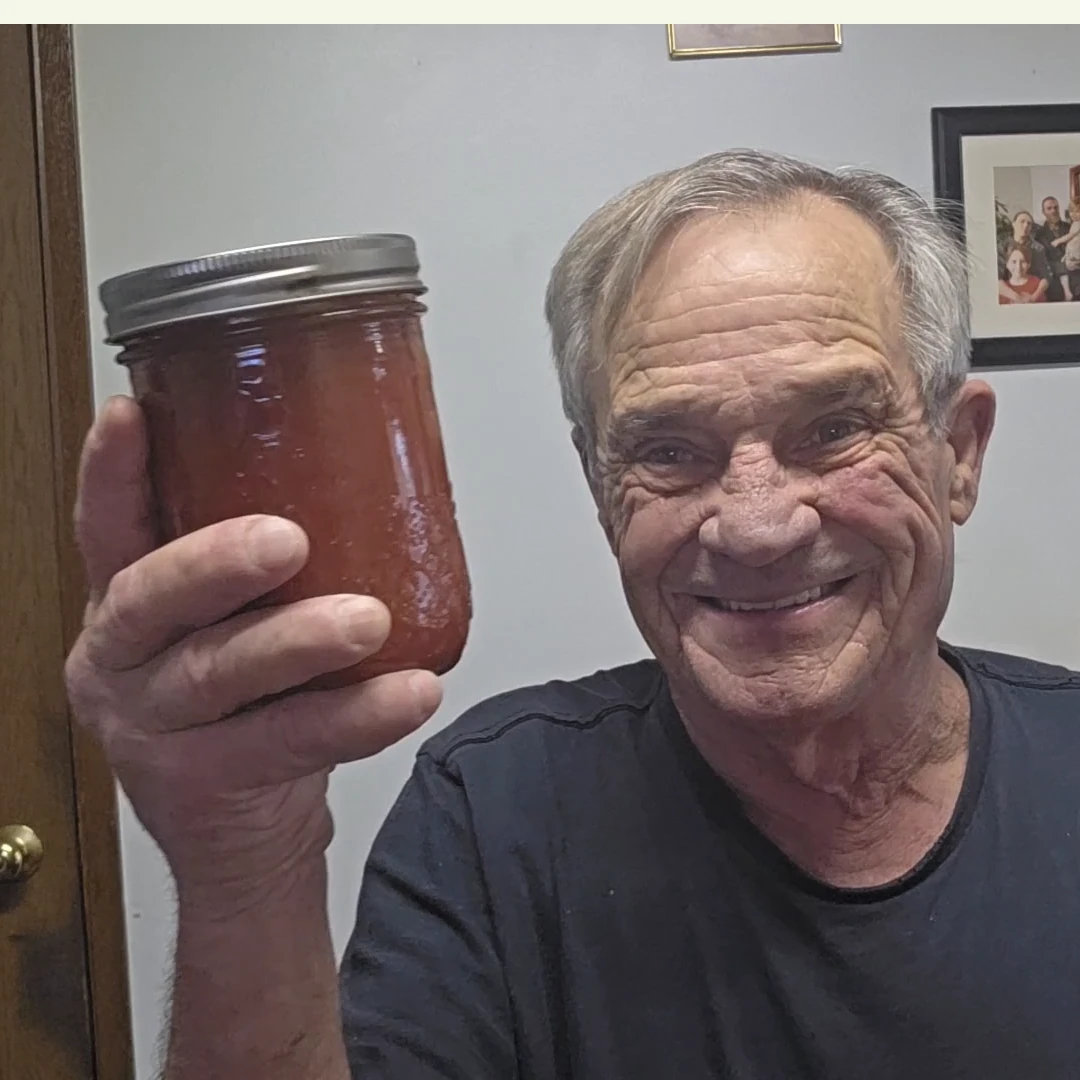
This past summer, my neighbor wasn’t able to use her garden, so she offered it to me instead. Since I already had canning in mind, I decided to plant Roma tomatoes. They’re ideal for sauces, crushed tomatoes, and of course, homemade ketchup.
It honestly wasn’t the best tomato year. Most of my Romas stayed small, so I picked them as they ripened and froze them indoors. Once I finally had enough saved up, I ended up with just under 9 pounds — enough to make a small batch of ketchup. I also used part of the harvest to can a few pints of crushed tomatoes, which I’ll be sharing in a separate post.
Why I Used the Bernardin Recipe (Scaled Down Safely)
The ketchup recipe in Bernardin Home Preserving is written for 24 pounds of tomatoes, which is a lot more than I had on hand. Since I was working with 9 pounds, I scaled the entire recipe using a simple calculation: 9 divided by 24 equals 0.375.
Every ingredient in the recipe was multiplied by 0.375. This keeps the acidity and proportions exactly the same as the original, which is critical when you’re water-bath canning.
Ingredients (Scaled to 9 lbs of Tomatoes)
For this batch, I used 9 pounds of previously frozen tomatoes along with celery seed, whole cloves, a cinnamon stick, ground allspice, white vinegar with 5% acidity, chopped onion, cayenne pepper, sugar, and pickling salt. All measurements were scaled proportionally from the original Bernardin recipe.
Equipment I Used
I made this ketchup using a large stainless steel stock pot and processed the tomatoes with my Weston Food Strainer & Sauce Maker. For canning, I used pint jars and my Carey electric canner, along with standard canning tools like a ladle, funnel, jar lifter, and spice bag.
Why I Chose White Vinegar Over Apple Cider Vinegar
I chose to use white vinegar instead of apple cider vinegar for two reasons. First, my apple cider vinegar is only 4.5% acidity, which is below the required 5% for safe canning. Second, I prefer the cleaner, more traditional flavor that white vinegar gives ketchup.
Step-by-Step Instructions
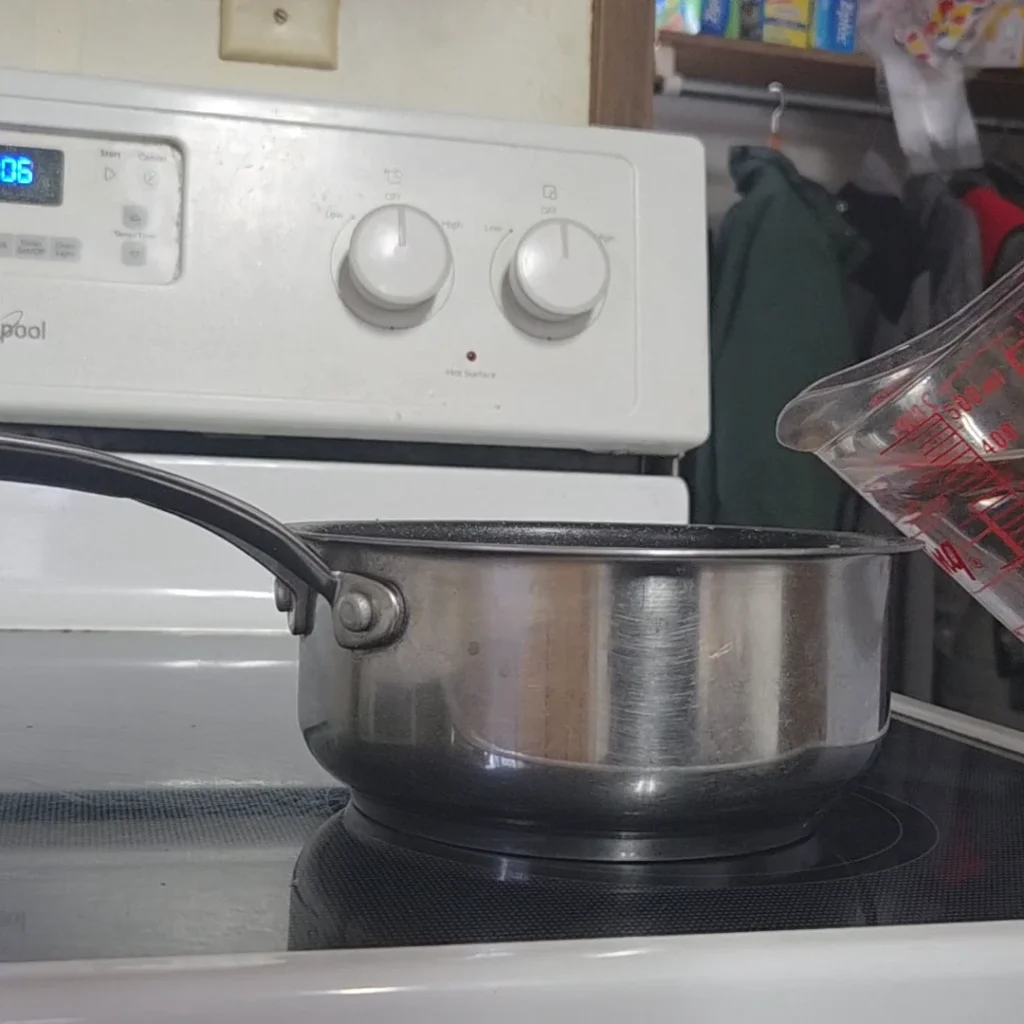
1. Prepare the Spice Vinegar
I started by tying the celery seed, cloves, cinnamon stick, and allspice into a spice bag. The spice bag went into a small saucepan with the vinegar, which I brought to a boil. Once it reached a boil, I removed it from the heat and let the spices steep for about 25 minutes before discarding the spice bag.
2. Prepare the Tomatoes
Because my tomatoes were frozen, they softened easily and didn’t need coring. I washed them, trimmed off any blemishes, chopped them up, and added them directly to the stock pot.
3. First Cook
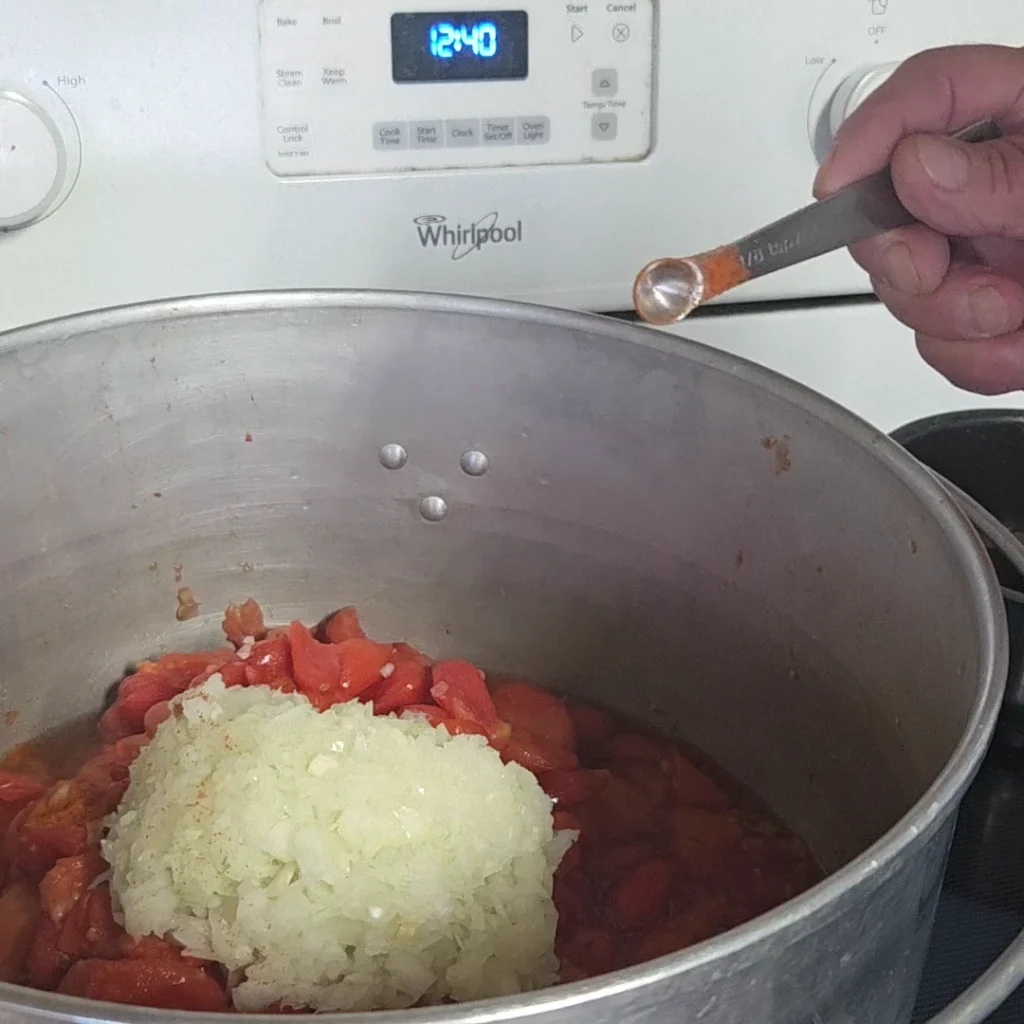
I added the chopped onion and cayenne pepper to the pot with the tomatoes and brought everything to a boil, stirring occasionally. Once boiling, I reduced the heat and let it simmer for about 20 minutes. After that, I poured in the spice vinegar and continued simmering for another 30 minutes.
4. Remove Seeds & Skins
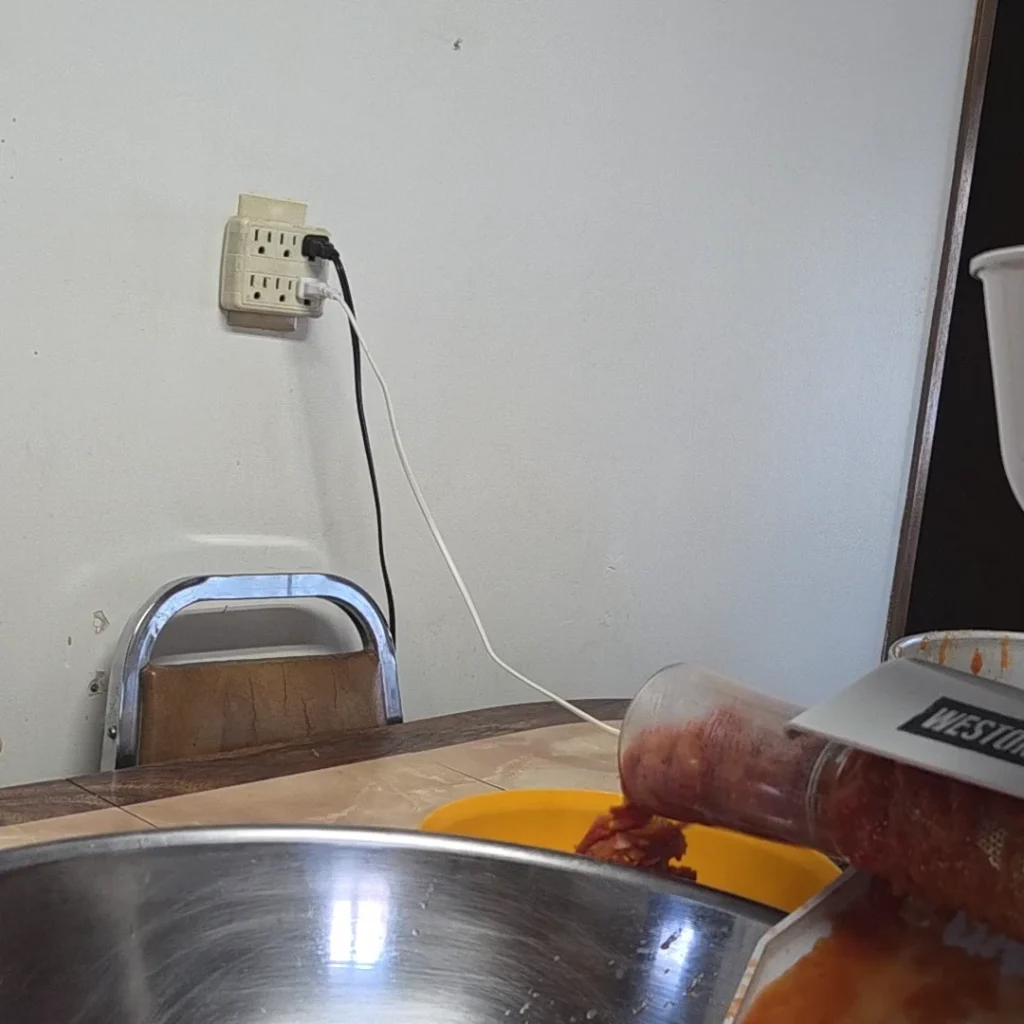
I let the mixture cool just enough to handle, then ran it through my Weston Food Strainer & Sauce Maker. This removed all the skins and seeds and left me with a smooth tomato pulp. I ran the pulp through twice to get as much tomato as possible, but a food mill or fine sieve would also work.
5. Cook Down the Ketchup
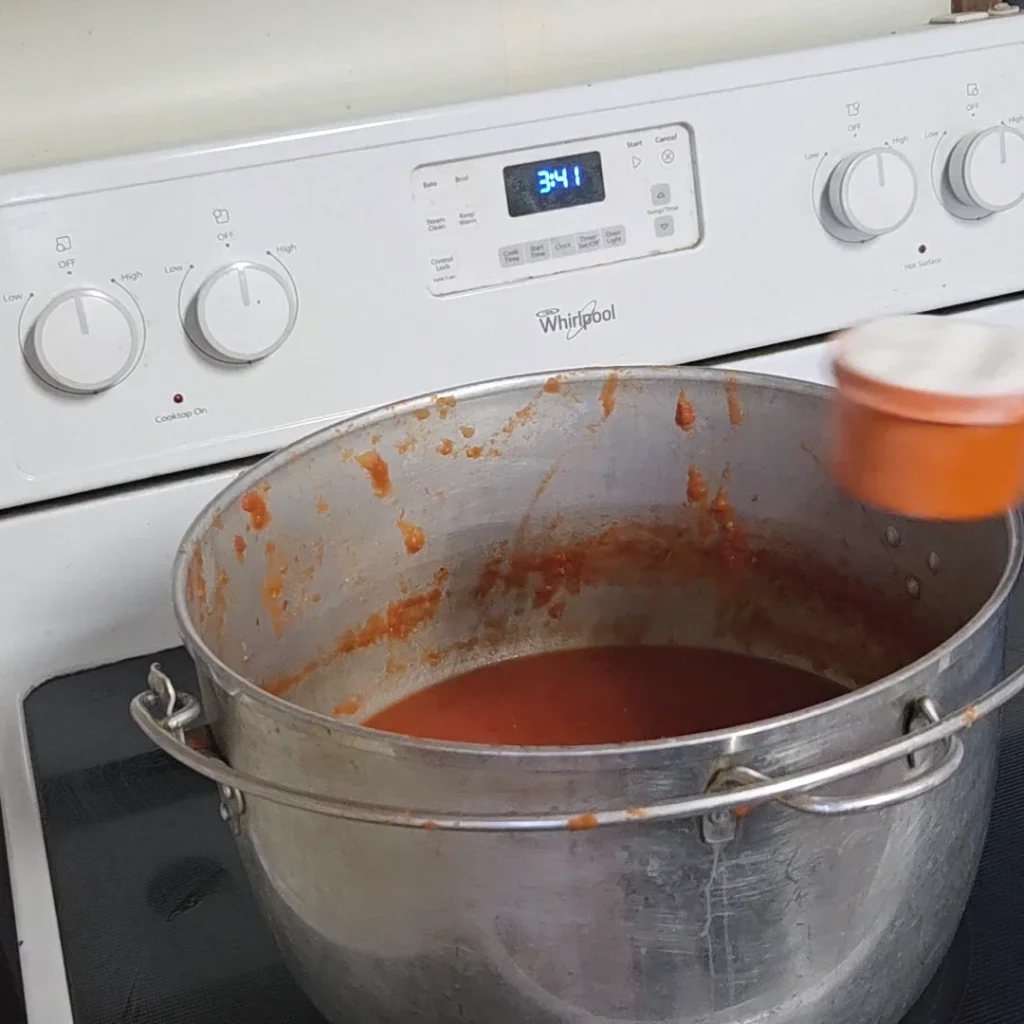
The strained tomato pulp went back into the pot, along with the sugar and pickling salt. I brought it to a gentle boil and cooked it down, stirring often to prevent sticking. The Bernardin book estimates about 45 minutes for this step, but mine took closer to an hour and fifteen minutes, which is completely normal depending on how juicy your tomatoes are.
6. Fill the Jars
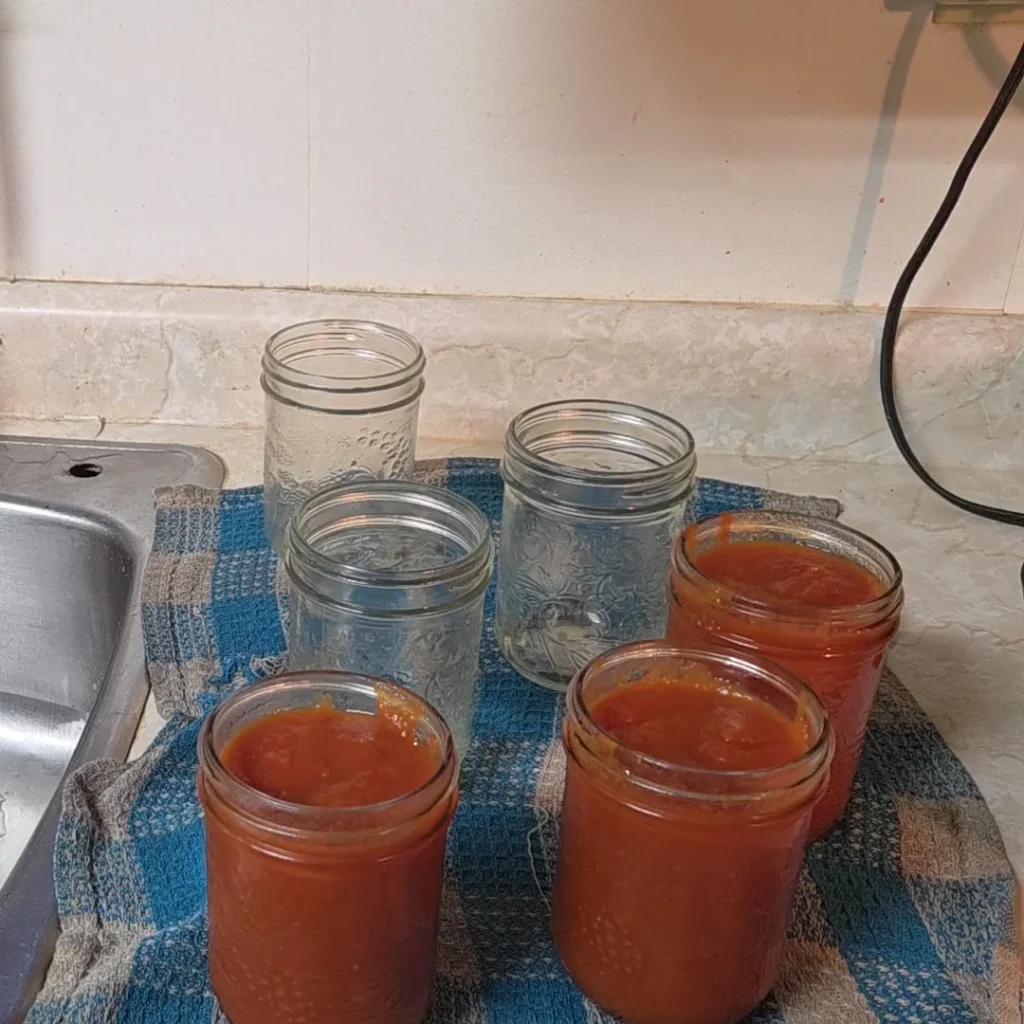
I heated my jars in hot water, then ladled the hot ketchup into them, leaving about half an inch of headspace. After removing air bubbles and wiping the rims with vinegar, I applied the lids and tightened the bands finger-tight.
7. Water-Bath Processing
Carey Electric Canner
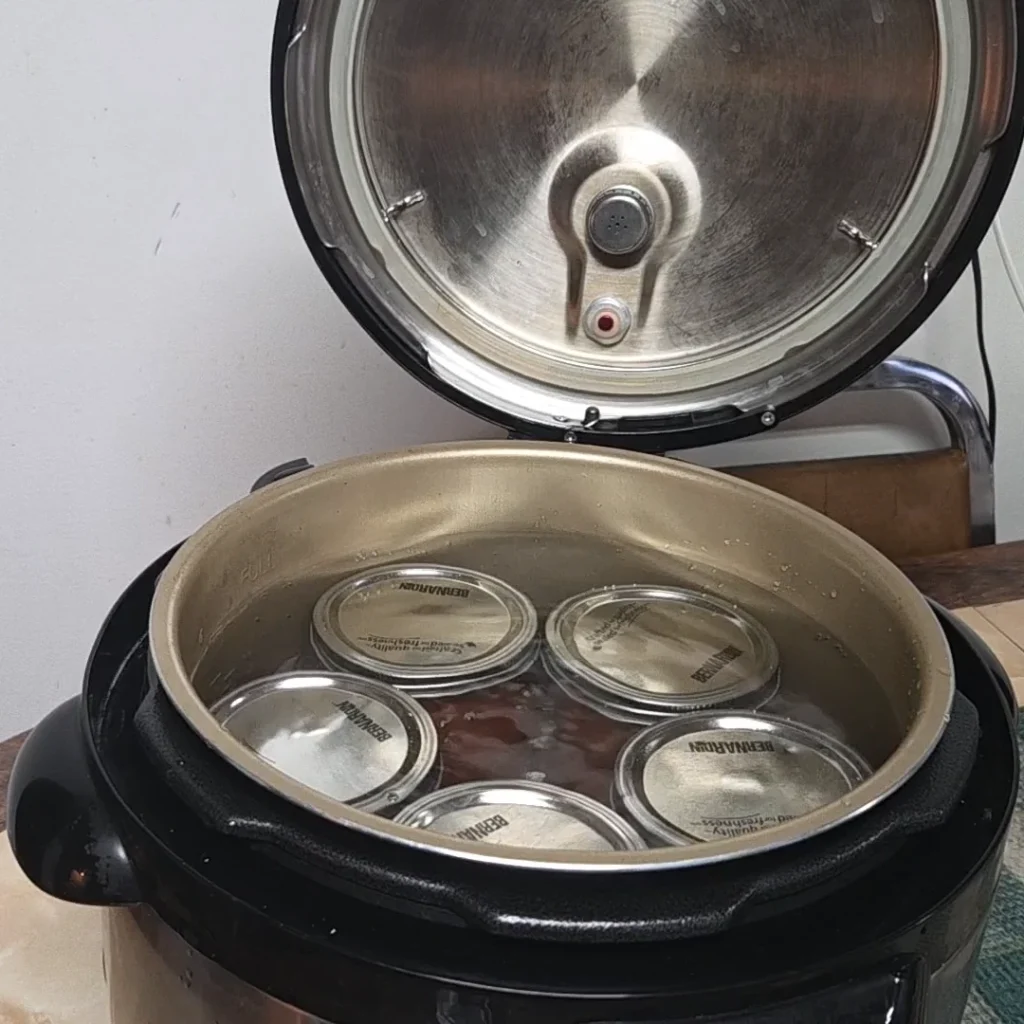
For the Carey electric canner, I set the valve to exhaust, selected the water-bath setting, and set the time for 15 minutes. Once steam vented steadily, I pressed start again and let the cycle complete. After processing, I waited five minutes before removing the jars.
Stovetop Canner
If you’re using a traditional stovetop canner, bring the water to a full boil and process the jars for 15 minutes. Once the time is up, turn off the heat, wait five minutes, and then remove the jars.
My Results
The finished ketchup isn’t as bright red as store-bought ketchup, which is completely normal for homemade versions. The texture is slightly less smooth, but the flavor is very similar — and honestly, I think it tastes a little better. In the end, I got three pint jars for the pantry and an extra half-pint for the fridge.
I really enjoy knowing exactly what went into this ketchup. There are no preservatives or fillers, just tomatoes I grew myself and a recipe I trust.
Homemade Ketchup (Small-Batch Bernardin Style)
Yield: 3 pints + ½ pint
Method: Water-Bath Canning
Source: Bernardin Home Preserving (scaled safely)
Ingredients
- 9 lbs Roma tomatoes (fresh or previously frozen)
- 1 1/8 tbsp celery seed
- 1 1/2 tsp whole cloves
- 3/4 cinnamon stick
- 1/2 tsp ground allspice
- 1 1/8 cups white vinegar (5% acidity)
- 1 1/8 cups chopped onion
- 3/8 tsp cayenne pepper
- 0.5625 cups sugar (½ cup + 1 tbsp)
- 1 1/2 tsp pickling salt
How I Made This Batch
- I started by tying the celery seed, cloves, cinnamon stick, and allspice into a spice bag. The spice bag went into a small saucepan with the vinegar, which I brought to a boil. Once boiling, I removed it from the heat and let the spices steep for about 25 minutes.
- While the vinegar steeped, I chopped the tomatoes. Because they were previously frozen, they softened easily and didn’t need coring. I added them to a large stock pot along with the chopped onion and cayenne pepper.
- I brought everything to a boil, then reduced the heat and let it simmer for about 20 minutes. After that, I added the spice vinegar and continued simmering for another 30 minutes.
- Once the mixture had softened, I let it cool slightly and ran it through my Weston Food Strainer & Sauce Maker to remove the skins and seeds. I ran the pulp through twice to get as much tomato as possible.
- The smooth tomato pulp went back into the pot. I added the sugar and pickling salt, then gently boiled the ketchup, stirring often, until it thickened. This took about 1 hour and 15 minutes, which is longer than the book suggests but completely normal.
- When the ketchup reached the consistency I wanted, I ladled it into warm pint jars, leaving ½ inch of headspace. I wiped the rims with vinegar, applied the lids, and tightened the bands finger-tight.
- The jars were processed in a water-bath canner for 15 minutes. After processing, I waited 5 minutes before removing them from the canner and letting them cool undisturbed.
Frequently Asked Questions
-
Can I use frozen tomatoes?
Yes. Frozen tomatoes work very well for ketchup and other sauces because freezing breaks down the cell structure. Just make sure they were frozen indoors and not outdoors on the vine. -
Is it safe to scale the Bernardin ketchup recipe?
Yes, as long as all ingredients are scaled equally. Maintaining the correct vinegar-to-tomato ratio is what keeps the recipe safe for water-bath canning. -
Can I use apple cider vinegar instead of white vinegar?
Only if the vinegar is clearly labeled as 5% acidity. Many apple cider vinegars are only 4.5%, which is not considered safe for canning. -
Why isn’t my homemade ketchup bright red?
Homemade ketchup varies in color depending on the tomatoes used and how long it’s cooked. Commercial ketchup uses concentrates and controlled processing that home kitchens don’t. -
Why did my ketchup take longer to thicken?
Tomatoes vary widely in water content. The time listed in canning books is only an estimate. Longer cooking is perfectly fine as long as you don’t change the ingredient ratios. -
How long will home-canned ketchup keep?
Properly sealed jars will keep for at least one year in a cool, dark pantry. Once opened, store the jar in the refrigerator and use it like regular ketchup.

Leave a Reply