
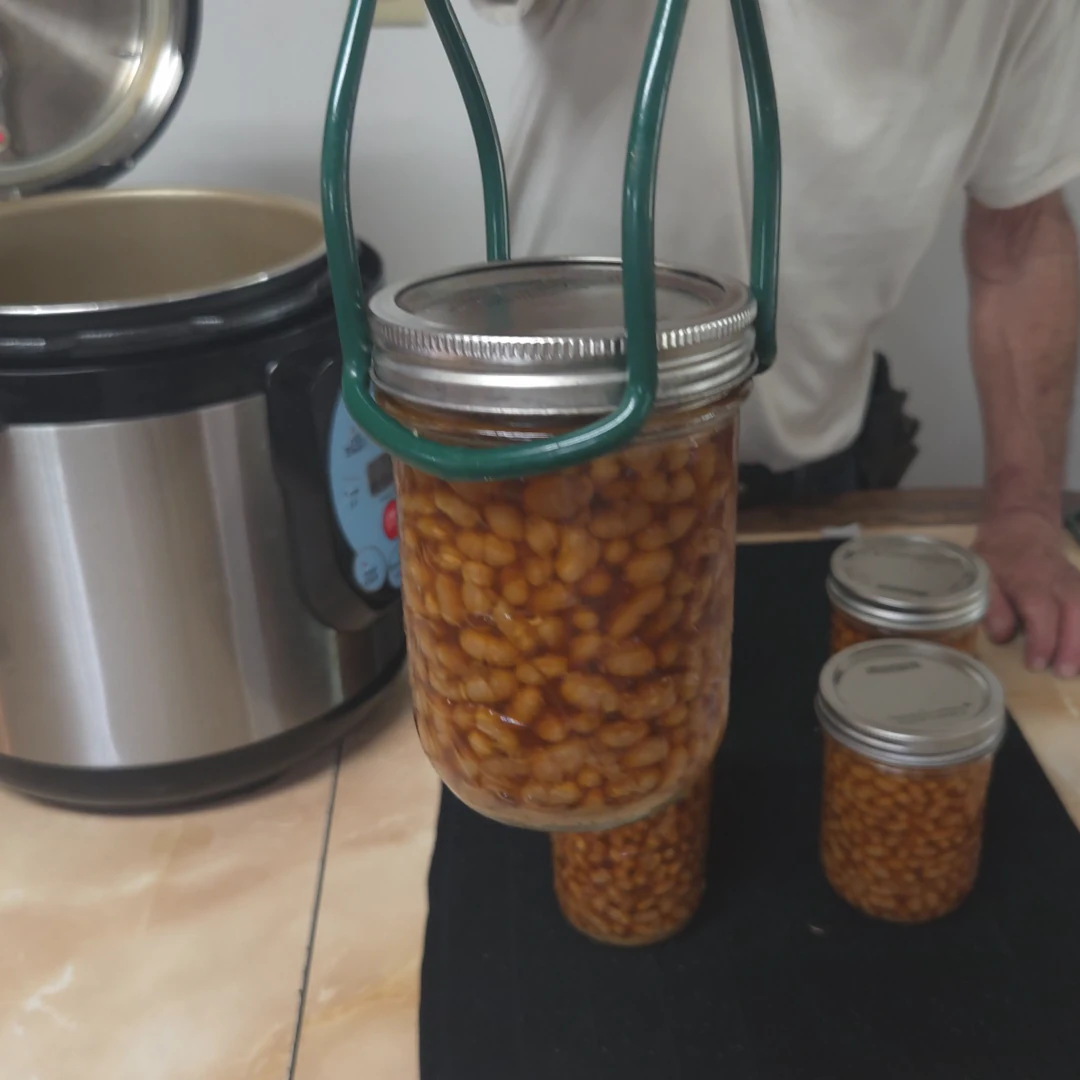
There’s something comforting about having jars of homemade beans sitting on the pantry shelf. They make an easy side dish, they go great with breakfast, and they’re one of those things that are nice to have ready when you need them. I decided to give the Ball recipe for beans in molasses sauce a try, although I did learn a couple of things along the way that I’ll change next time.
My pressure canner only holds five pint jars, so I had to scale everything to fit my batch. The Ball book says to use three-quarters of a pound of dry beans for every quart jar. When I worked that out for five pints, it came to just under two pounds of dry beans.
Later in the recipe, Ball recommends using three cups of water for every cup of dry beans. To make things simple, I measured out five cups of beans, which turned out to be just over two pounds, so I knew I would have more than enough for my five pint jars.
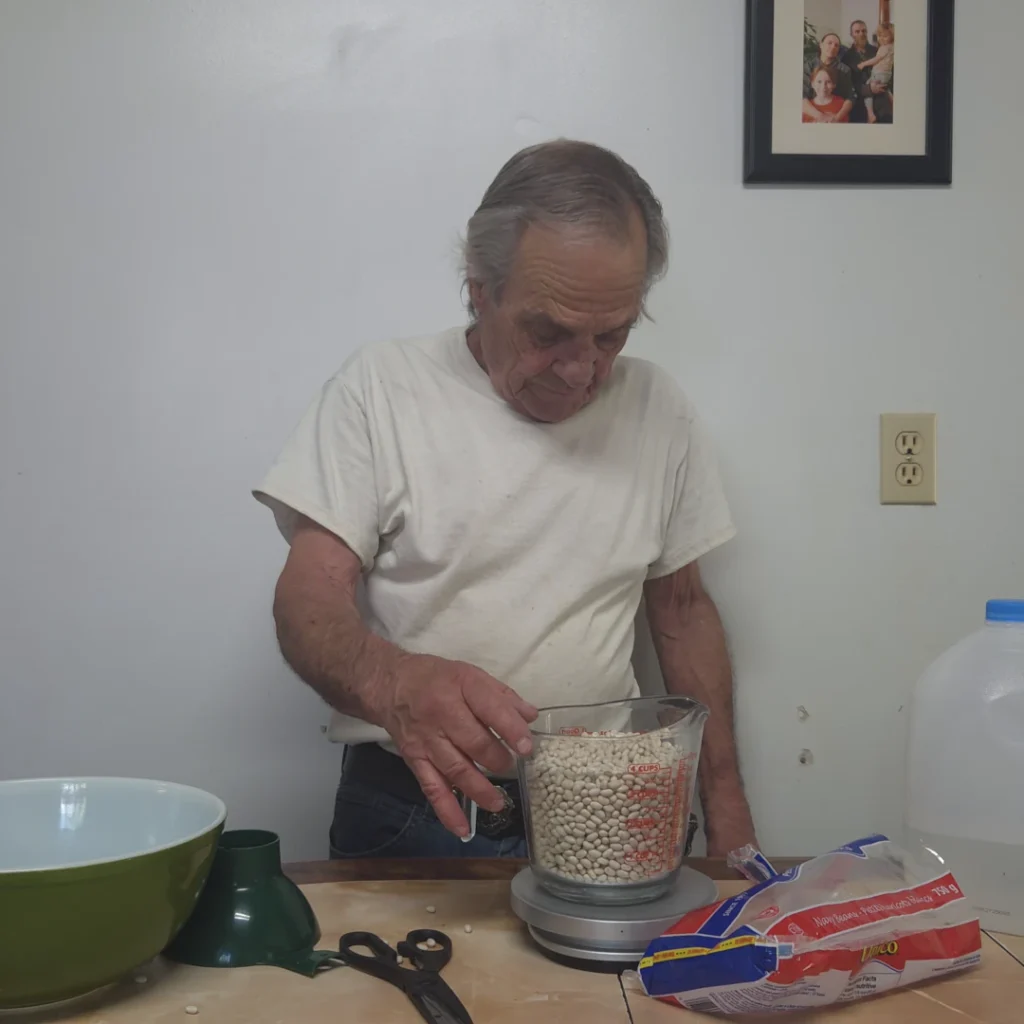
Because our water comes from a well and is fairly hard, I always use distilled water when soaking beans. Hard water can sometimes leave beans a little crunchy even after cooking. If you have soft tap water, regular tap water should work just fine.
For my batch, I used fifteen cups of distilled water for the five cups of beans. That works out to three cups of water for every cup of dry beans, which is exactly what the Ball recipe recommends. Most of the time I don’t measure the soaking water too closely and simply make sure the beans are well covered because they absorb a surprising amount of water as they soak. Since I wanted to follow the recipe as closely as possible this time, I measured the water out.
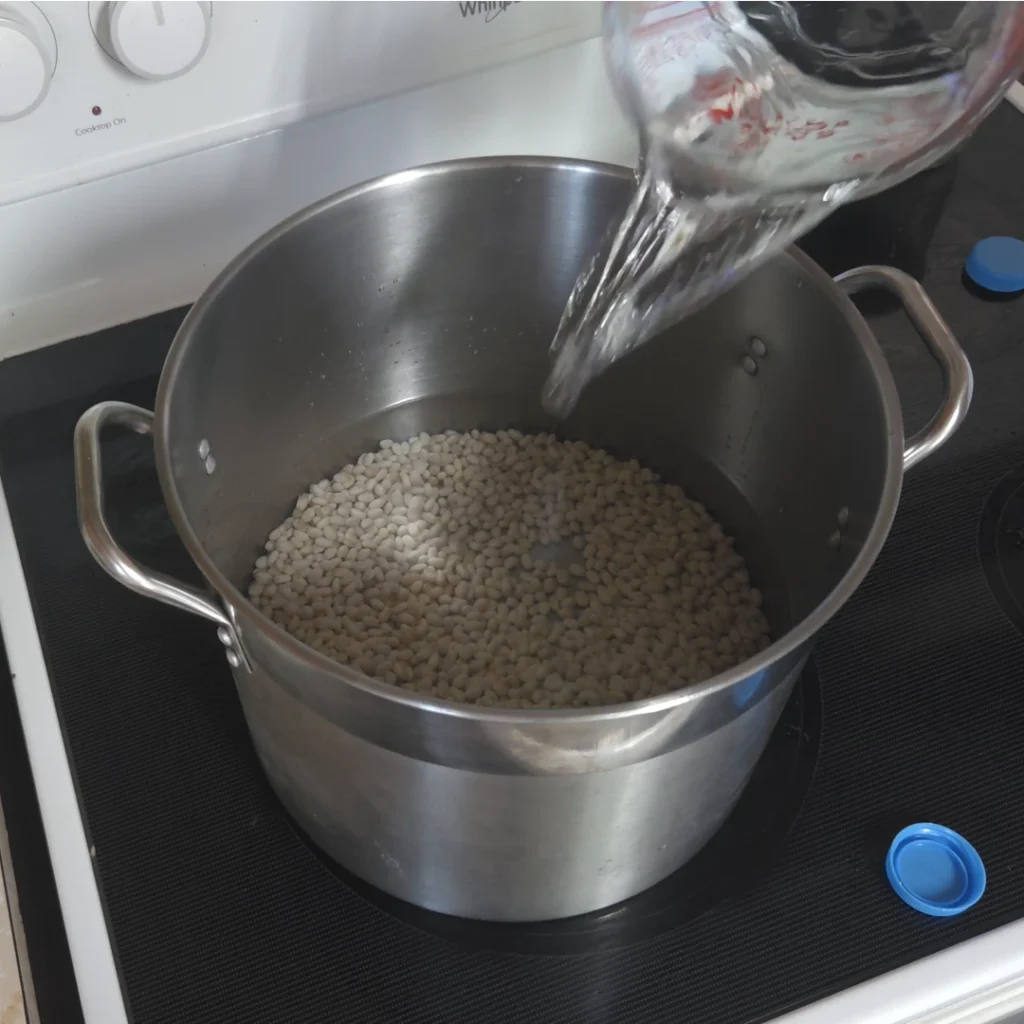
Normally, I soak beans in the refrigerator for anywhere from twelve to twenty-four hours, but this time I decided to try Ball’s method. I brought the beans to a boil, let them boil for two minutes, removed the pot from the heat, and let them sit for one hour.
After the hour was up, I drained the soaking water and covered the beans with fresh water. This time I used regular tap water because the soaking stage was finished. I brought the beans back up to a boil while I prepared my jars.
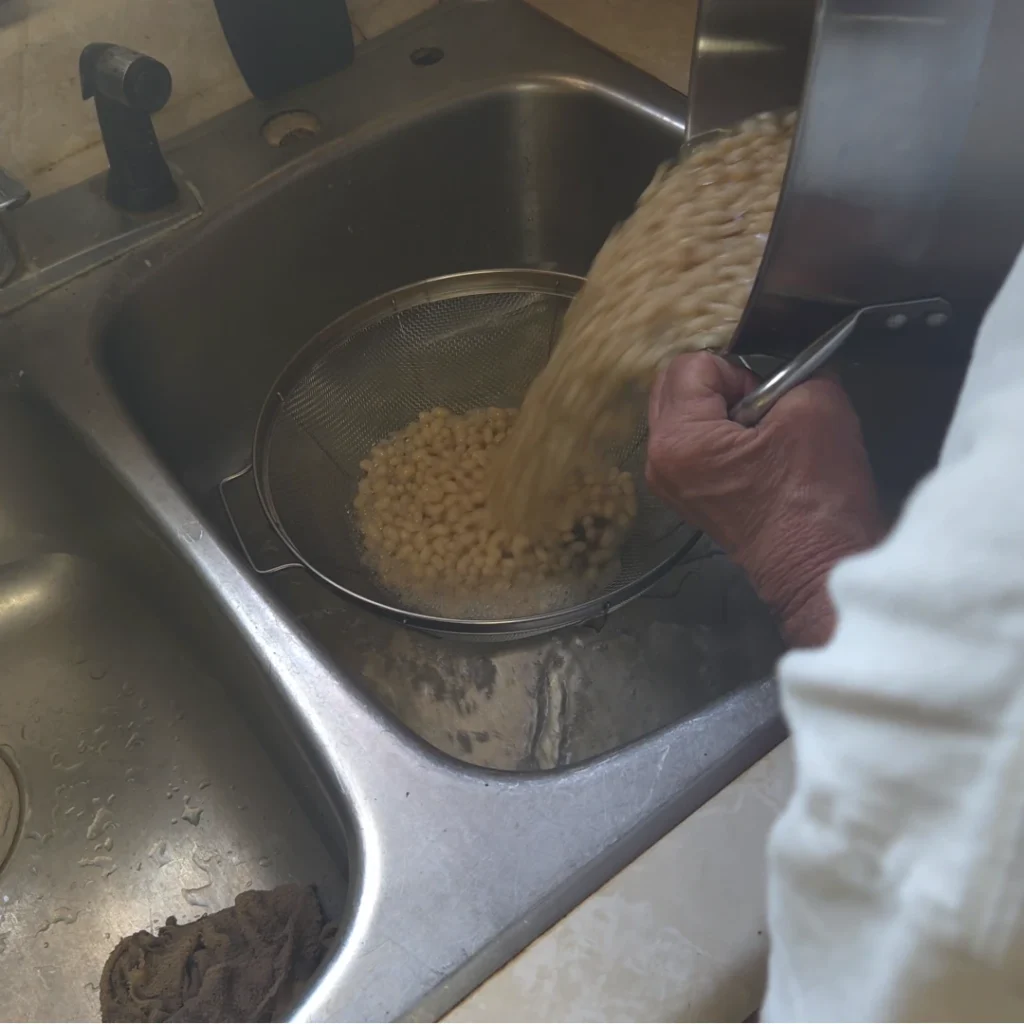
While the beans were heating, I placed my jars in hot water to keep them warm. Once the beans came to a boil, I drained them, but I saved four cups of the cooking liquid to make the sauce.
For the sauce, I mixed four cups of the bean cooking liquid, three tablespoons of dark molasses, one tablespoon of vinegar, two teaspoons of kosher salt, and three-quarters of a teaspoon of dry mustard. I brought everything to a boil so the flavors could blend together.
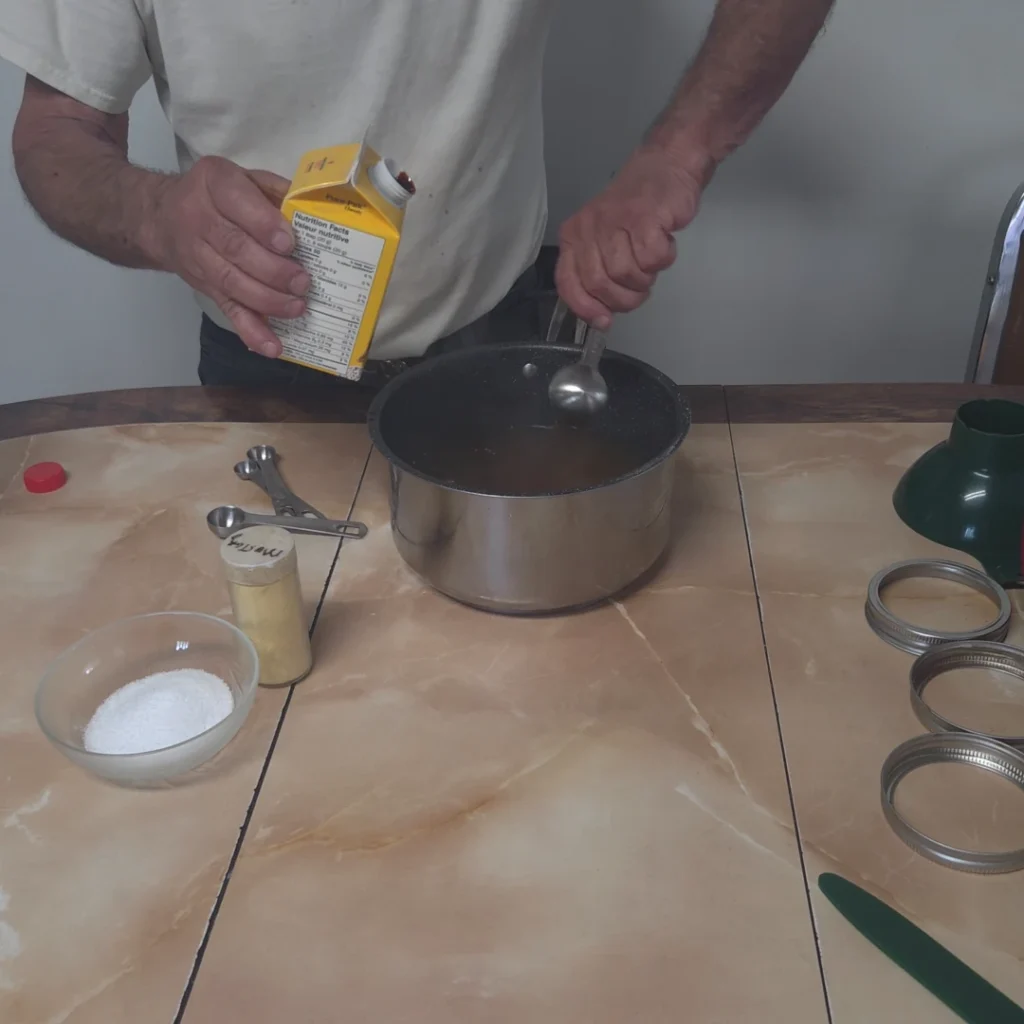
One thing I discovered pretty quickly is that this simply wasn’t enough sauce for my five pint jars. The recipe below has been adjusted because I definitely needed more liquid to properly fill all the jars.
I filled each jar about three-quarters full with beans and then added the hot sauce, aiming for one inch of headspace. I ended up just a little short, so I topped the jars off with hot water.
Headspace is important when pressure canning, and the small amount of extra water really doesn’t change the flavor. The important thing is making sure you maintain the proper headspace for safe processing.
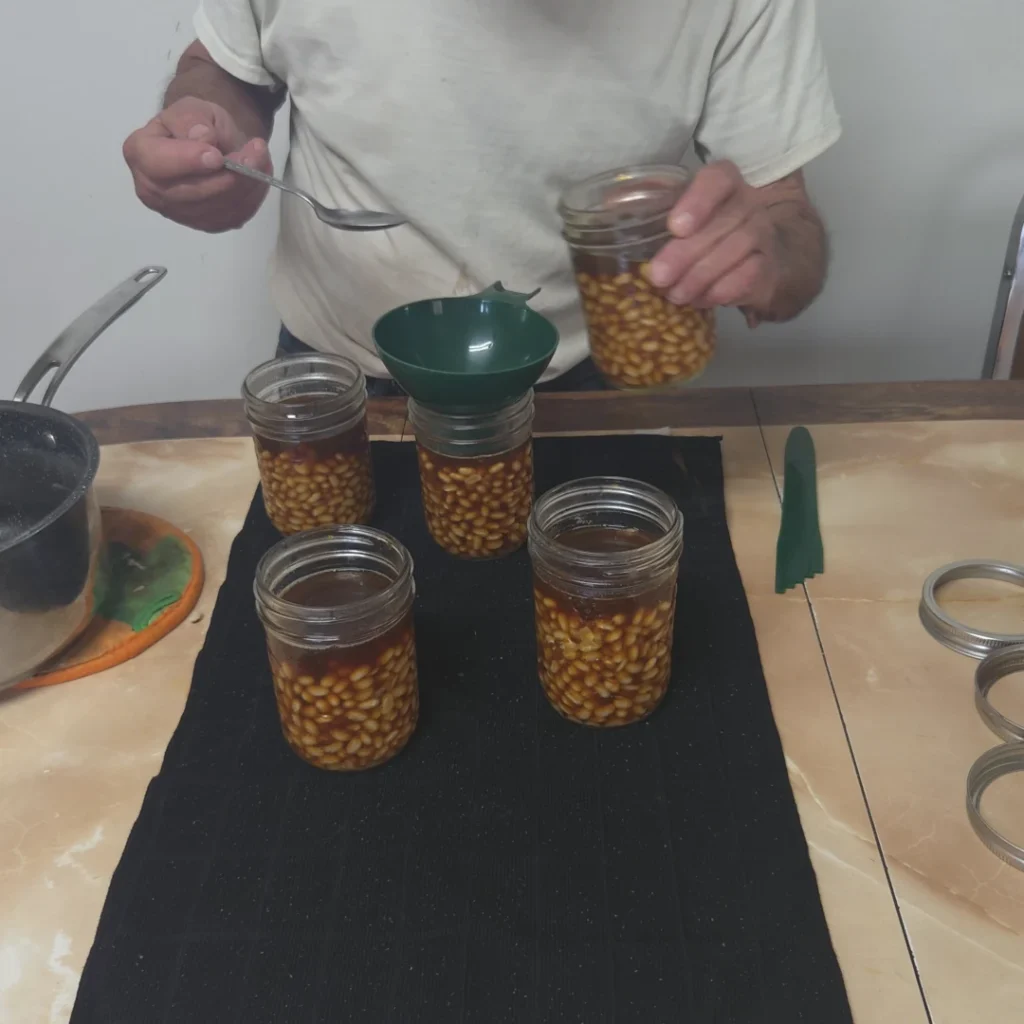
Once the jars were filled, I wiped the rims and lids with a paper towel dampened with vinegar to make sure there was nothing that might interfere with getting a good seal. I put the lids on, tightened the bands finger tight, and loaded the jars into my canner.
I used my Carey electric pressure canner. This is an actual pressure canner, not one of the electric pressure cookers that are not approved for pressure canning. My canner requires eight cups of water, but you should always follow the instructions for your own canner.
Once the canner was loaded and the lid locked into place, I vented it for ten minutes before starting the pressure canning process.
After the canner reached pressure, I processed the pint jars for 65 minutes. If you’re using quart jars, they need to process for 75 minutes.
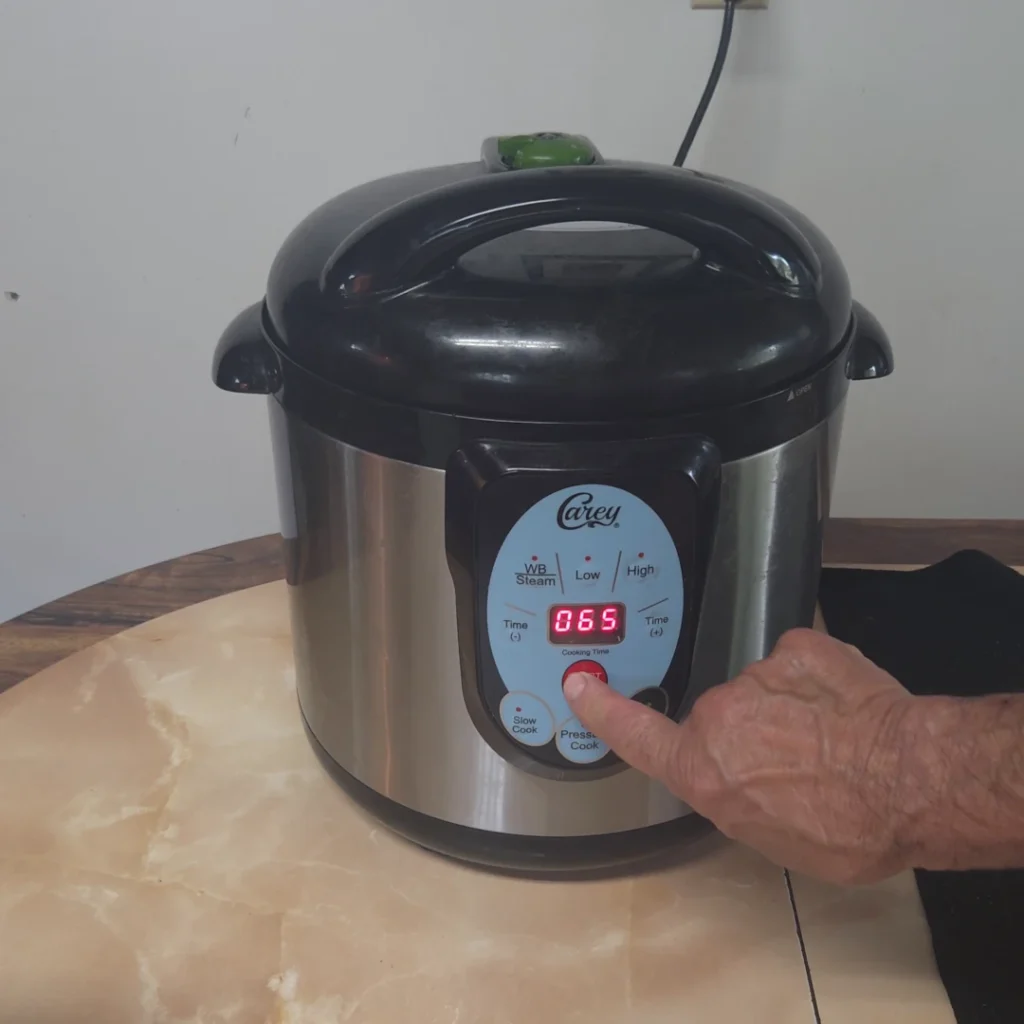
When the processing time was finished, I allowed the canner to depressurize naturally. After the pressure had completely returned to zero, I opened the lid and waited another ten minutes before removing the jars.
The whole process is actually pretty easy. The biggest change I’ll make next time is increasing the amount of sauce because the original amount simply wasn’t enough for my batch.
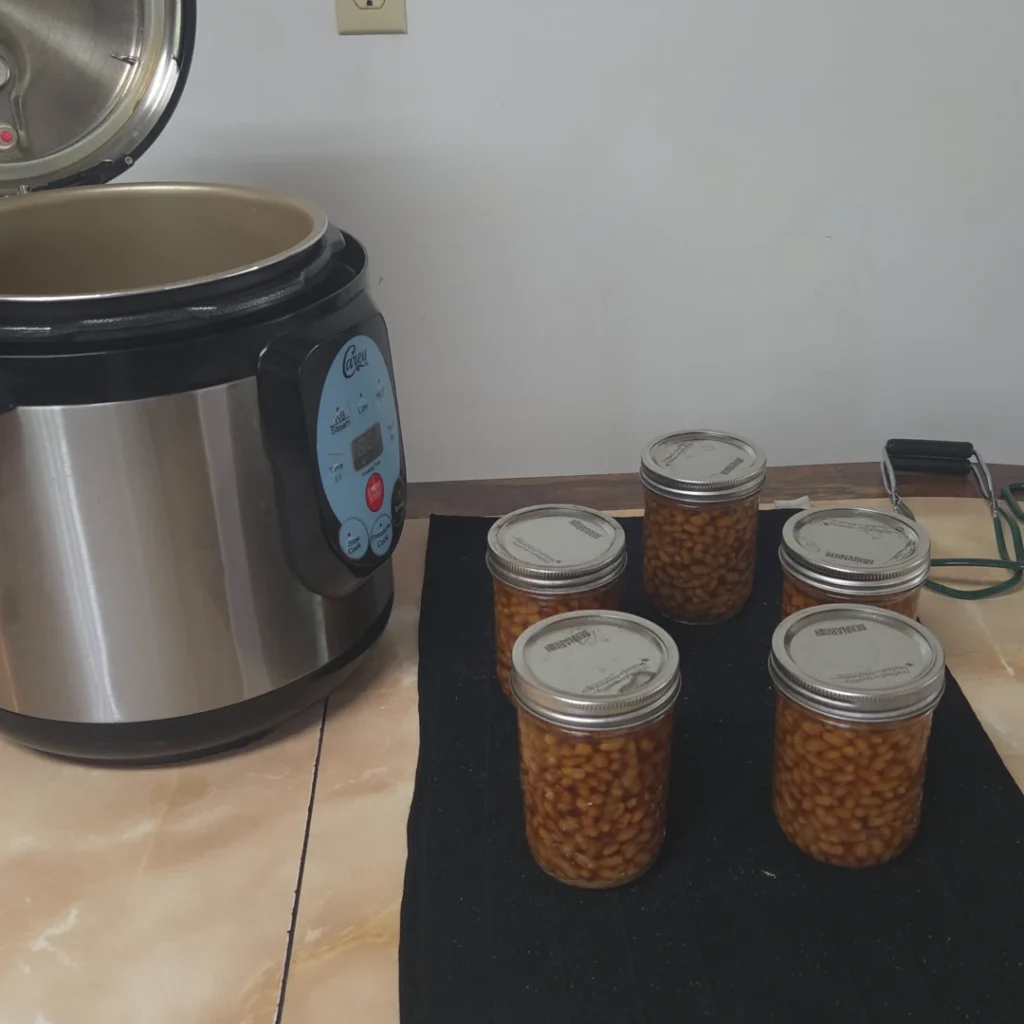
As for the finished beans, this really comes down to personal preference. The molasses sauce gives them a mild sweetness and an old-fashioned flavor that a lot of people will probably enjoy. Personally, I think I still prefer beans in tomato sauce, but I’m glad I tried these because it’s always nice to have a few different options on the pantry shelf.
Beans in Molasses Sauce (Pressure Canned)
Yield: 5 pint jars
Process Time: 65 minutes (pints) or 75 minutes (quarts)
Ball Reference: A full canner load is about 5 lbs of dry beans for 7 quarts, or about 3¼ lbs for 9 pints (roughly ¾ lb per quart).
Ingredients
- 5 cups dry beans (just over 2 lbs)
- Distilled or soft water for soaking (enough to fully cover beans)
- Fresh water for boiling/cooking beans
- Molasses Sauce (for 5 pint jars)
- 6 cups bean cooking liquid (or water if needed)
- 4½ tablespoons dark molasses
- 1½ tablespoons vinegar
- 2 teaspoons kosher salt
- ¾ teaspoon dry mustard
Instructions
Rinse beans and soak them in enough water to keep them fully covered as they expand. I use distilled water because my well water is hard, but soft tap water works fine if that’s what you have.
Soak overnight for 12–24 hours in the fridge, or use the quick-soak method by bringing beans to a boil for 2 minutes, then removing from heat and letting them sit covered for 1 hour.
Drain and rinse the beans, then cover with fresh water and bring them to a boil until just tender.
While the beans are cooking, keep jars hot in the canner or in hot water so they’re ready for filling.
Once tender, drain the beans but reserve the cooking liquid for the sauce.
Combine the reserved liquid with molasses, vinegar, salt, and dry mustard. Bring to a boil, stirring until everything is fully dissolved and well blended.
Fill hot jars about 3/4 full with beans, then ladle hot sauce over the top, leaving 1 inch headspace.
Wipe jar rims with a vinegar-dampened paper towel, apply lids, and tighten bands finger-tight.
Process in a pressure canner for 65 minutes for pints or 75 minutes for quarts, adjusting for altitude and following your canner manufacturer’s instructions.
Allow the canner to depressurize naturally before opening. Let jars rest undisturbed before storing.
Print Recipe
Print RecipeFrequently Asked Questions
Can I use any type of dry beans for this recipe?
Yes, most standard dry beans will work such as navy beans, white beans, or great northern beans. Just make sure they are fresh, since older beans can take longer to soften during cooking and processing.
Do I have to use distilled water for soaking beans?
No, it depends on your water. If you have hard well water, distilled water can help keep beans from staying firm. If your tap water is soft, regular water is fine.
Can I skip soaking the beans?
You can, but soaking helps the beans hydrate evenly and shortens cooking time. If you skip soaking, make sure the beans are fully tender before canning.
Why did you reserve the bean cooking liquid?
The cooking liquid adds extra flavor to the molasses sauce and helps build a richer taste. You can substitute water if needed.
Why was extra water added to the jars?
In my batch, I came up slightly short on sauce. A small top-off of hot water was used to reach proper headspace. This does not noticeably affect flavor, but correct headspace is important for safe canning.
Can I use the quick-soak method instead of overnight soaking?
Yes. Bring beans to a boil for 2 minutes, remove from heat, and let them sit covered for 1 hour before draining.
Do I need to adjust processing time for different jar sizes?
Yes. Process pint jars for 65 minutes and quart jars for 75 minutes in a pressure canner, adjusting for altitude and following your canner instructions.
Why is headspace important?
Headspace allows proper expansion during pressure canning and helps ensure a strong seal. Too much or too little can affect sealing and safety.

Leave a Reply