
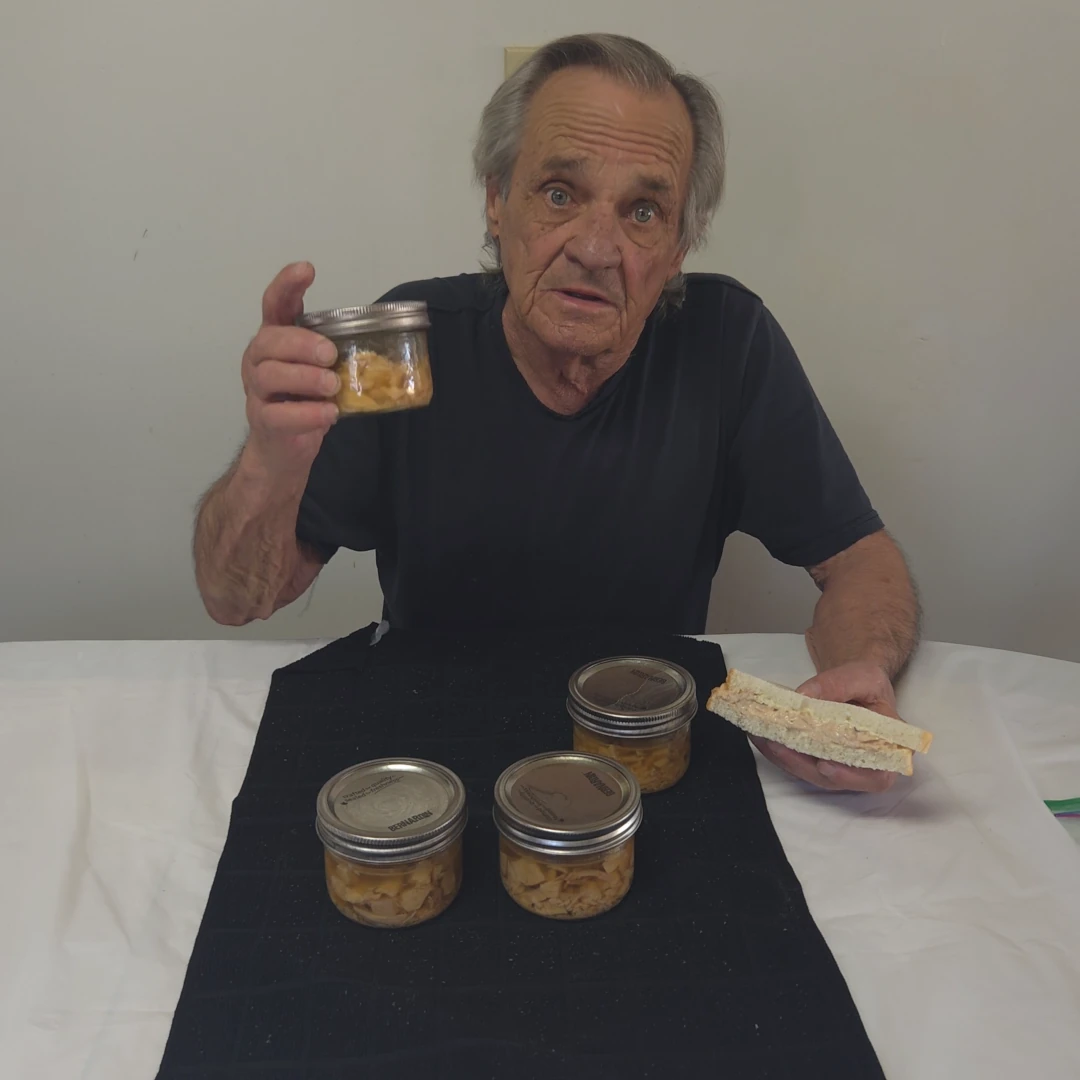
I roasted a chicken with the intention of canning the meat for quick meals later on. Instead of leaving the meat in larger pieces like drumsticks or thighs, I wanted something that would be ready to use in sandwiches, wraps, and salads, so I cut all of the meat into small cubes.
Before I started filling jars, I put a pint of homemade chicken stock on the stove and brought it up to a boil. While the stock was heating, I placed my half-pint jars into hot water to warm them up. Having hot jars ready to go helps prevent temperature shock when adding the hot food and broth.
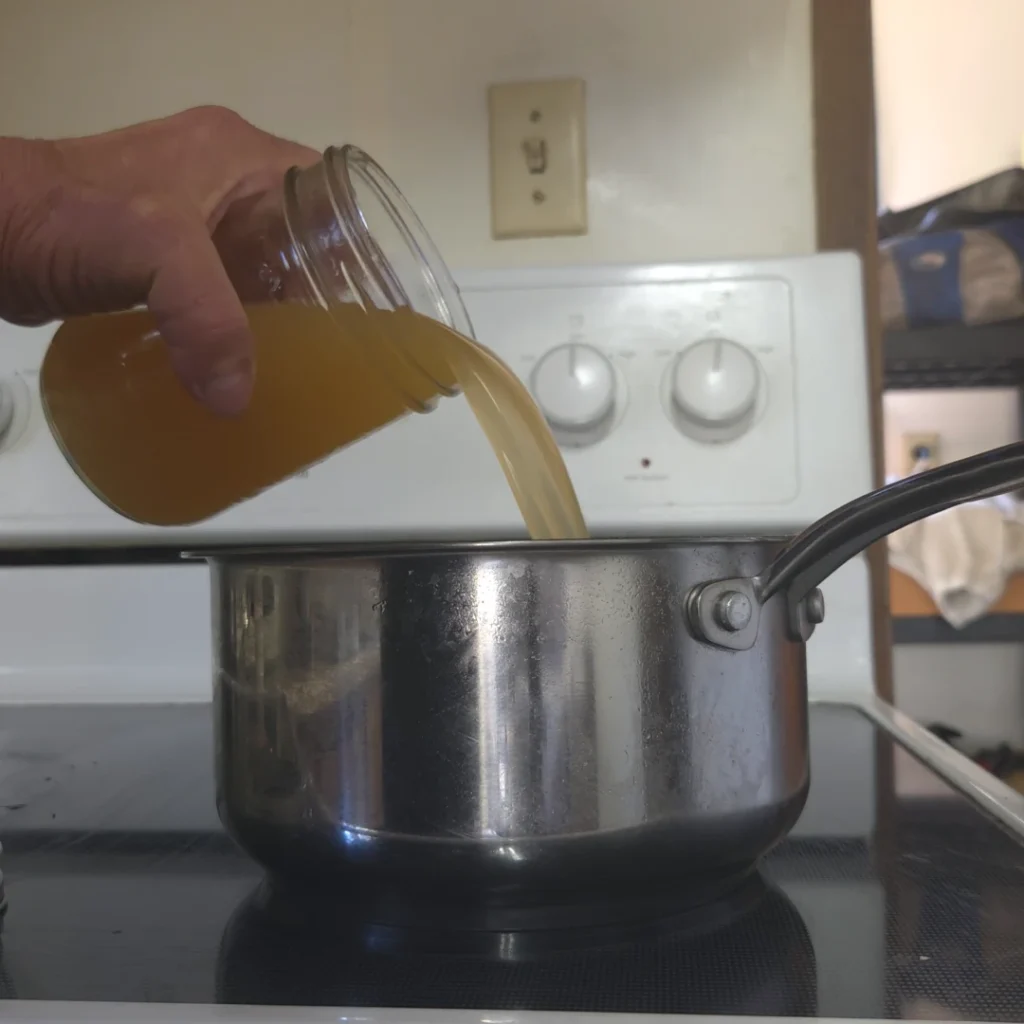
Once the broth was boiling, I packed the cubed chicken into the hot jars, leaving 1¼ inches of headspace. After that, I ladled the hot chicken stock into each jar, again making sure to leave 1¼ inches of headspace.
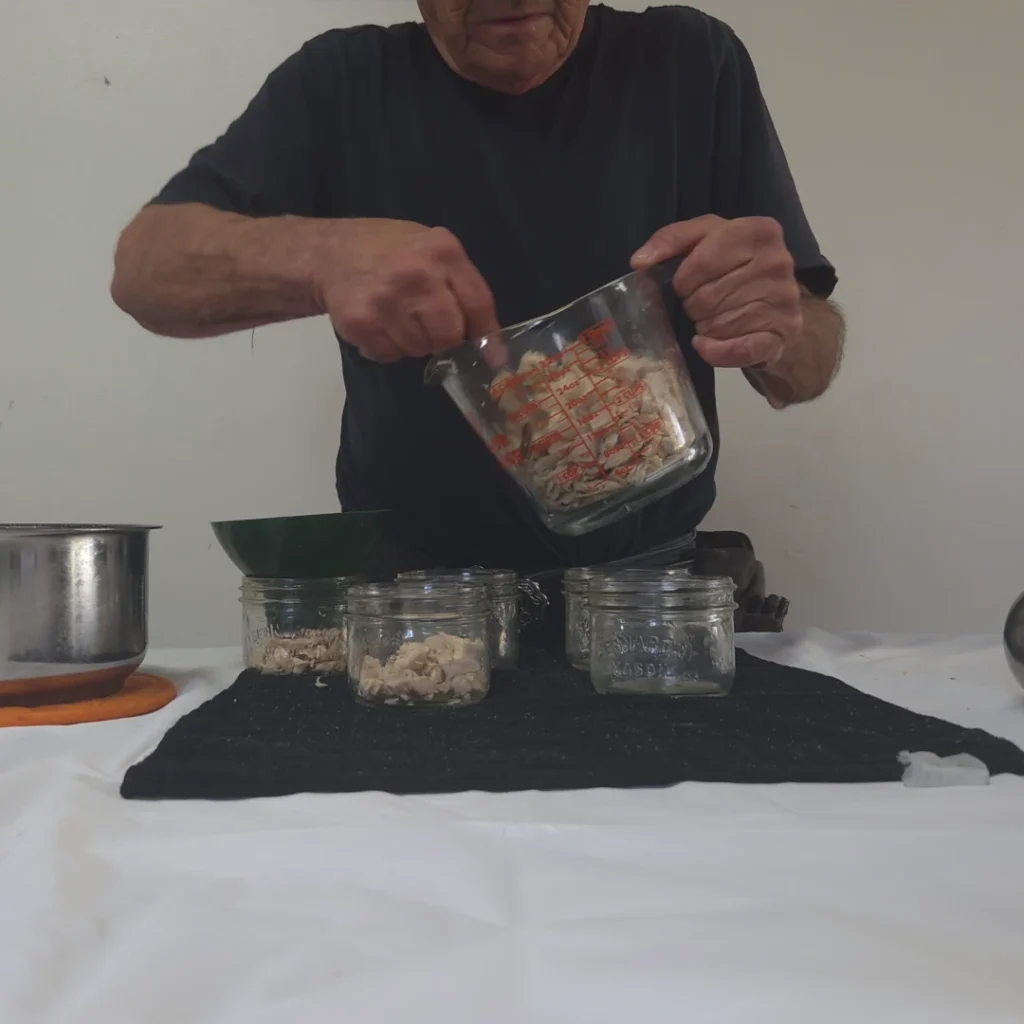
With the jars filled, I used my headspace tool to remove any trapped air bubbles. This step only takes a minute, but it helps ensure the jars seal properly and gives a more accurate headspace measurement. After checking the headspace one final time, I wiped the rims with a paper towel dampened with vinegar to remove any grease or residue.
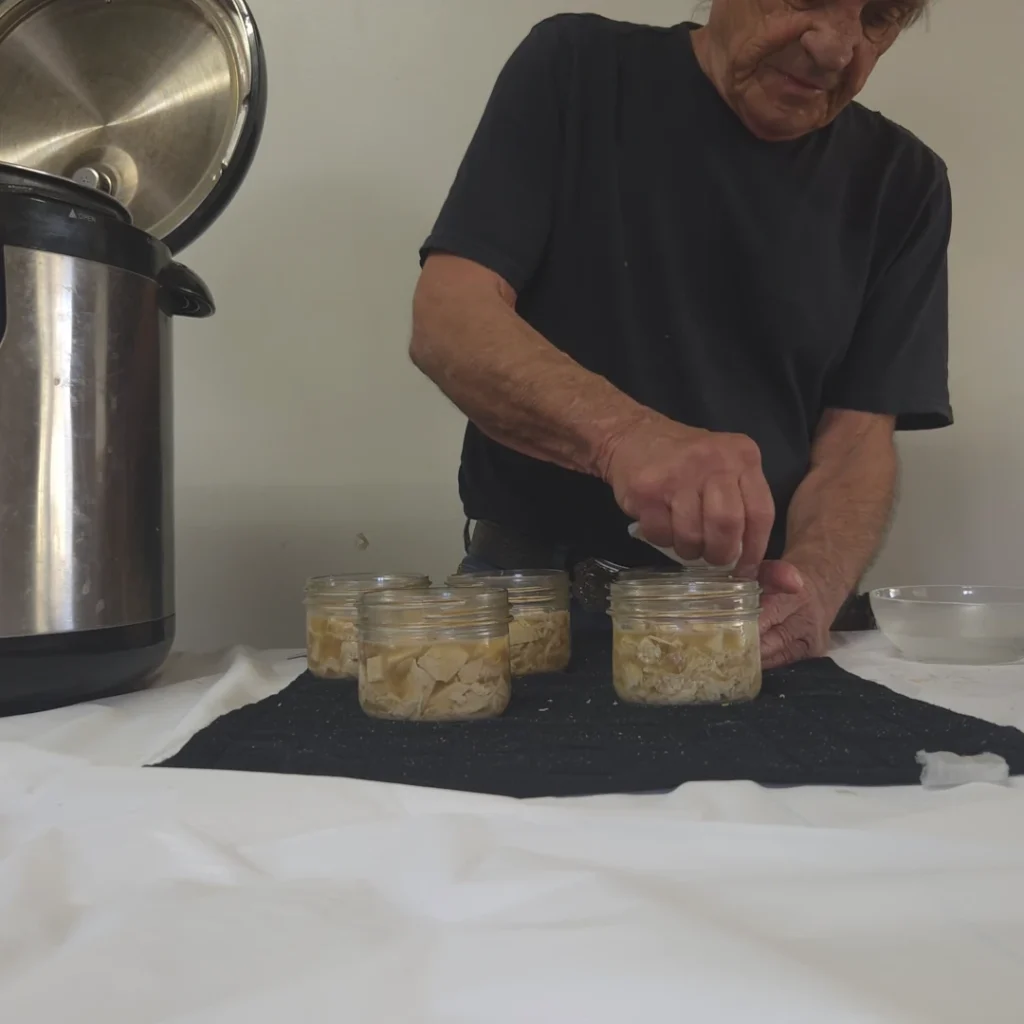
I placed the lids on the jars, tightened the bands finger tight, and loaded them into the canner.
My Carey Electric Canner calls for 8 cups of water, so that’s what I used. If you’re using a different canner, follow the manufacturer’s instructions for the correct amount of water. I also added a splash of vinegar to the canner water to help keep the jars from developing a cloudy film during processing.
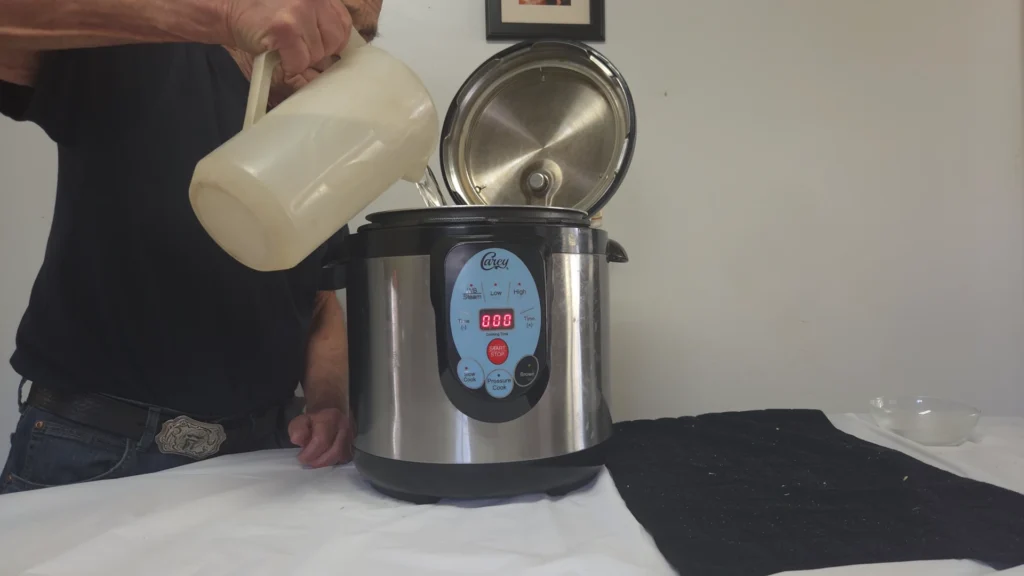
Once everything was loaded, I closed the lid and made sure the vent was left open. Since I was canning boneless chicken in half-pint jars, I processed them for 75 minutes, which is the same processing time used for pint jars.
If you’re using quart jars, the processing time is 90 minutes.
For bone-in chicken, the processing times are 65 minutes for pints and 75 minutes for quarts.
These processing times apply whether you’re using a raw pack or hot pack method.
I selected the pressure canning function and set the canner for 75 minutes. The canner first heated up and completed its standard 10-minute exhaust cycle. When the exhaust cycle finished, it beeped to let me know it was time to close the vent.
After that, the canner built pressure and automatically started the 75-minute countdown.
When the processing time was complete, the canner shut itself off. I let it depressurize naturally, which is an important part of pressure canning. Once all pressure had been released, I opened the lid and let the jars sit for another 10 minutes before removing them.
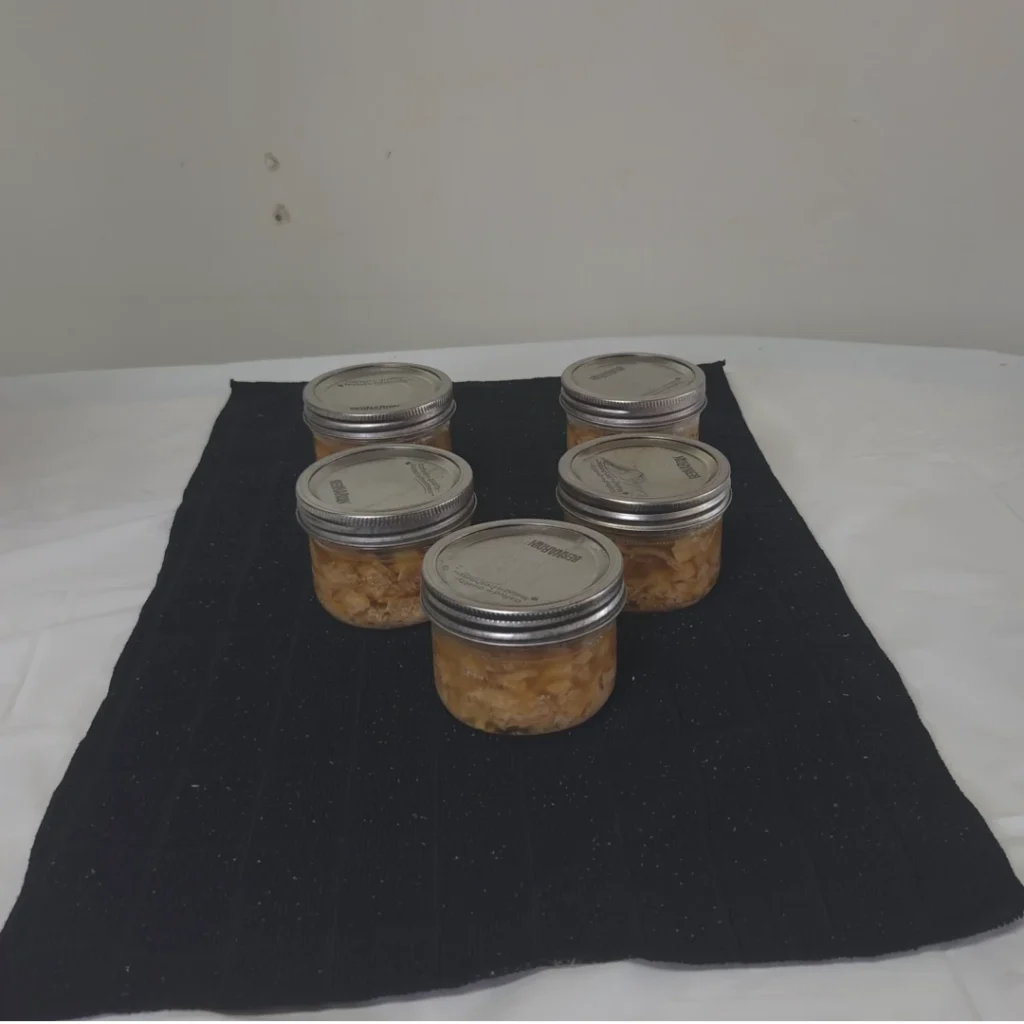
In the end, I only filled five half-pint jars. Looking back, I probably should have roasted two chickens.
Canned Chicken
Roast a chicken, cube the meat, and pressure can it in homemade chicken stock for convenient shelf-stable meals. Perfect for sandwiches, salads, soups, casseroles, and quick lunches.
Prep Time
30 minutes
Cook Time
75 minutes pressure canning (plus heat-up, venting, and cooling time)
Total Time
Approximately 2½ to 3 hours
Yield
5 half-pint jars
Ingredients
- 1 roasted chicken, meat removed and cubed
- 1 pint homemade chicken stock, heated to boiling
- White vinegar for wiping rims
- Water for the pressure canner (follow your manufacturer’s instructions)
- A splash of vinegar for the canner water (optional)
Equipment
- 5 half-pint canning jars
- New canning lids and bands
- Pressure canner
- Jar lifter
- Bubble remover/headspace tool
- Large pot for heating stock
Instructions
- Roast the chicken and remove the meat from the bones.
- Cut the chicken into small cubes suitable for sandwiches, salads, soups, and casseroles.
- Heat the chicken stock until it reaches a boil.
- Place the half-pint jars in hot water to warm them.
- Fill the hot jars with cubed chicken, leaving 1¼ inches of headspace.
- Ladle the boiling chicken stock into the jars, maintaining 1¼ inches of headspace.
- Remove air bubbles using a bubble remover or headspace tool.
- Adjust headspace if necessary.
- Wipe the jar rims with a paper towel dampened with vinegar.
- Apply lids and tighten bands finger tight.
- Place the jars in the pressure canner.
- Add the amount of water recommended by your canner manufacturer.
- Add a splash of vinegar to the canner water if desired to help prevent cloudy jars.
- Close the canner lid and leave the vent open.
- Allow the canner to complete a 10-minute exhaust (venting) period.
- Close the vent and bring the canner up to pressure.
- Process half-pint and pint jars for 75 minutes.
- Process quart jars for 90 minutes.
- When processing is complete, allow the canner to depressurize naturally.
- Open the lid and let the jars rest in the canner for 10 minutes.
- Remove the jars and allow them to cool undisturbed for 12 to 24 hours.
- Check seals, remove bands, label, and store.
Notes
This recipe uses cooked, cubed boneless chicken packed in hot chicken stock. Half-pint jars use the same processing time as pint jars. Always follow current approved pressure canning guidelines and adjust for altitude if required.
Print RecipeFrequently Asked Questions
Can I use leftover roasted chicken for canning?
Yes. This recipe uses chicken that was roasted first and then removed from the bones before being canned in hot chicken stock.
Why did you cube the chicken instead of leaving it in larger pieces?
I wanted the chicken ready for sandwiches, chicken salad, soups, casseroles, and other quick meals. Cubed chicken is easier to use straight from the jar.
Can I use store-bought chicken broth instead of homemade stock?
Absolutely. Homemade stock adds great flavor, but store-bought chicken broth can be used if that’s what you have available.
How much headspace should I leave when canning chicken?
Leave 1¼ inches of headspace in each jar. This applies after adding both the chicken and the broth.
Why do I need to remove air bubbles?
Removing air bubbles helps ensure accurate headspace and promotes a good seal. It also helps prevent trapped air from affecting the finished product.
Why wipe the jar rims with vinegar?
Chicken contains natural fats that can leave residue on the rim. Wiping with vinegar helps remove grease and improves the chances of getting a proper seal.
Can I use half-pint jars for canning chicken?
Yes. Half-pint jars are great for small portions and use the same processing time as pint jars.
How long do I process canned chicken?
Process half-pint and pint jars for 75 minutes and quart jars for 90 minutes using a pressure canner.
Can chicken be safely water bath canned?
No. Chicken is a low-acid food and must be pressure canned to reach temperatures high enough to destroy harmful bacteria.
Do I need to let the canner cool naturally?
Yes. Always allow the canner to depressurize naturally. Forcing the cooling process can lead to liquid loss and may affect jar seals.
Why did you add vinegar to the canner water?
A small amount of vinegar in the canner water can help reduce mineral deposits and keep jars looking cleaner after processing.
How long should the jars cool after canning?
Allow the jars to cool undisturbed for 12 to 24 hours before checking the seals and storing them.
How do I know if my jars sealed properly?
After the jars have cooled, press the center of each lid. A properly sealed lid will remain firm and not flex up and down.
How long does home canned chicken last?
For best quality, use home canned chicken within one year, although properly sealed jars often remain safe longer when stored in a cool, dark place.
What can I make with canned chicken?
Canned chicken works well in chicken salad, sandwiches, wraps, soups, casseroles, pasta dishes, pot pies, and many other quick meals.

Leave a Reply