
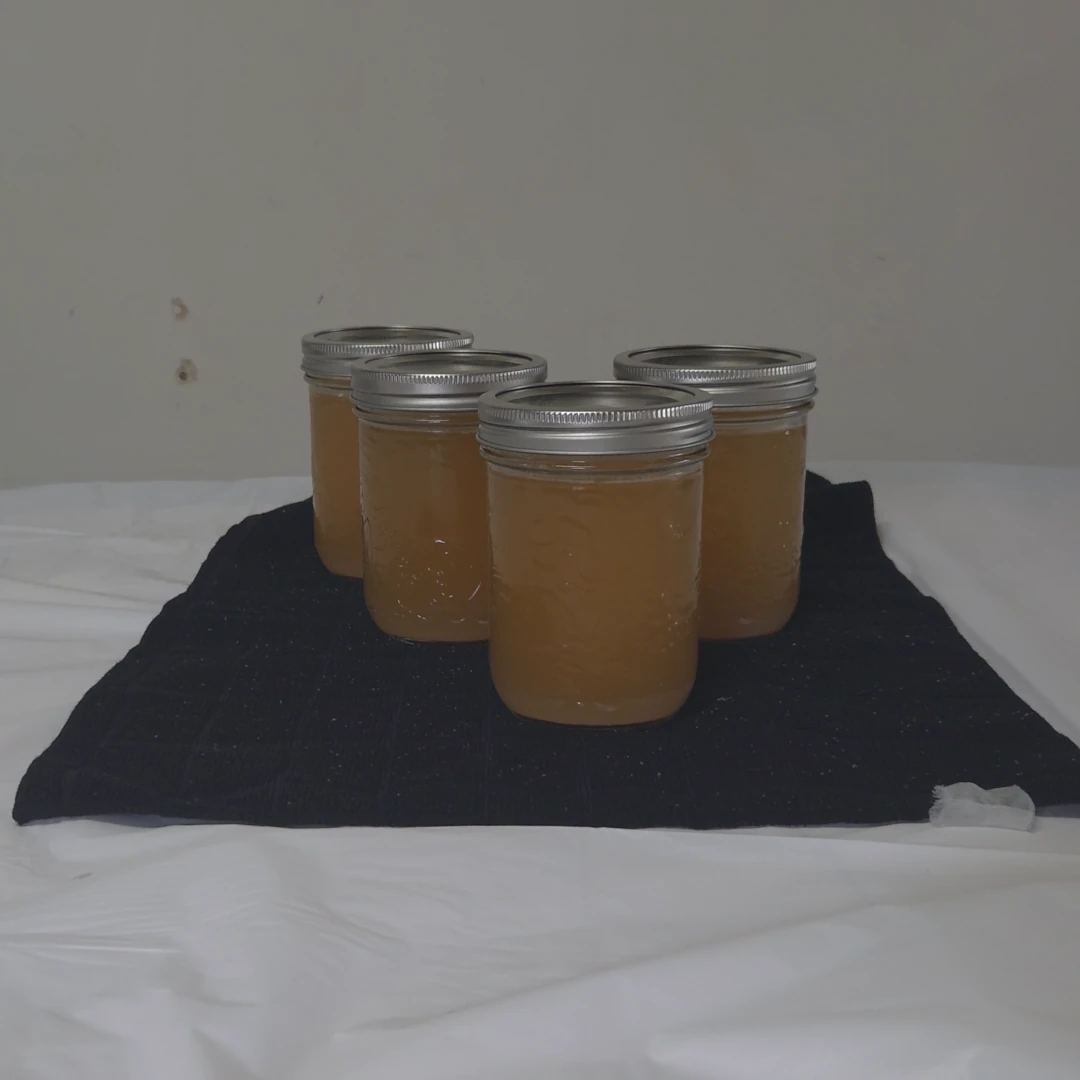
There’s something about homemade chicken stock that just feels worth the effort. Once you make it yourself, it’s hard to go back to the boxed stuff from the store. The flavor is richer, the smell while it’s simmering fills the whole house, and you know exactly what went into it.
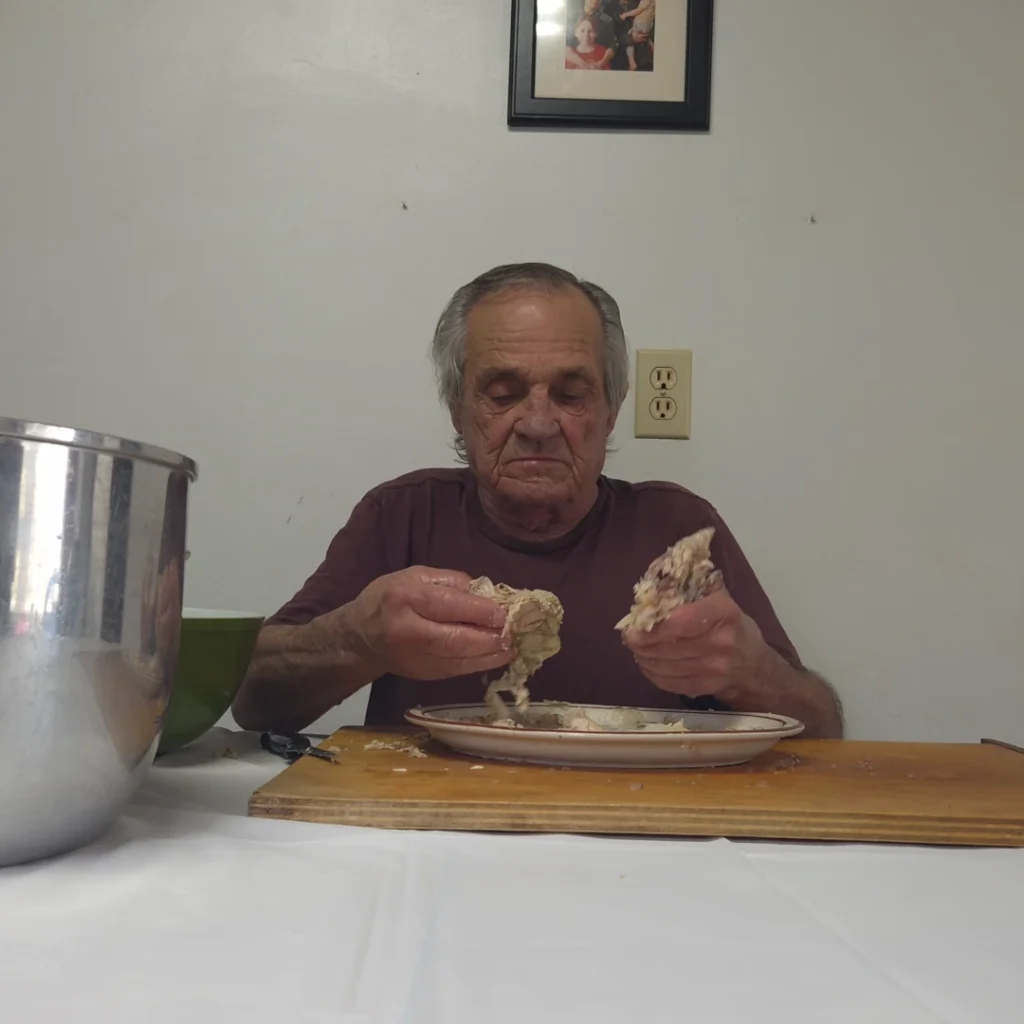
This batch actually started with a leftover roast chicken. After supper I pulled all the meat off the carcass and tossed the bones, skin, and all that gelatin that had set overnight into a big pot. That gelatin is gold when you’re making stock, so don’t throw it out.
I added 2 onions, 2 stalks of celery, 2 bay leaves, 1 tablespoon of kosher salt, 10 peppercorns, and 16 cups of water. Then I brought everything up to a boil.
Now, what I should have done at that point was turn the heat down and let it gently simmer for a couple of hours. Instead, I let it go a little too hard and reduced it way more than I intended. The good news is stock is pretty forgiving. Since it had become really concentrated, I just added another 8 cups of water and let it simmer for another 2 hours.
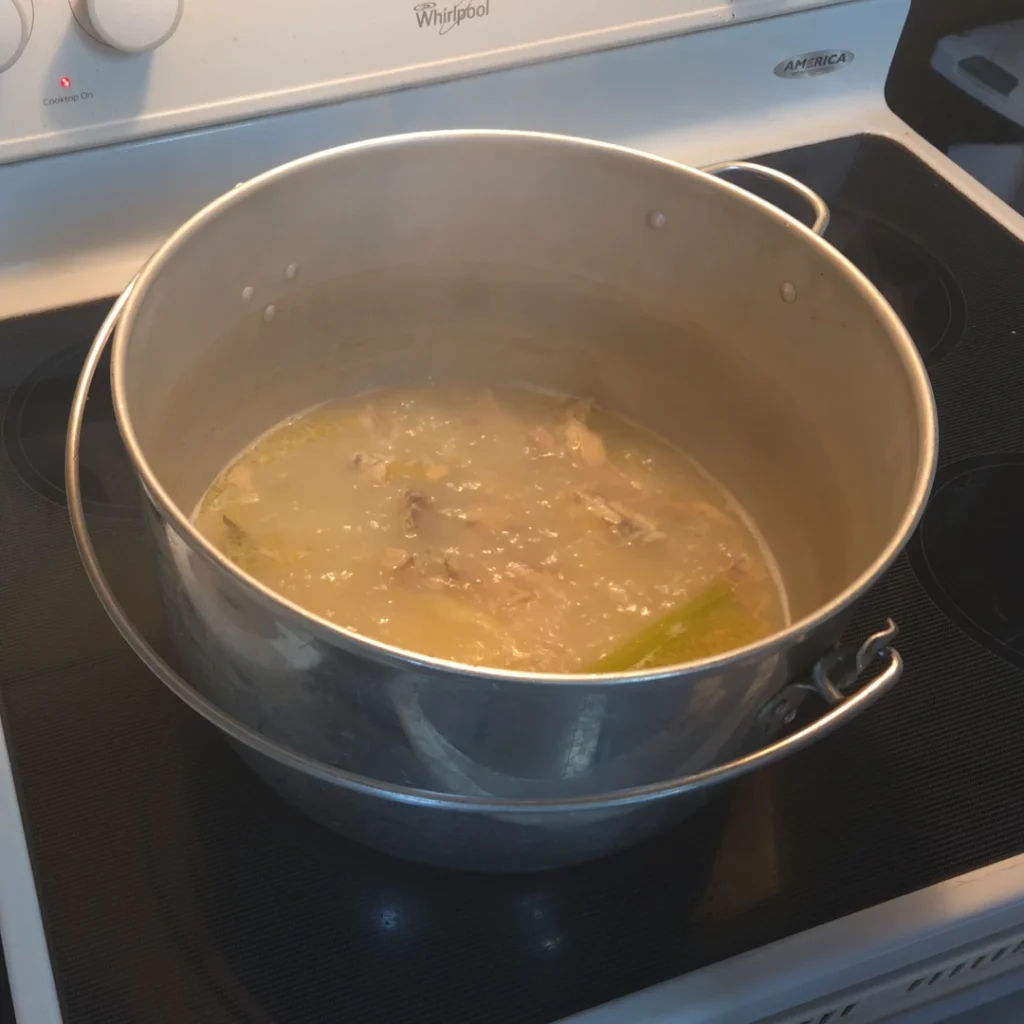
Honestly, it worked out perfectly fine. There was still plenty of flavor left in the bones and vegetables, and the concentrated stock gave the final batch a really rich taste.
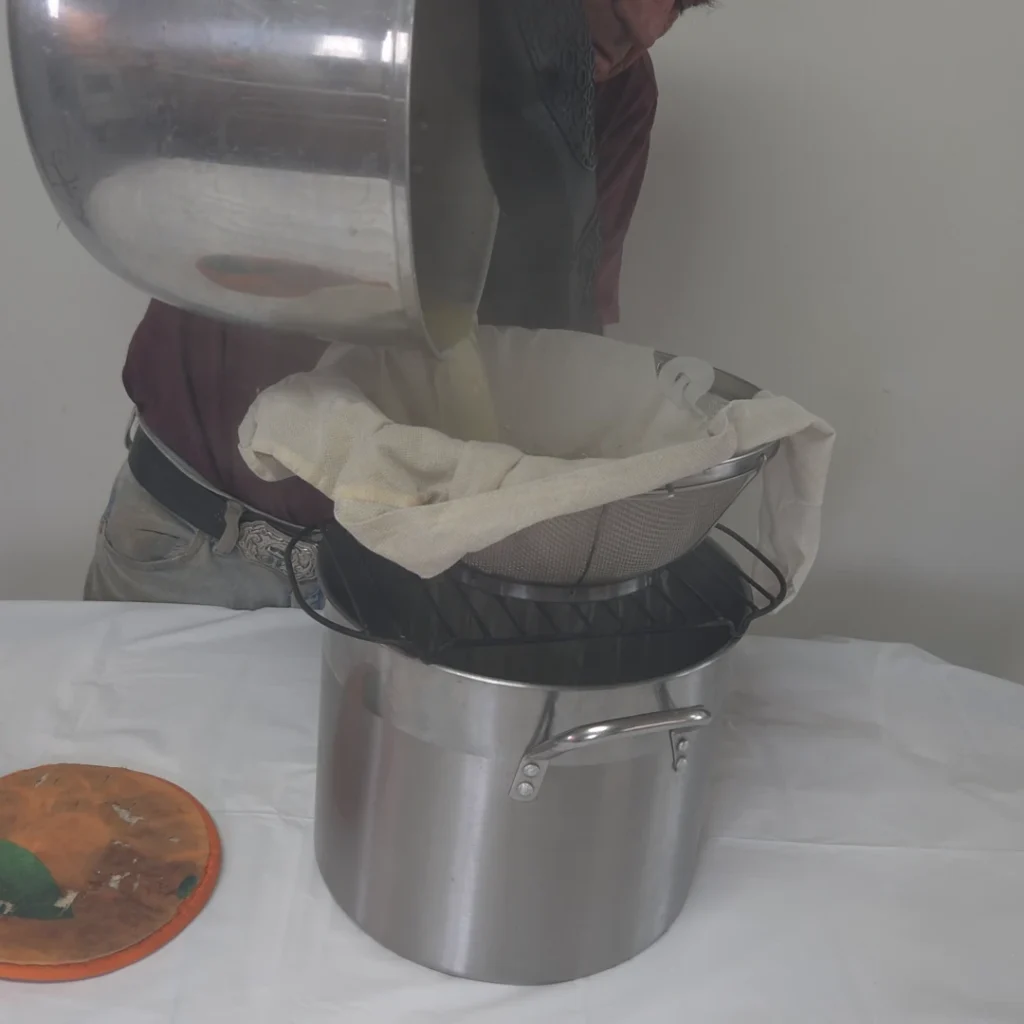
Once it was done simmering, I used a slotted spoon to remove most of the bones and vegetables and then strained everything through cheesecloth to catch the smaller bits. After that, I let it cool down enough to go into the fridge overnight.
The next morning the fat had floated to the top and hardened, which makes it really easy to remove. I strained it one more time just to clean it up even more and get rid of any leftover fat.
At that point I put the stock back on the stove and brought it back up to a boil. While that was heating, I put my pint jars into hot water so they’d be nice and hot before filling.
I filled 4 pint jars, leaving 1 inch of headspace. Then I wiped the rims with a paper towel dampened with vinegar, put the lids on, and tightened the bands finger tight.
For the fifth jar, I just filled it with hot water and used an old lid on it to help fill space in the canner.
My pressure canner calls for 8 cups of water, so that’s what I used, but definitely follow the instructions for your own canner since they can vary. I also added a splash of vinegar to the canner water because it helps keep the jars from getting cloudy.
After locking the lid on, I let the canner exhaust steam for 10 minutes before bringing it up to pressure. The pint jars processed for 20 minutes. If you’re using quart jars instead, they’ll need 25 minutes.
Looking back, I probably could have added the full 16 cups of water after over-reducing the first batch and still ended up with really good stock. But honestly, I’m happy with how this turned out. The flavor is rich, and now there are jars sitting on the shelf ready for soups, gravy, rice, or whatever else comes along.

And if you’re just getting into pressure canning, chicken stock is actually a great place to start. It’s simple, useful, and even if things don’t go exactly to plan, it usually still turns out pretty good.
Homemade Chicken Stock
Rich homemade chicken stock made from a leftover roast chicken, vegetables, and a slow simmer. Perfect for soups, gravy, rice, and pressure canning for the pantry.
Ingredients
- 1 leftover roast chicken carcass
- Skin and gelatin from the roasting pan
- 2 onions
- 2 stalks celery
- 2 bay leaves
- 1 tbsp kosher salt
- 10 peppercorns
- 16 cups water
Instructions
- Remove the meat from the leftover roast chicken and place the carcass, skin, and gelatin into a large stock pot.
- Add the onions, celery, bay leaves, kosher salt, peppercorns, and 16 cups of water.
- Bring the pot to a boil, then reduce the heat and simmer for several hours.
- If the stock reduces too much, add an additional 8 cups of water and continue simmering for 2 more hours.
- Use a slotted spoon to remove most of the bones and vegetables.
- Strain the stock through cheesecloth into another container.
- Let the stock cool, then refrigerate overnight so the fat hardens on top.
- Remove the hardened fat and strain the stock again.
- Return the stock to a boil while heating pint jars in hot water.
- Fill hot pint jars leaving 1 inch of headspace.
- Wipe the rims with vinegar, apply lids, and tighten the bands finger tight.
- Add water to the pressure canner according to your canner’s instructions.
- Add a splash of vinegar to the canner water to help prevent cloudy jars.
- Exhaust steam for 10 minutes before bringing the canner up to pressure.
- Pressure can pint jars for 20 minutes or quart jars for 25 minutes.
Notes
Homemade chicken stock can also be frozen instead of pressure canned. Even after adding extra water, the stock still turned out rich and flavorful.
Print RecipeFrequently Asked Questions
Can I use frozen chicken bones instead of a fresh carcass?
Yes, frozen bones work just fine. Just thaw them enough to get them into the pot and proceed as usual.
Do I have to pressure can the stock?
No, you can freeze it instead. Pressure canning is just a way to store it on the shelf for longer term storage.
Why did my stock reduce too much?
It usually happens when the heat is too high. A gentle simmer is all you need to extract flavor without over-reducing.
Can I skip straining through cheesecloth?
You can, but the stock will be clearer and cleaner if you strain it well. It removes small bits and sediment.
Do I need to remove all the fat before canning?
No, but chilling the stock and removing the hardened fat improves flavor and helps with storage quality.
How long does home canned chicken stock last?
When properly pressure canned and sealed, it can last for a year or more in a cool, dark pantry.

Leave a Reply