
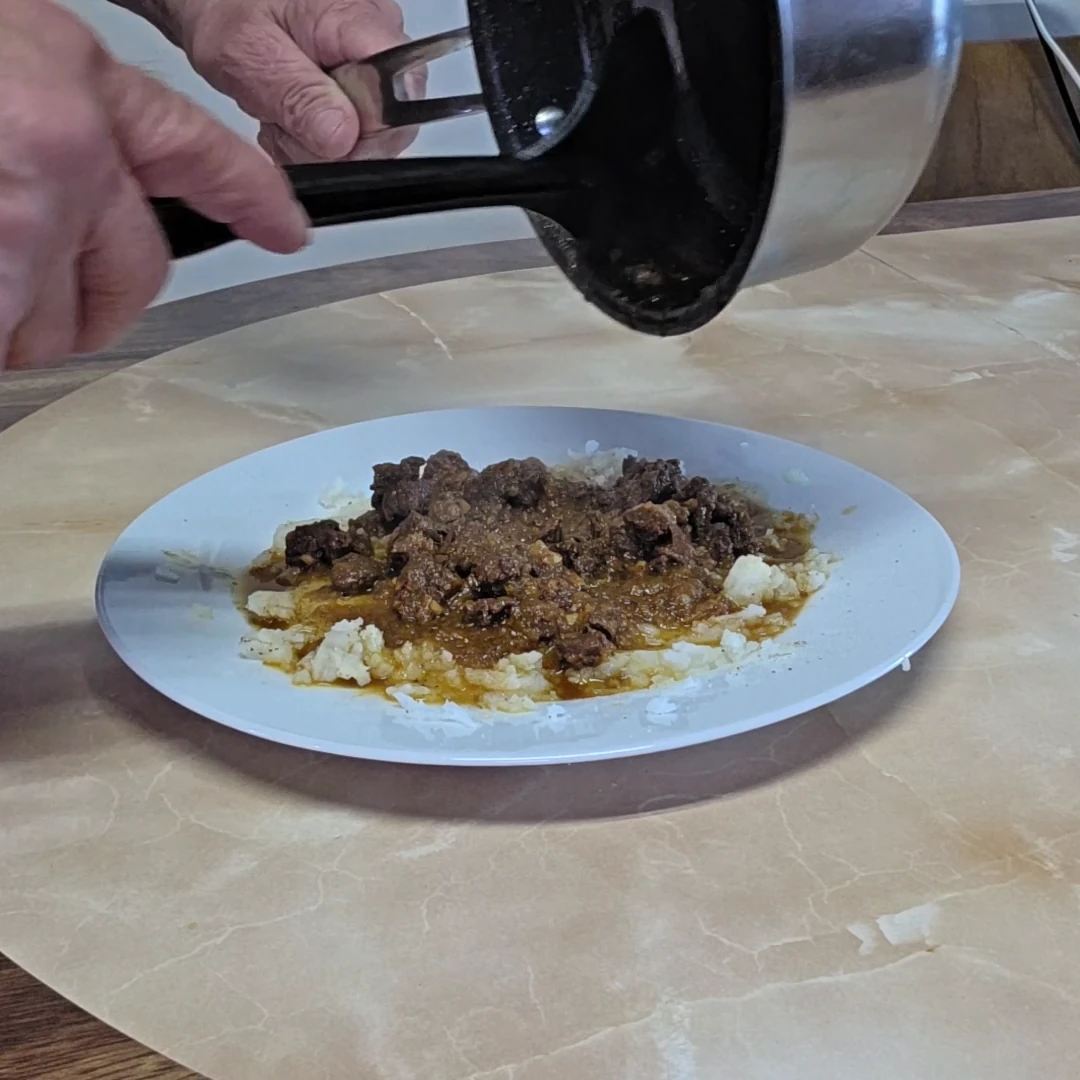
I saw a recipe for beef in wine sauce in one of my Ball canning books and thought it sounded pretty good, but you never really know until you make it yourself. Some recipes sound amazing and then turn out kind of disappointing. This one thankfully wasn’t one of those.
The recipe is meant for canning, but honestly you could skip the jars altogether and just make it for supper. That would work just fine too.
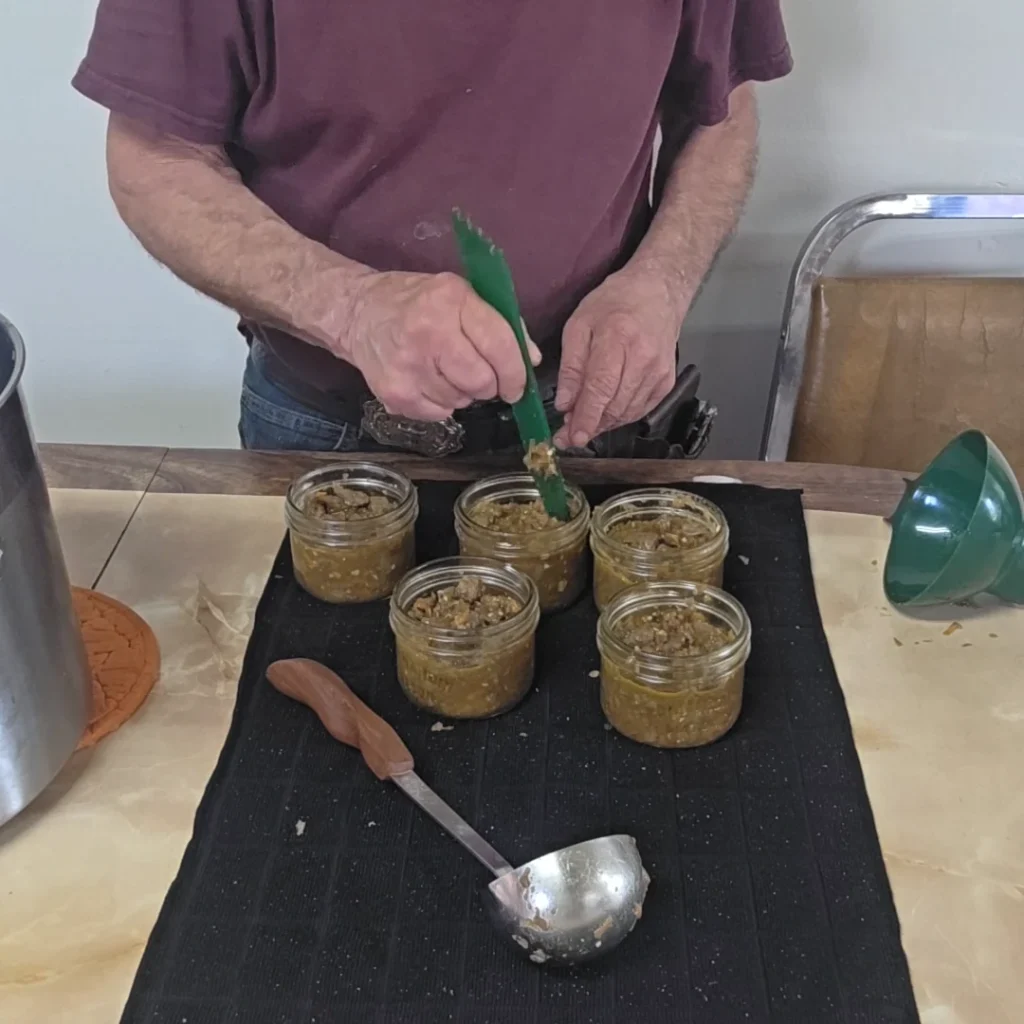
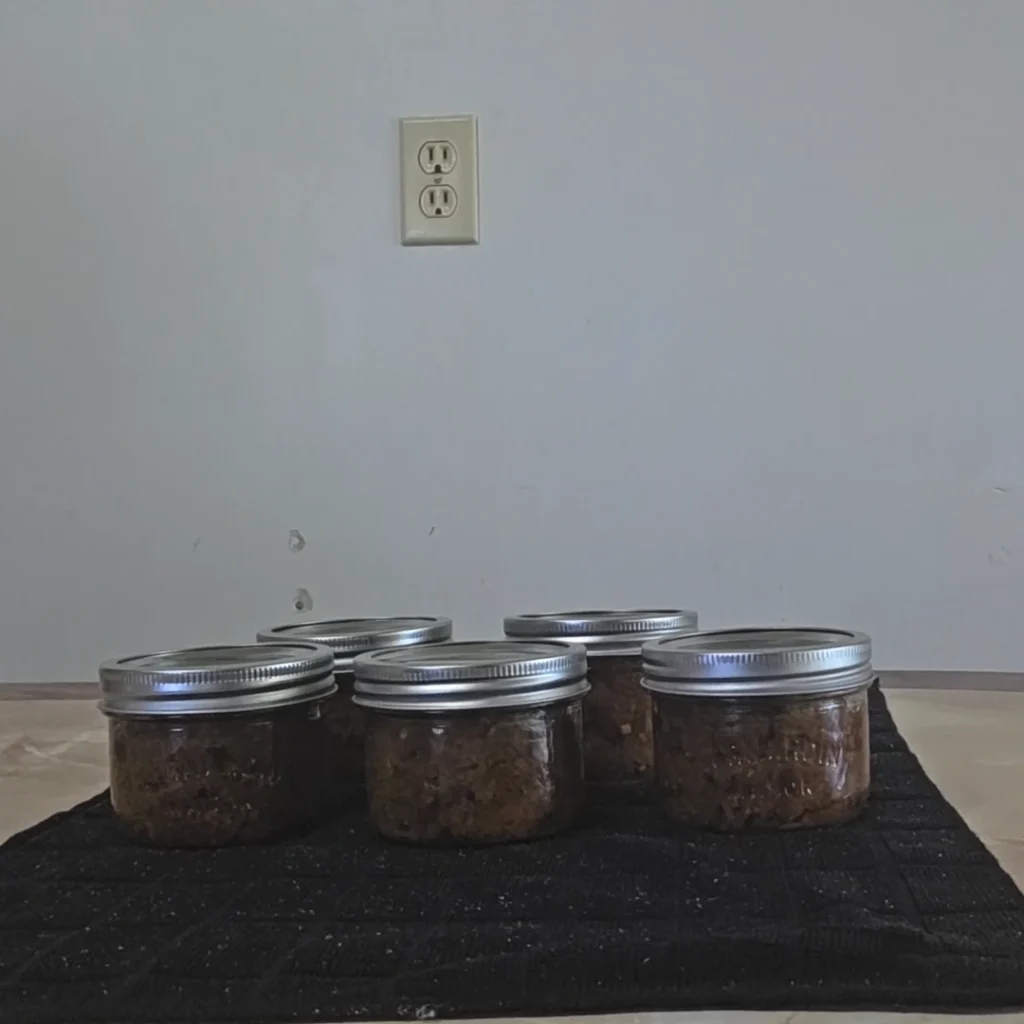
The book says this recipe makes 2 to 3 pint jars. I used half-pint jars instead and ended up with 5 jars plus a bit extra.
The original recipe called for 2 pounds of round steak, but I’ve got plenty of moose meat in the freezer, so I used a chuck roast and a round roast instead. Moose works really well in slow cooked recipes like this.
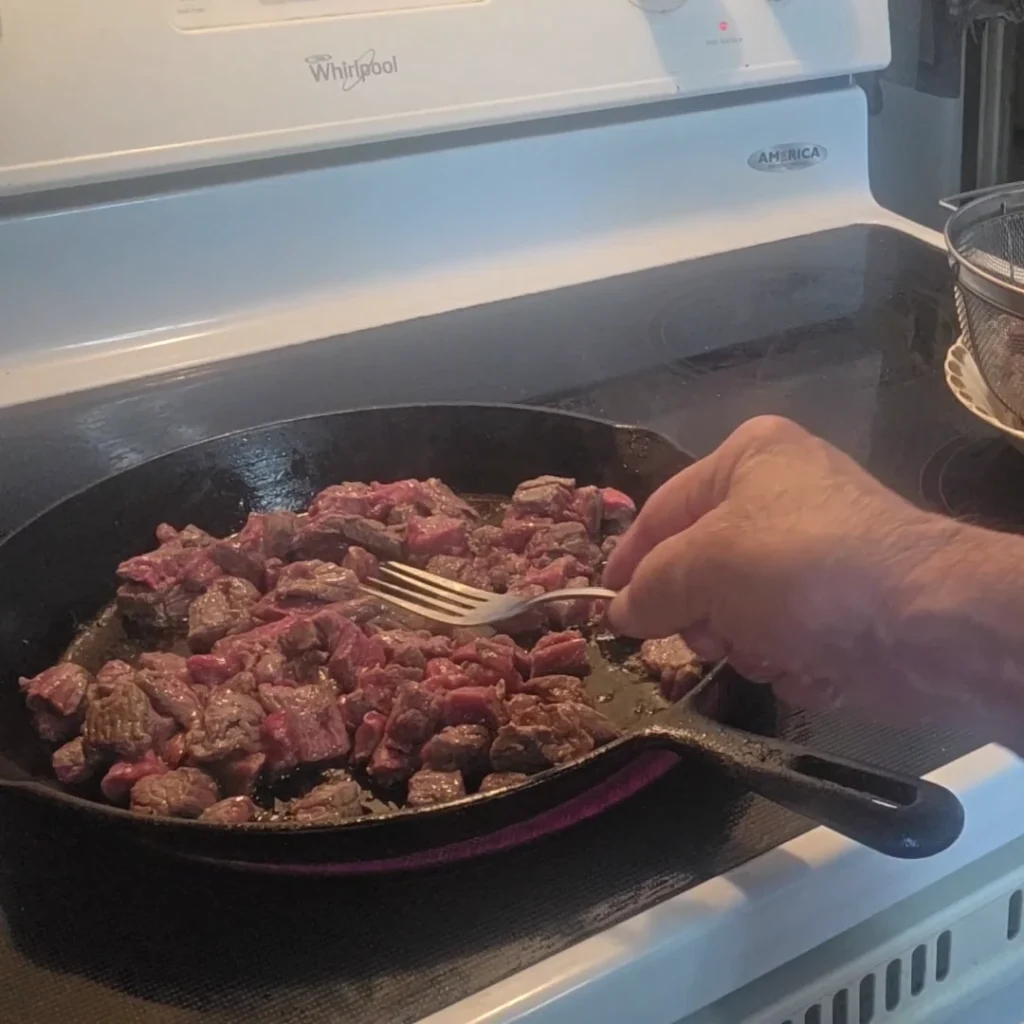
I started by cutting the meat into about 1 inch cubes. After that I browned it in batches in a cast iron frying pan with a little canola oil. I didn’t try to cook it all at once because overcrowding the pan just makes the meat steam instead of brown.
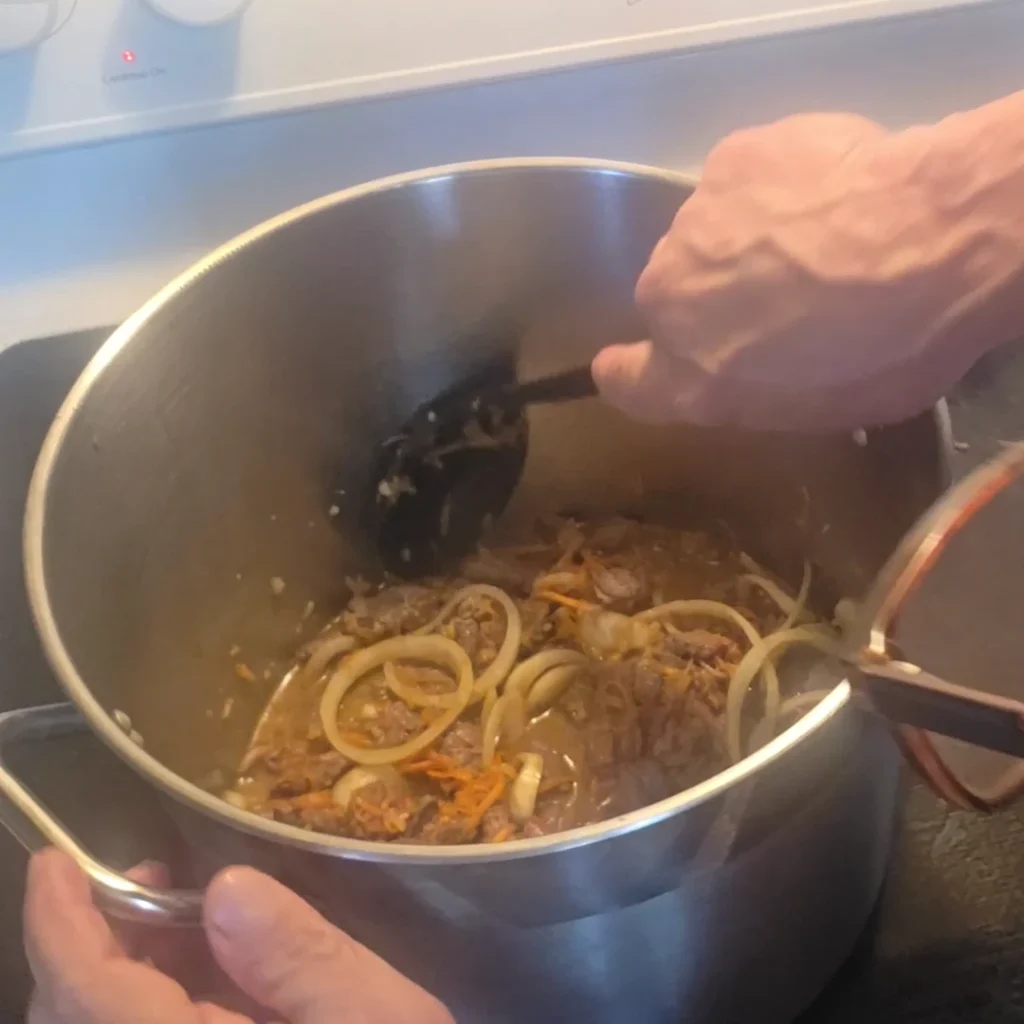
Once all the meat was browned, I put it into a large pot and added 1 cup of shredded apple, 1 cup of shredded carrot, ¾ cup sliced onion, ¾ cup water, ½ cup dry red wine, 1 teaspoon kosher salt, 2 tablespoons crushed garlic, 2 packets of beef bouillon, and 2 bay leaves.
I brought everything up to a boil while stirring pretty regularly so nothing stuck to the bottom. Once it was boiling, I turned the heat down and let it simmer for an hour. I gave it a stir every so often while it cooked.
While that was simmering, I got my half-pint jars sitting in hot water so they’d be ready to fill.
After the hour was up, I stirred in ½ teaspoon of Kitchen Bouquet. That just gives the sauce a darker richer color.
Then I filled the jars, leaving 1 inch of headspace. I wiped the rims with vinegar, put the lids and bands on finger tight, and loaded everything into the pressure canner.
My canner takes 8 cups of water, but always go by the instructions for your own canner.
After the 10 minute exhaust period, I processed the jars for 75 minutes. If you’re doing quart jars instead, they need 90 minutes.
When the canning time was finished, I let the canner depressurize on its own before opening the lid. Then I waited another 10 minutes before taking the jars out and setting them on a towel overnight.
The next day I heated up one of the jars and spooned it over mashed potatoes.
And honestly, it turned out really good.
The sauce is rich and savory, and the wine gives it a deep flavor without being too strong. The apple and carrot sort of melt into the sauce while it cooks, so you barely notice them, but they add a little sweetness to balance everything out.
Definitely one I’ll make again.
Beef In Wine Sauce
A rich and hearty pressure canning recipe made with chunks of beef or moose meat simmered in a savory wine sauce. Great served over mashed potatoes.
Ingredients
- 2 lbs round steak, beef roast, or moose roast
- Canola oil for browning
- 1 cup shredded apple
- 1 cup shredded carrot
- ¾ cup sliced onion
- ¾ cup water
- ½ cup dry red wine
- 1 tsp kosher salt
- 2 tbsp crushed garlic
- 2 packets beef bouillon
- 2 bay leaves
- ½ tsp Kitchen Bouquet
Instructions
- Cut the meat into roughly 1 inch cubes.
- Heat a cast iron frying pan with a little canola oil and brown the meat in batches.
- Transfer the browned meat into a large pot.
- Add the shredded apple, shredded carrot, sliced onion, water, red wine, kosher salt, crushed garlic, beef bouillon, and bay leaves.
- Bring everything to a boil while stirring regularly.
- Reduce the heat and simmer for 1 hour, stirring occasionally.
- While the mixture simmers, keep your jars hot in hot water.
- After the hour is up, stir in the Kitchen Bouquet.
- Fill hot jars leaving 1 inch headspace.
- Wipe the rims with vinegar, apply lids and bands finger tight, and place jars into the pressure canner.
- Once the canner reaches a steady flow of steam, allow it to exhaust or vent steam continuously for 10 minutes before placing the weight on the vent or closing the petcock.
- After the 10 minute exhaust period, process half-pint or pint jars for 75 minutes. Process quart jars for 90 minutes.
- Allow the canner to depressurize naturally before opening.
- Wait 10 minutes before removing the jars and let them cool overnight.
Notes
- The original Ball recipe calls for round steak, but moose meat works very well in this recipe.
- The recipe makes about 2 to 3 pint jars or roughly 5 half-pint jars.
- Serve hot over mashed potatoes, rice, or egg noodles.
Frequently Asked Questions
Can I use moose meat instead of beef?
Yes, moose works very well in this recipe. I used a moose chuck roast and round roast instead of beef and it turned out excellent.
Do I have to can this recipe?
No, you can make it as a regular meal and serve it right away. It’s really good over mashed potatoes, rice, or egg noodles.
What kind of wine should I use?
A dry red wine works best in this recipe. It gives the sauce a deeper richer flavor without making it taste overly wine heavy.
What does the shredded apple do in the recipe?
The apple adds a slight sweetness that balances the rich savory flavor of the sauce. Once cooked down, you barely notice it’s there.
Can I leave out the Kitchen Bouquet?
Yes, the recipe will still work without it. The Kitchen Bouquet mainly gives the sauce a darker richer color.
How many jars does this recipe make?
The Ball recipe says it makes about 2 to 3 pint jars. Using half-pint jars, I ended up with 5 jars plus a little extra.
Why do you brown the meat first?
Browning adds a lot more flavor to the finished sauce. It also helps give the meat better texture after canning.
Do I really need to vent the canner for 10 minutes?
Yes, allowing the canner to vent steadily for 10 minutes helps remove trapped air so the pressure inside the canner is accurate during processing.
How long do the jars need to process?
Half-pint and pint jars are processed for 75 minutes after the 10 minute exhaust period. Quart jars need 90 minutes.
What’s the best way to serve beef in wine sauce?
It’s excellent served hot over mashed potatoes, but it’s also really good over rice, noodles, or even with fresh bread on the side.

Leave a Reply